
2-week Kenya itinerary: complete route with safari, wildlife & beach
Going to Kenya for 2 weeks and want to get the most out of your trip? In this complete itinerary we take you to Nairobi, Ol Pejeta, Lake Naivasha, the Maasai Mara and Diani Beach. From game drives and spotting the Big Five to boat safaris, rhinos and relaxing days on the coast. We share our route, travel times and practical tips on safaris, accommodation, transport, costs and preparation, so you can start your round trip through Kenya well prepared.
Kenya
Safari, nature and tropical beaches: discover diverse Kenya
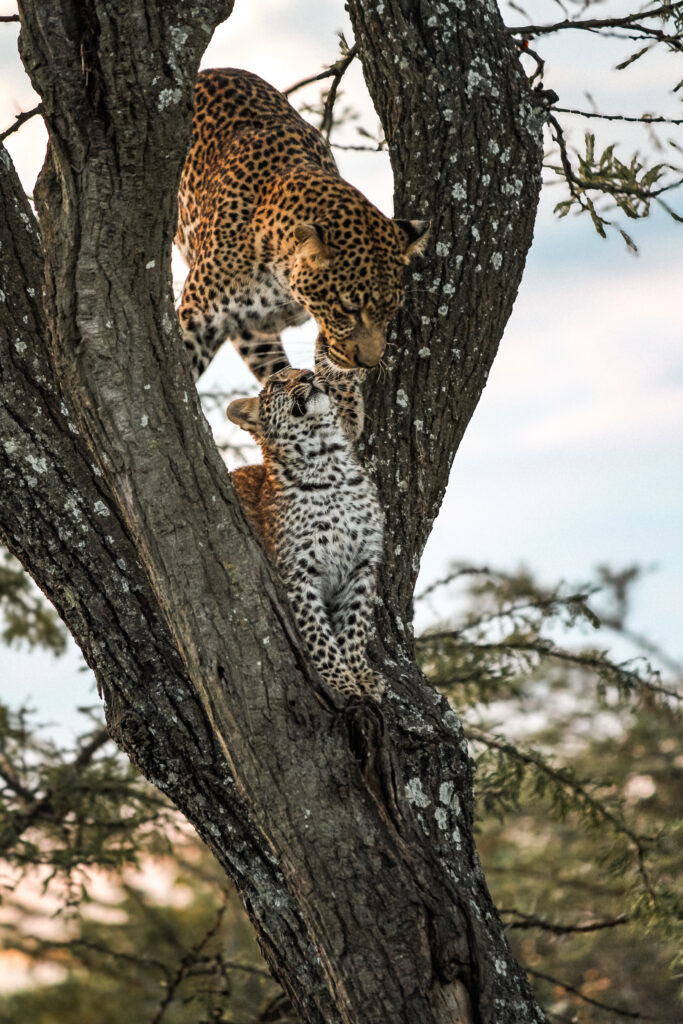
The sun slowly rises over the vast savannah. The sky turns orange as our jeep drives slowly through the grasslands of the Maasai Mara. Suddenly our driver stops. A moment later we see a leopard and her cub eating in a tree. These are the moments you travel to Kenya for.
Kenya is a destination that surprises you every single day. From the first safari among rhinos and elephants to the last sunset on the white beaches of Diani Beach. The country combines vast nature reserves, impressive wildlife, special cultures and tropical beaches in a way that few destinations can match.
Steal our 15-day round trip through Kenya and discover not only the famous safaris, Lake Naivasha and the lively capital Nairobi, but also lesser-known places such as Ol Pejeta Conservancy. You come face to face with lions, walk among giraffes, cycle through a national park and end your trip relaxing on the Indian Ocean.
In this travel blog we share our complete 15-day itinerary through Kenya, including practical tips, information about safaris, accommodation, costs and everything you need to know to plan a round trip through Kenya yourself.
Kenya in 2 weeks: our itinerary
In 15 days you travel from Nairobi via Ol Pejeta Conservancy, Lake Naivasha and the Maasai Mara to Diani Beach on the Indian Ocean.
Day 1-3: Nairobi
Day 4-6: Ol Pejeta Conservancy
Day 6-8: Lake Naivasha & Crescent Island
Day 8-11: Maasai Mara National Reserve
Day 11-14: Diani Beach
Day 14-15: back to Nairobi
Book this tailor-made round trip with Kipanga Adventures
We made this round trip through Kenya with Kipanga Adventures. What we liked about this way of travelling is that everything was arranged in advance and all we had to do was get in and enjoy.
Kipanga Adventures is a Kenyan tour operator with a Dutch owner, based in Nairobi. Kipanga Adventures puts together fully arranged round trips based on your wishes. This means you can decide for yourself which national parks you want to visit, how many safaris you want to do, which type of accommodation suits you and whether you want to end the trip with a few relaxing days on the coast.
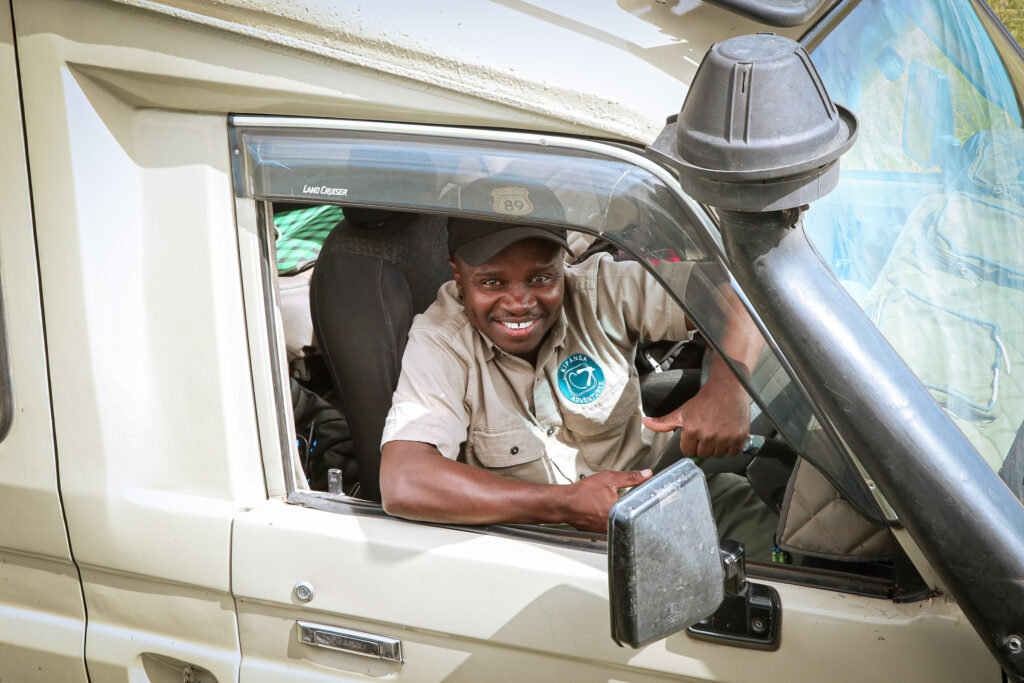
For us, the combination of local knowledge and an experienced driver/guide was a huge added value. During the safaris our driver knew exactly where to look for wildlife, and on the road he also knew exactly which route to take and where we could stop for a moment. This made us feel very safe.
Putting together a round trip through Kenya yourself can be quite a challenge. The distances are large, the choice of national parks is enormous and the best route depends on the season in which you travel. A local specialist knows which places combine well, which accommodations are in a good location and how to build up the trip logically.
The big advantage of a tailor-made trip with Kipanga Adventures is that you keep the freedom to put together your ideal round trip, without having to figure everything out yourself. From transport and accommodation to safaris and excursions: everything is tailored to your wishes.
💡 Tip: Book your round trip well in advance if you are travelling to Kenya during the high season. Popular accommodations around the Maasai Mara in particular can be fully booked quickly. Mention 'Dutchtravelfreak' to Kipanga Adventures and get € 100 off your booking!
Day 1-3
Nairobi
about 45 minutes' drive from Nairobi airport.
For many travellers, a round trip through Kenya starts in Nairobi. The capital may not be the place you plan a whole city trip for, but as the starting point of your safari adventure Nairobi is surprisingly interesting.
The city combines modern buildings, busy streets and green areas. The special thing is that within a short time you can go from the city to standing among wild animals.
A nice start to slowly get to know Kenya and gather your first impressions. We found Nairobi more fun than we expected!
⚠️ Good to know: Nairobi is a large and busy city where, as a traveller, you need to be a bit more conscious about safety. The safety risk is higher in certain neighbourhoods in particular. Keep your phone, camera and other valuables close to you in busy places. They can be snatched out of your hands. We therefore recommend not wandering through the city alone at night and using a reliable taxi, transfer or driver to get around. Let your accommodation know where you want to go and ask which kind of transport they recommend. Especially for rides in the evening, that is a small effort that can prevent a lot of uncertainty.
What to do in Nairobi?
Go on safari in Nairobi National Park ⌄
Doing the first safari of your trip while you see the Nairobi skyline in the background. That may sound strange, but that is exactly what makes Nairobi National Park special. The park lies right next to the city, so you are there in no time, and it is one of the few places in the world where you can spot wild animals with a big city in the background.
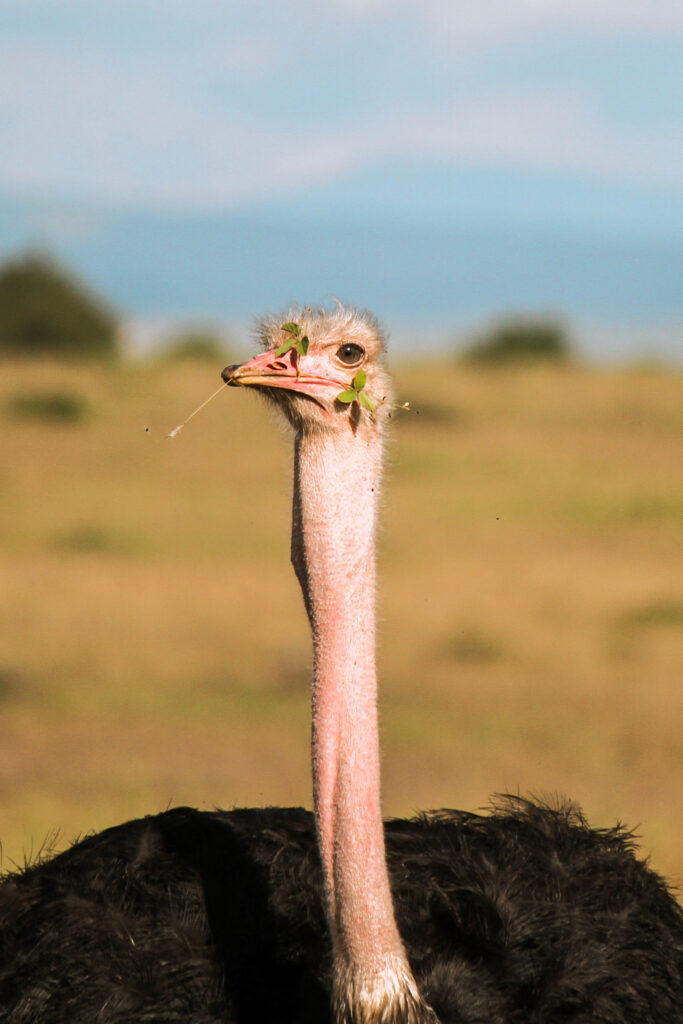
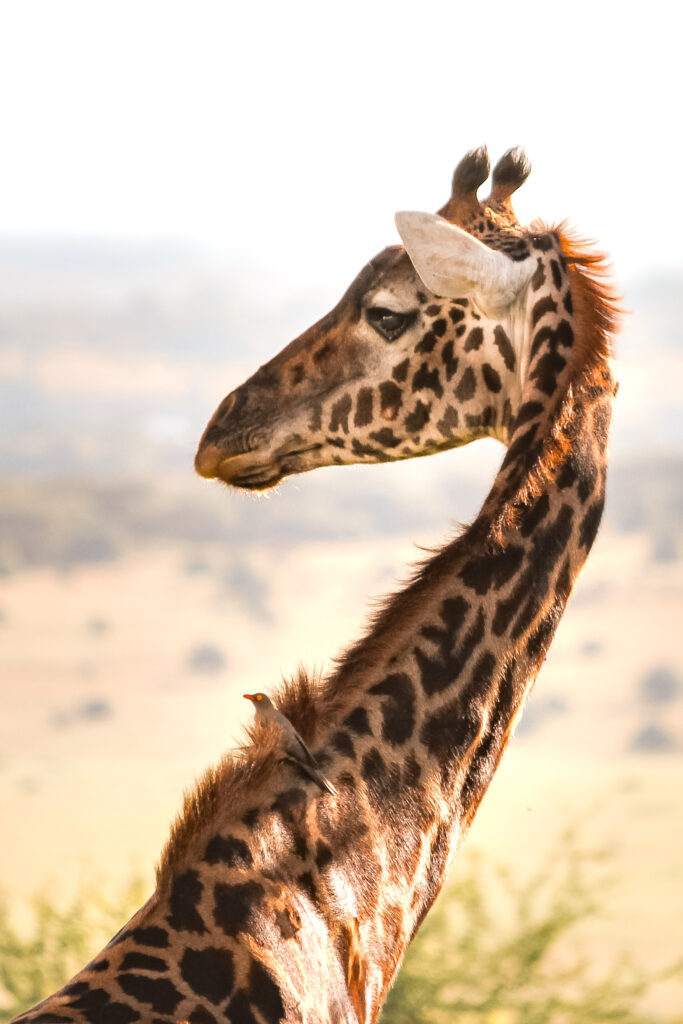
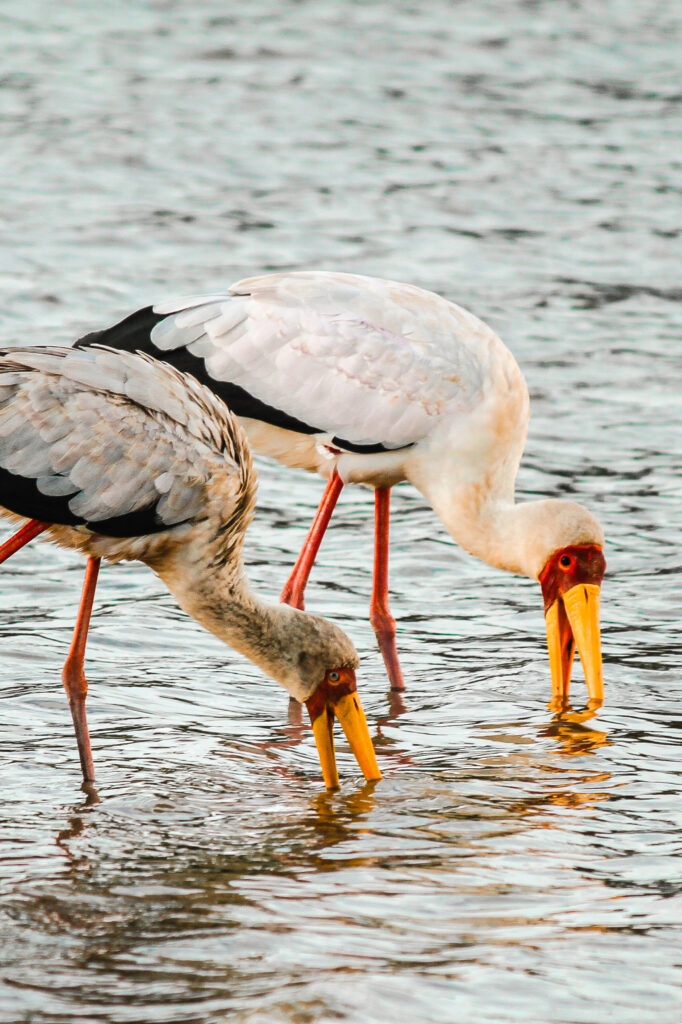
During our jeep safari we saw lions, zebras, buffalo, rhinos, ostriches, hippos, crocodiles and various antelopes, among others. We went in the late afternoon and had the park almost entirely to ourselves!

Visit the Giraffe Centre ⌄
Meet the endangered Rothschild's giraffes. The centre was set up to protect the Rothschild's giraffe and plays an important role in nature education. A nice first introduction to Kenya's wildlife if you are not going on safari otherwise.
If you are already doing several safaris during your trip to Kenya, we would not necessarily put the Giraffe Centre at the top of your list. In the national parks and conservancies you see giraffes in their natural environment, without having to feed them. If you have never been this close to a giraffe and would like to learn more about the Rothschild's giraffe and nature conservation, it can be an interesting stop.
⚠️ Good to know: The Giraffe Centre is not a place where you see giraffes roaming free in nature. It is a nature education and breeding centre where visitors can see and feed the animals up close.
Discover the story behind Karen Blixen ⌄
Lovers of history and literature can visit the former home of Karen Blixen, known from the book and film Out of Africa. In the museum you can see personal belongings, furniture and stories about her life in Kenya.
Even if you do not know the book or the film, it is an interesting place to learn more about the colonial history of Kenya.
Learn more about the history at the Nairobi National Museum ⌄
The Nairobi National Museum is a good place to understand more about the history, culture and nature of Kenya. Here you will find exhibitions about the different ethnic groups, archaeological finds and the country's biodiversity.
A nice activity when it rains or when you want to escape the bustle of the city for a while.
Visit Mathare Slum in Nairobi ⌄
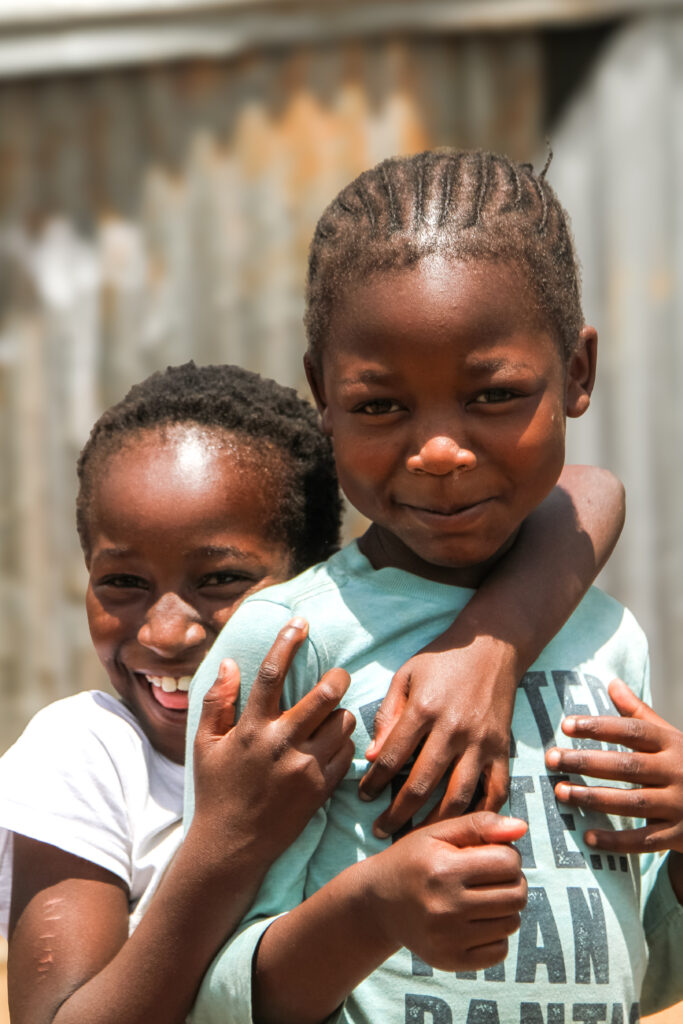
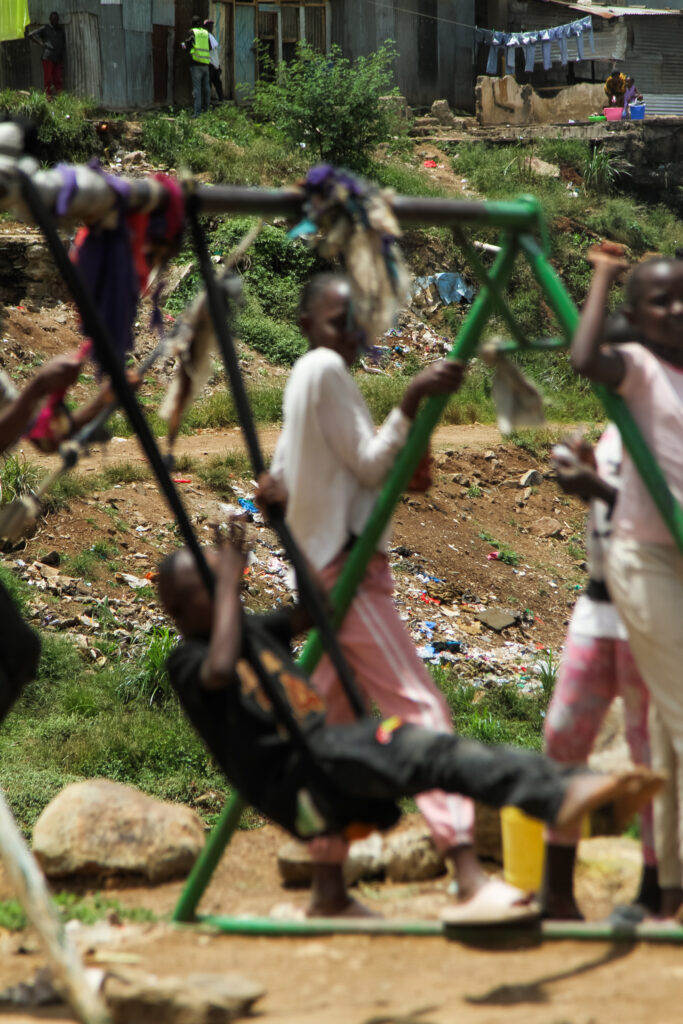
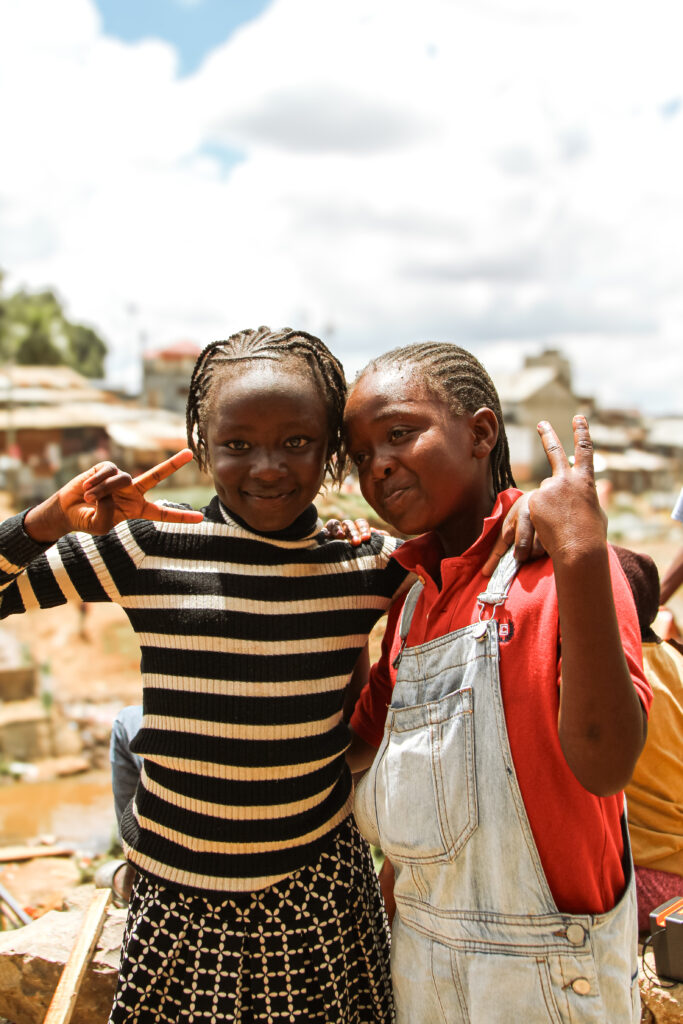
Besides the modern side of Nairobi, with tall office buildings, restaurants and shopping centres, you will also find neighbourhoods where daily life looks very different. One of the most special experiences during our stay in Nairobi was a visit to Mathare Slum, one of the oldest and largest informal settlements in the city.
During a tour of the neighbourhood you discover not only the challenges residents face, but above all the strength and creativity of the community. Accompanied by a local guide, you walk through narrow streets and get a glimpse into the daily life of the residents. You see small businesses and local initiatives and hear personal stories from people who live and work here.
What stayed with us most was that Mathare is not only a place where poverty is visible, but also a neighbourhood full of entrepreneurship, solidarity and hope. Many residents work on the development of their community, for example through education projects, recycling initiatives and local organisations.
A visit to Mathare shows a different side of Nairobi and helps you understand the city better. It is an experience you will not forget in a hurry, precisely because you look beyond the well-known highlights.
⚠️ Good to know: A visit to Mathare Slum requires respect and an open attitude. It is not a tourist attraction where you take photos of people in difficult circumstances. So always choose a local organisation or guide that works with the community and makes sure the income flows back into the neighbourhood.
Day 4-6
Ol Pejeta Conservancy
about 4.5 hours from Nairobi to Ol Pejeta Conservancy
After your first introduction to Kenya in Nairobi, you leave the bustle of the capital behind and travel towards the green heart of Kenya. The route to Ol Pejeta Conservancy takes you right through the central highlands of Kenya.
We found Ol Pejeta Conservancy one of the most special places during our round trip through Kenya. This nature reserve lies at the foot of Mount Kenya and combines impressive wildlife with important nature conservation. Whereas some safari destinations are mainly about spotting animals, here it is also about protecting endangered species.
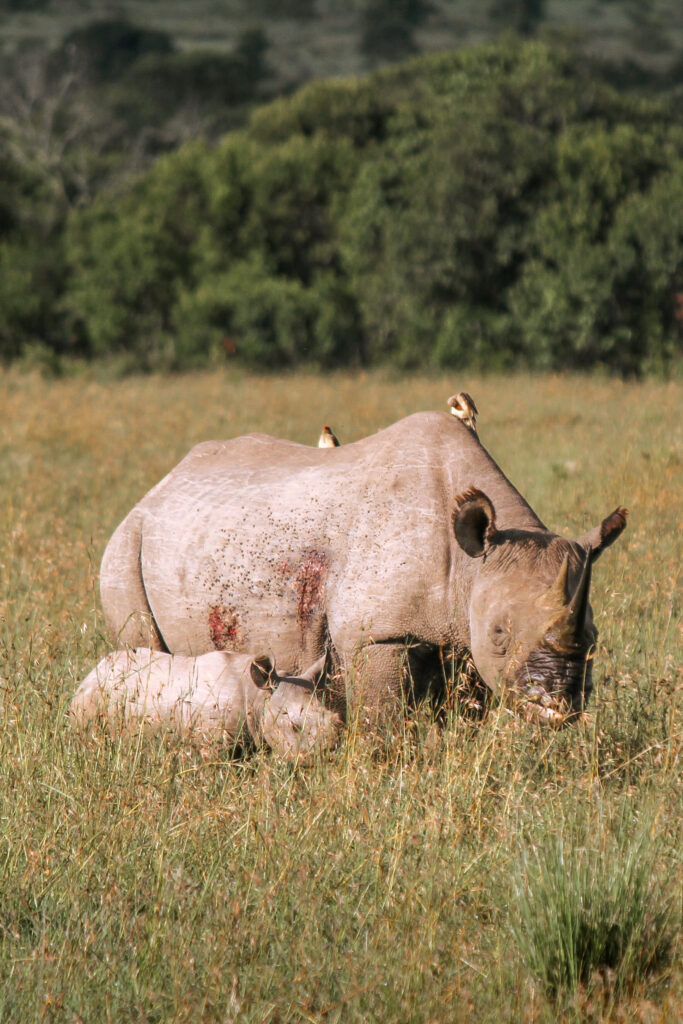
The conservancy is known worldwide as the last place where northern white rhinos live. It is also home to one of the largest populations of black rhinos in East Africa.
💡 Tip: Do not pack your warm clothes at the bottom of your suitcase. On early morning safaris you often leave before sunrise and it can be surprisingly cold in the back of the jeep. Ol Pejeta lies at about 1,800 metres above sea level, so it can cool down considerably, especially in the evening. So be sure to bring a warm jumper or cardigan, even if you are travelling to Kenya during the warm months.
What to do in Ol Pejeta Conservancy?
Go on a jeep safari through Ol Pejeta ⌄
Of course you come to Ol Pejeta for a safari. The big advantage of this area is that it feels less busy than some of the better-known parks such as the Maasai Mara. This gives you more time to watch the animals at your leisure.
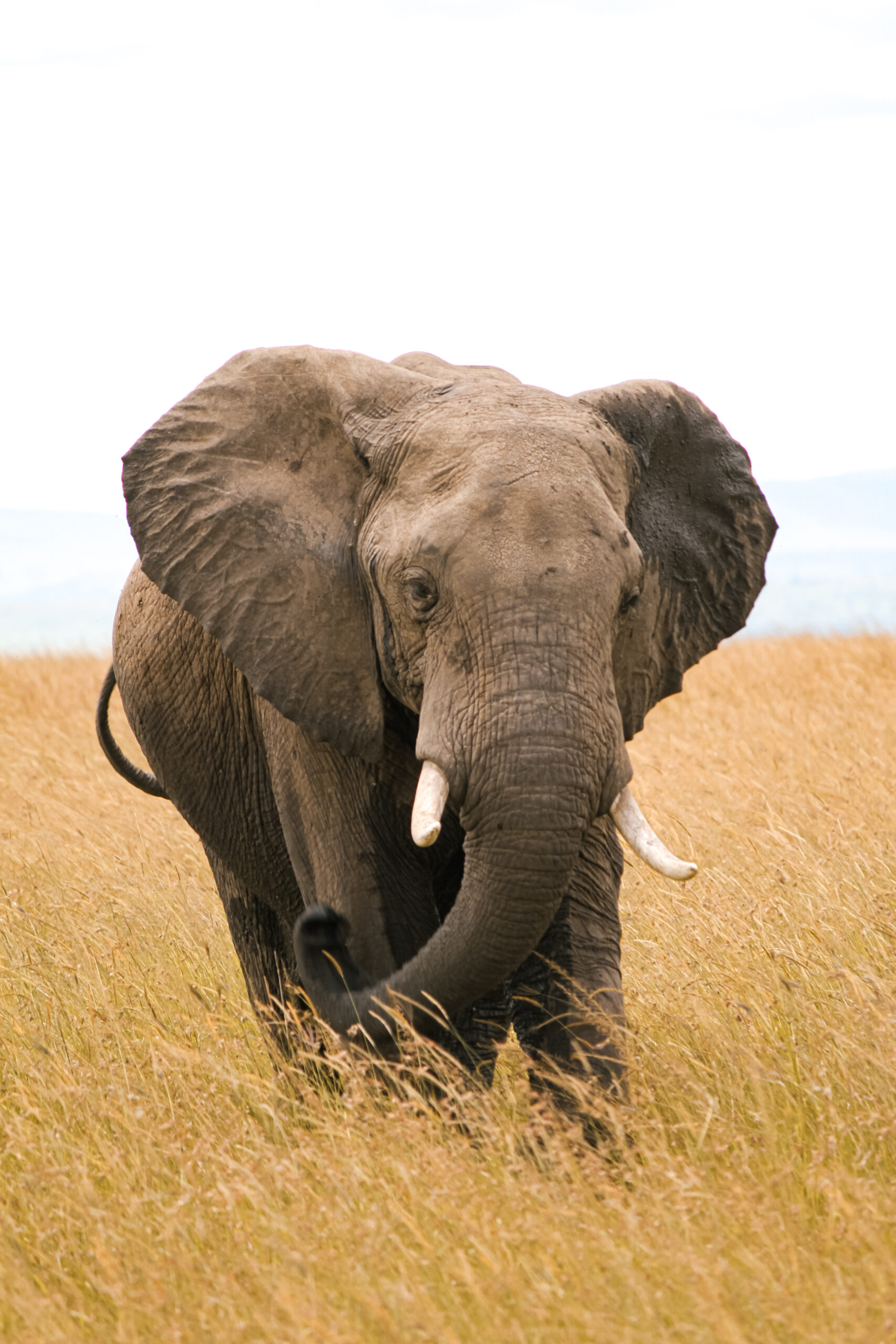
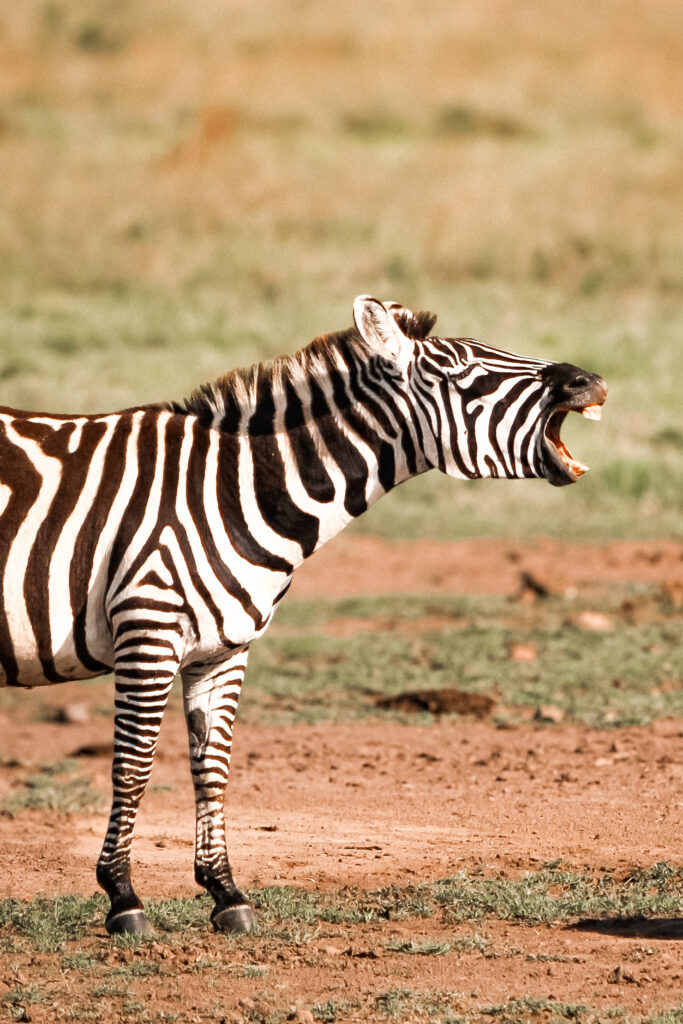
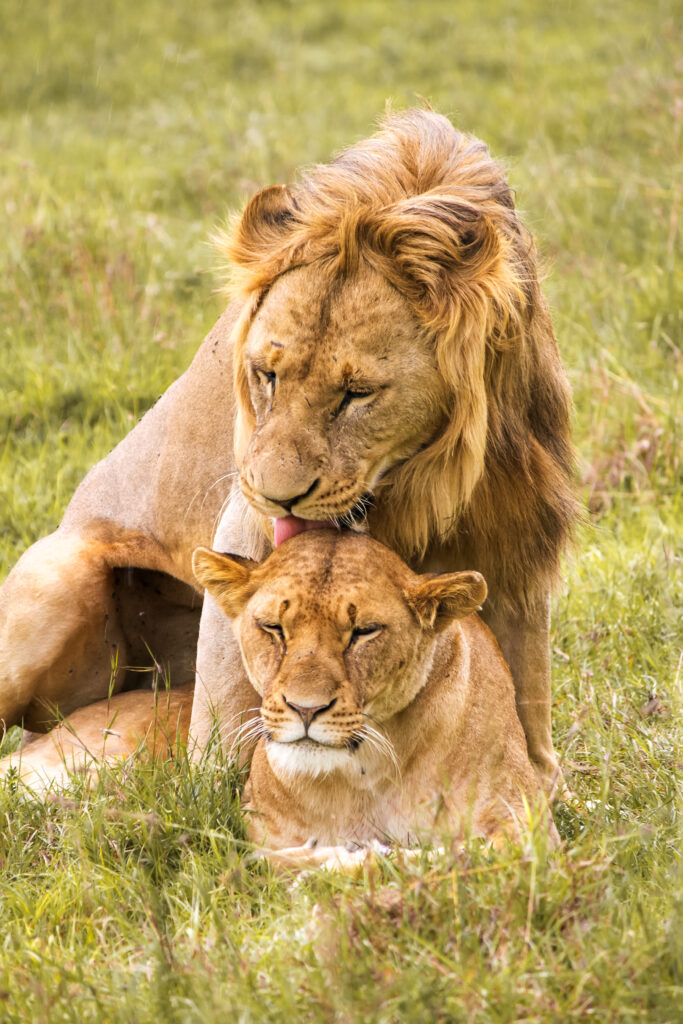
During a safari you have a chance to spot lions, elephants, giraffes, zebras, buffalo, rhinos and various species of antelope, among others. Because the area is well protected, the chance of seeing rhinos here is particularly high.
What struck us is that it was quiet here and very green and wooded! That does make the animals a bit harder to spot, but you are not standing with dozens of jeeps around one animal, so you really get the time to take in the nature.
Plan an early morning safari. The soft morning light gives the most beautiful colours and animals are often more active during the cooler hours of the day.
Visit the last northern white rhinos ⌄
One of the most special experiences in Ol Pejeta is a visit to the last 2 female northern white rhinos, Najin and Fatu. Ol Pejeta is the only place in the world where you can see the last two northern white rhinos. Najin and her daughter Fatu live here under the intensive protection of rangers.
Their story makes a visit to Ol Pejeta extra special. Due to poaching and the loss of their habitat, the population of the northern white rhino has almost completely disappeared. Because Najin and Fatu can no longer produce offspring naturally, a scientific programme is working on developing embryos using frozen genetic material from deceased males. The aim is to eventually bring the subspecies back.
During a visit you learn not only more about these special rhinos, but also about the enormous efforts needed to protect them. The income from tourism helps protect these and other animals living in Ol Pejeta.
Look for chimpanzees at Sweetwaters Chimpanzee Sanctuary ⌄
In the middle of Ol Pejeta lies the Chimpanzee Sanctuary, a refuge for chimpanzees that can no longer return to the wild. The chimpanzees come from various situations, for example from the illegal trade or after being kept as pets. In the sanctuary they get a safe place where they can spend the rest of their lives.
When we heard that you can see chimpanzees in Ol Pejeta, we first wondered what these animals are actually doing in Kenya. Chimpanzees do not occur here naturally at all. Their natural habitat is in the rainforests of West and Central Africa. The Sweetwaters Chimpanzee Sanctuary was established in 1993, after a chimpanzee rescue centre in Burundi had to close because of the civil war. Ol Pejeta opened its doors to the animals and set up the sanctuary together with Kenya Wildlife Service and the Jane Goodall Institute. It is now the only place in Kenya where you can see chimpanzees.
A visit is not only about watching the animals. You also learn about the stories behind the chimpanzees and the threats wild chimpanzees face around the world. That makes it clear why refuges like this are needed and how important it is to combat the illegal wildlife trade.
Go on a night safari in Ol Pejeta ⌄
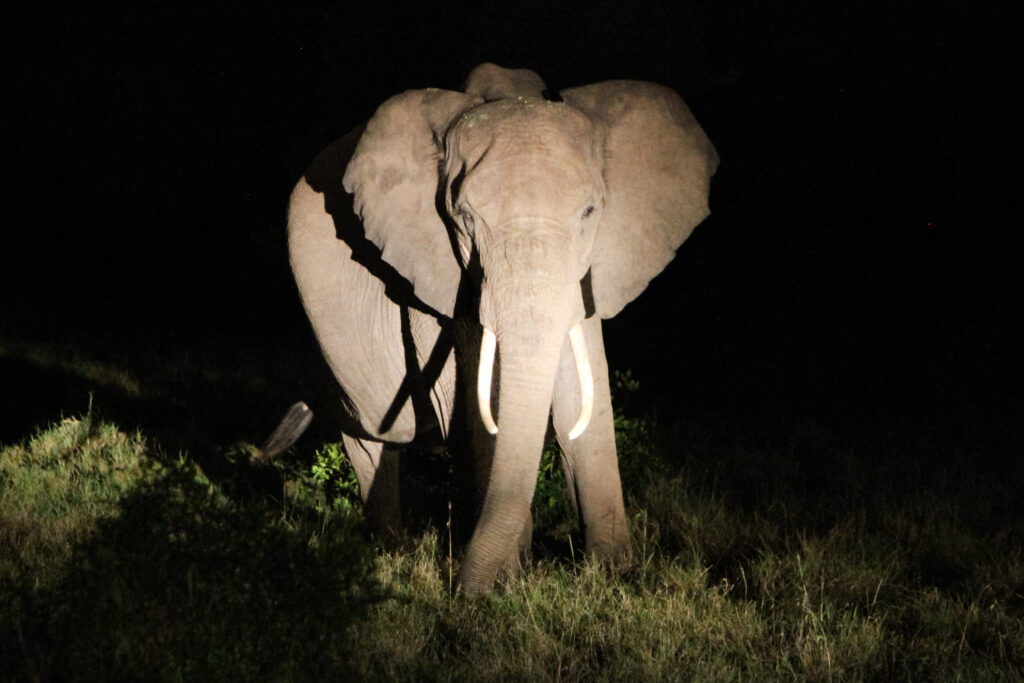
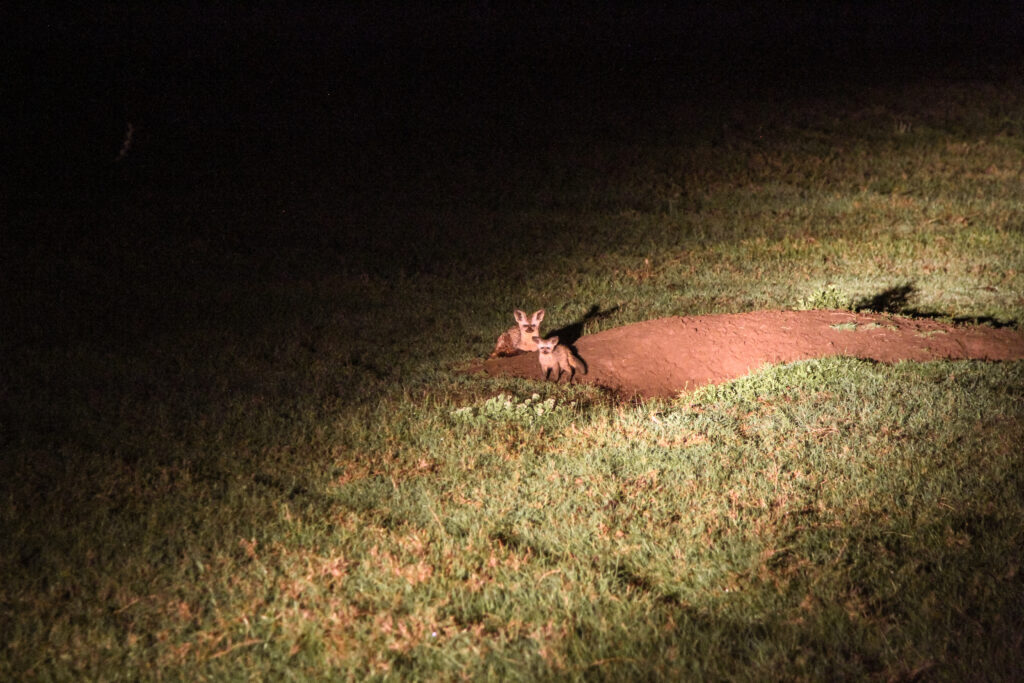
When the sun disappears behind the savannah, Ol Pejeta changes completely. On a night safari you head out with a guide after sunset to discover which animals become active in the dark. With a spotlight you search the surroundings for nocturnal animals that you would rarely come across on a regular daytime safari.
Precisely because you cannot see as far, a night safari is more about listening and paying close attention. You hear sounds from the bush and sometimes only know at the very last moment which animal will appear in the beam of the spotlight. We found that made the whole experience extra exciting. Together with a starry sky above your head, it is a very different experience from a regular game drive.
The night safaris are organised daily and last two hours. There are currently two time slots: from 7.00 pm to 9.00 pm and from 9.00 pm to 11.00 pm. The vehicles are shared and the activity is subject to availability.
💡 Tip: Bring a warm jumper or jacket in the evening. On the open plains of Ol Pejeta it can cool down considerably after sunset.
Day 6-8
Lake Naivasha & Crescent Island
about 4 hours from Ol Pejeta Conservancy to Lake Naivasha
After Ol Pejeta you travel on towards the Great Rift Valley. Along the way the landscape changes again. The high mountains make way for vast valleys and lakes.
Lake Naivasha is a completely different experience from the dry savannahs that Kenya is often associated with. The freshwater lake lies at about 1,900 metres above sea level and is known for the large number of hippos and birds that live here.
We found Lake Naivasha a nice change. After several days of safari, it is lovely not to watch animals only from a jeep for a while, but to discover nature in a different way.
What to do at Lake Naivasha?
Go on a boat safari on Lake Naivasha ⌄
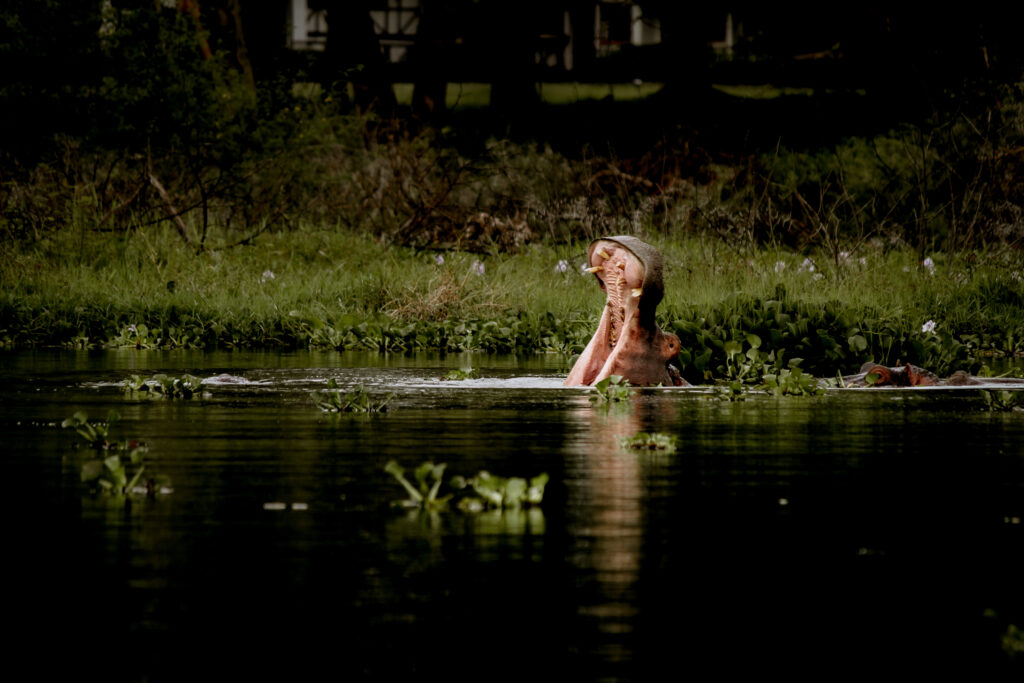
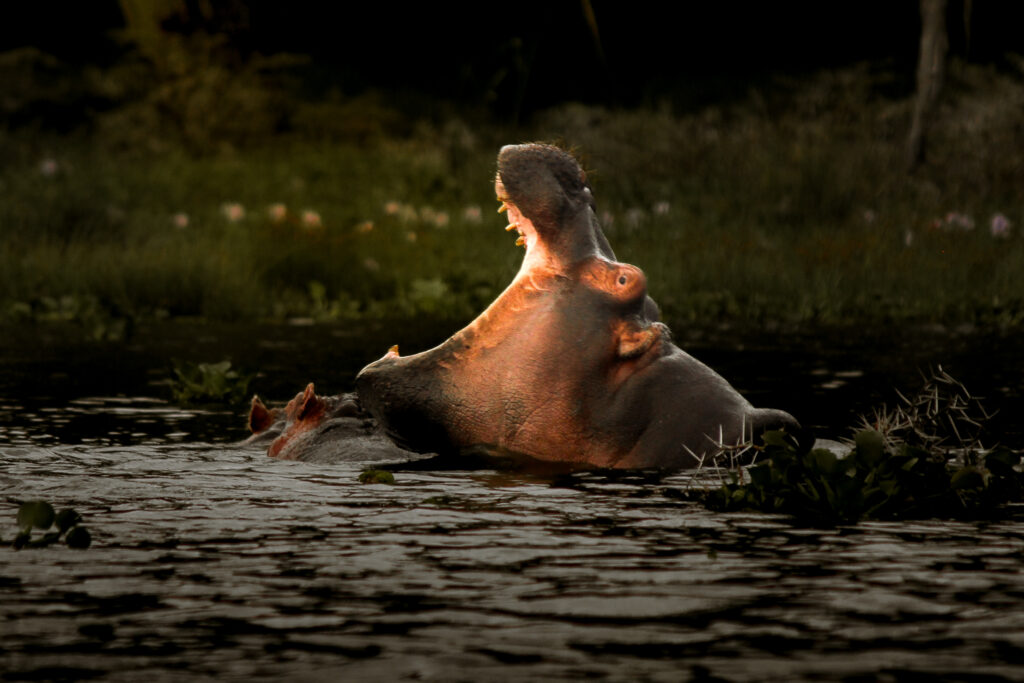
A boat safari on Lake Naivasha is one of the most fun activities in this area. As you cruise slowly across the water, you spot large groups of hippos lying mostly in the water. Sometimes you only see their heads sticking out above the surface, while they occasionally dive under or swim to another spot.
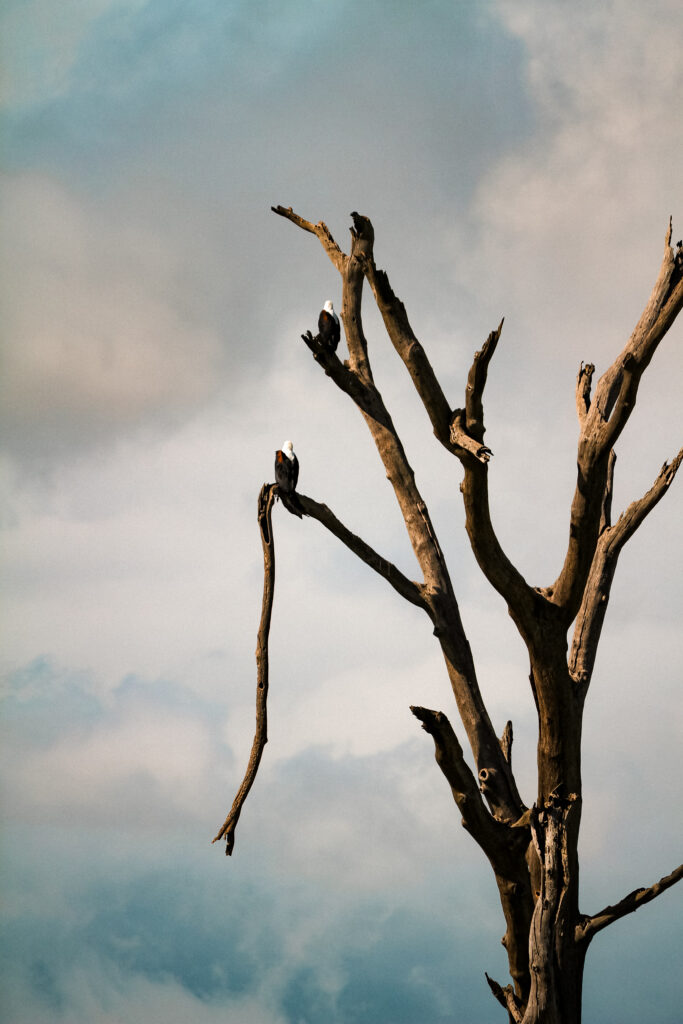
An enormous number of different bird species live around the lake. During the boat trip you regularly see fish eagles, pelicans and colourful kingfishers. With a bit of luck you will see a fish eagle dive from a tree into the water to catch a fish. Precisely because you are on the water, you can see the animals from a completely different perspective than on a safari from a jeep.
💡 Tip: Bring sunscreen, sunglasses and a hat or cap. There is little shade on the water and the sun can be quite strong.
Walk among giraffes and zebras on Crescent Island ⌄
In the middle of Lake Naivasha lies Crescent Island, a small peninsula that you can only reach by boat. As soon as you step off the boat, a very different safari experience begins here: you move around on foot among the wild animals.
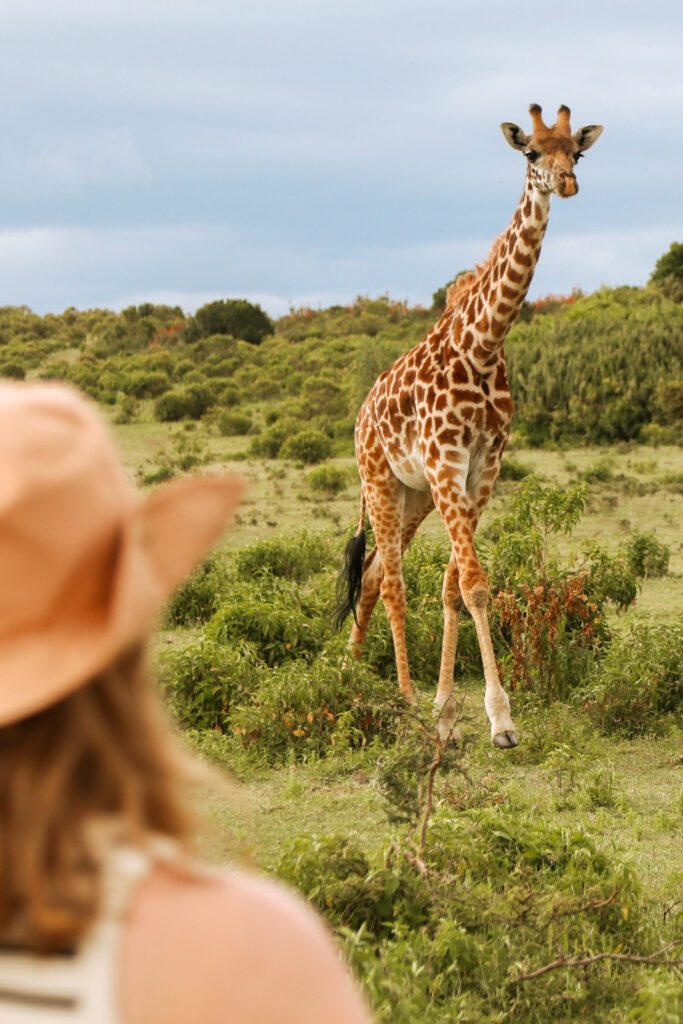
Zebras, giraffes, buffalo, gazelles and various species of antelope live on Crescent Island, among others. There are also lots of birds around the lake. Because there are no large predators such as lions on the island, you can walk safely among the animals here accompanied by a guide. That is exactly what we found so special. On a regular safari you usually sit in a jeep and watch wildlife from the vehicle. On Crescent Island you literally stand on your own two feet among the zebras and giraffes. You can walk at your leisure, while the animals themselves decide how close they come. We especially found the giraffes impressive to see from the ground. They already seem big from the safari jeep, but when you are standing next to them on foot, you really notice how tall they are.
Crescent Island is also a well-known former film location. The landscape around Lake Naivasha was used for scenes from Out of Africa, among others.
💡 Tip: Wear sturdy shoes and bring enough water.
⚠️ Good to know: You are walking among wild animals here. So always stay with your guide and keep enough distance. Never approach animals yourself or try to touch them.
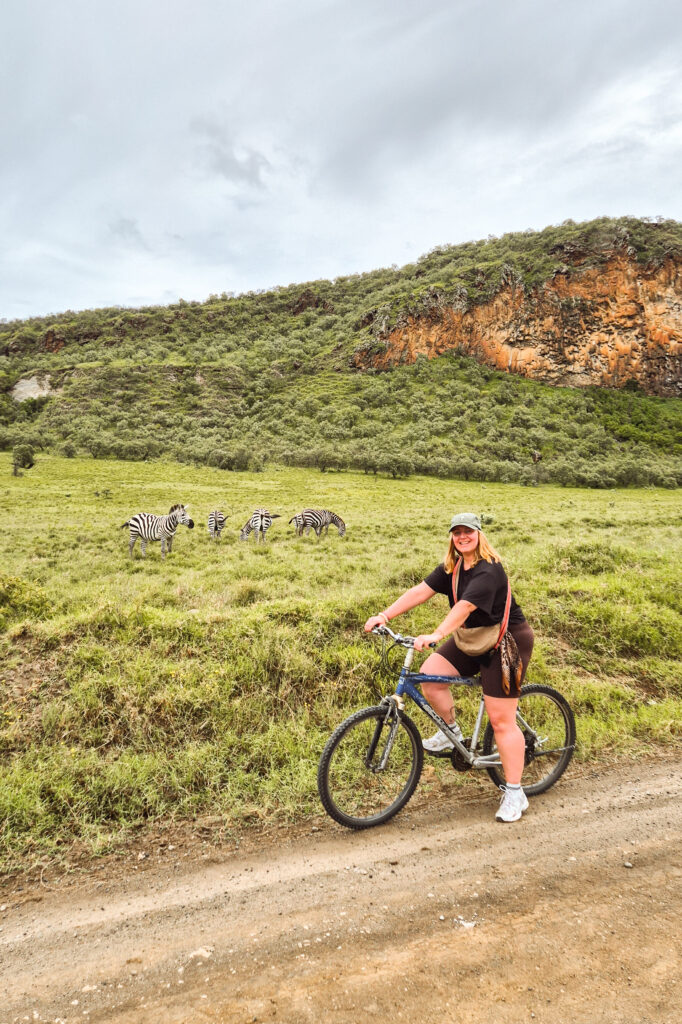
Cycle among zebras in Hell's Gate National Park ⌄
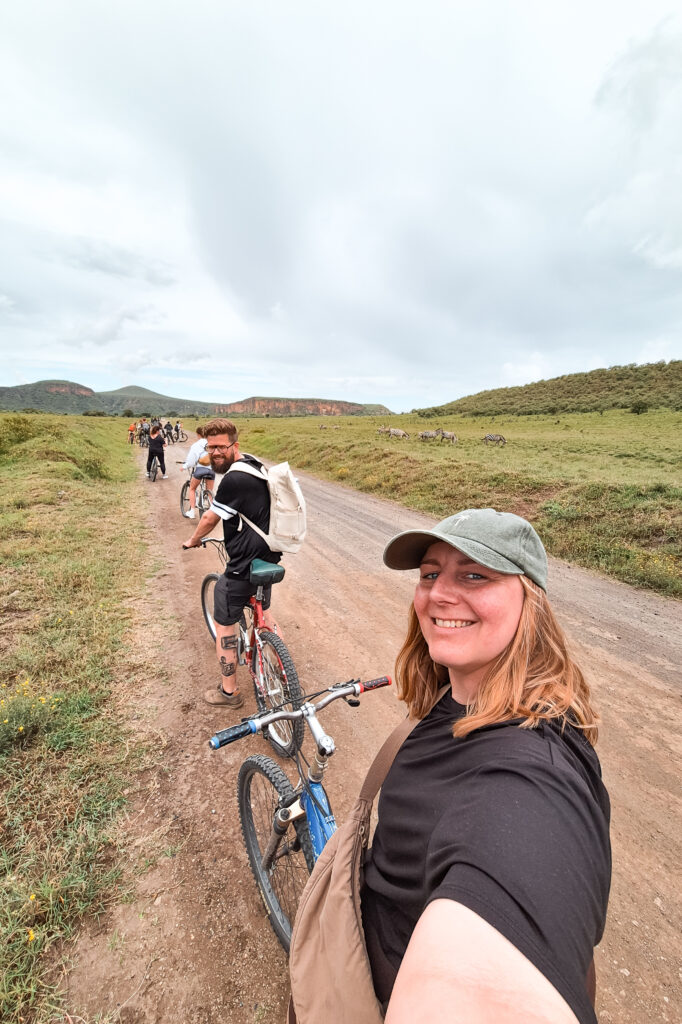
Want to do something active during your round trip through Kenya? Then Hell's Gate National Park is the perfect place. In this national park you can cycle and walk among the wildlife in various places.
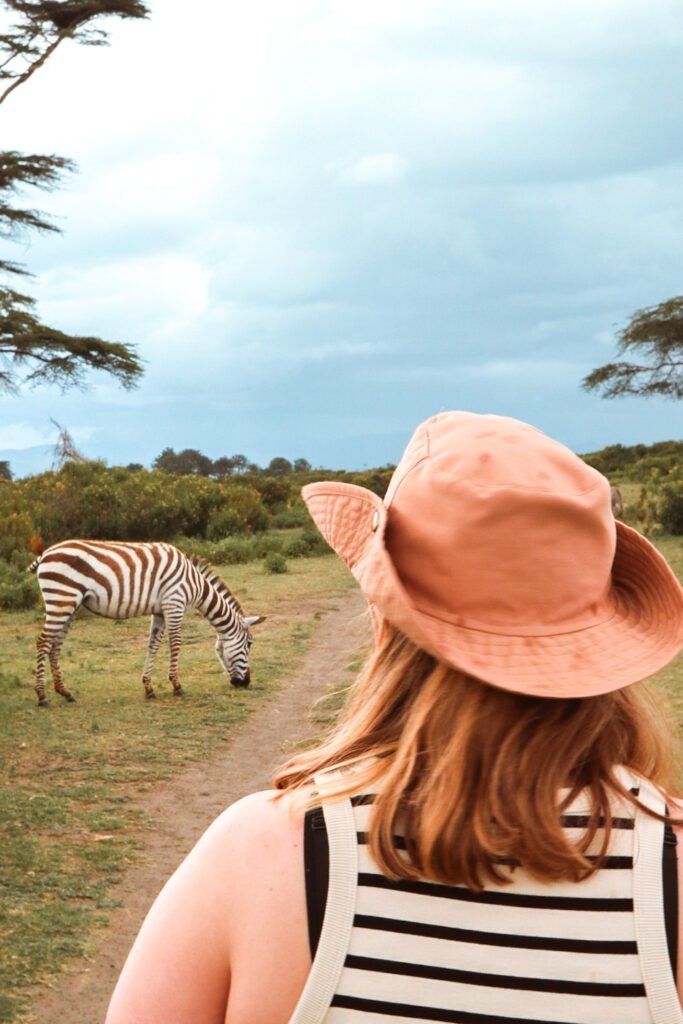
Hell's Gate is close to Lake Naivasha and is known for its impressive rock formations, deep gorges and steep cliffs. You cycle along dusty roads between the rocks, while zebras and giraffes walk around you. This place was also used as a film location for Tomb Raider, among others, and as inspiration for The Lion King, how cool!
Book a guided bike tour, so that you pass the most beautiful spots in Hell's Gate National Park and do not get lost. Along the way you regularly come across zebras, giraffes, buffalo, warthogs and various species of gazelle.
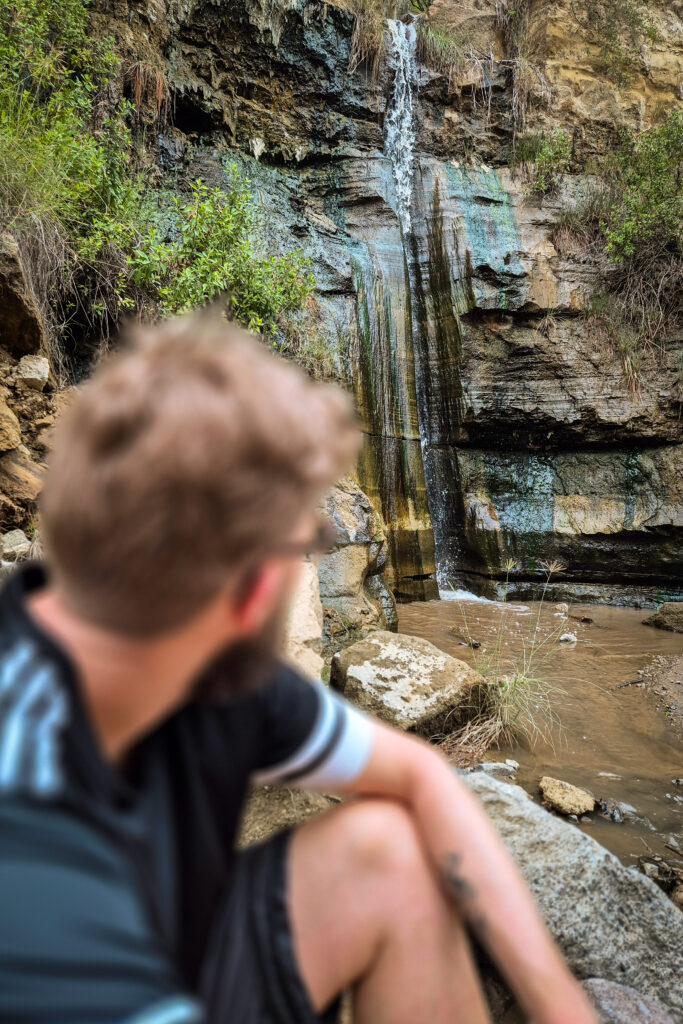
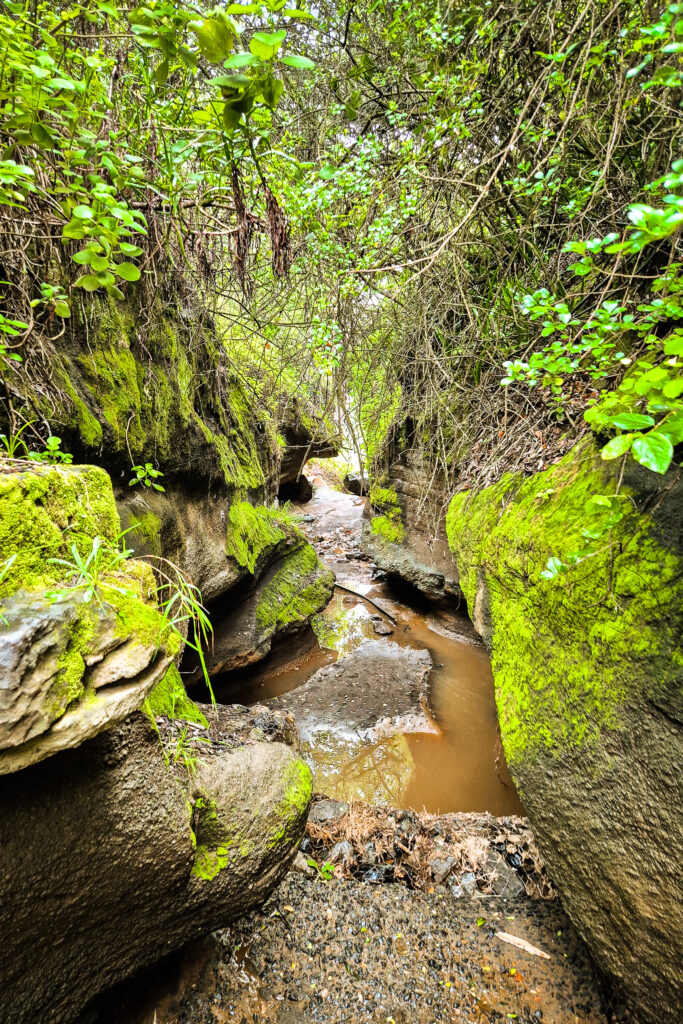
Besides cycling, you can also walk in Hell's Gate. A well-known spot is the Ol Njorowa Gorge, a narrow gorge with high rock walls. The landscape is impressive, but the conditions in the gorge can change. After rain the water level can rise quickly, making certain parts inaccessible. Definitely worth walking through, though!
Hell's Gate is also interesting for climbing enthusiasts. The high rock walls are used for rock climbing and abseiling.
💡 Tip: Start your visit early in the day and wear sturdy shoes. It can get quite hot during the day, and with an early start the conditions for cycling are often more pleasant.
Day 8-11
Maasai Mara National Reserve
about 5 hours from Lake Naivasha to the Maasai Mara
After Lake Naivasha you travel on to perhaps the best-known safari destination in Kenya: the Maasai Mara. The route there is an experience in itself. You drive through the rolling landscape of the Great Rift Valley and along the way see more and more traditional villages, herds of cattle and vast grasslands. On arrival in the Maasai Mara the landscape changes completely. The endless savannah stretches out in front of you and you immediately understand why this area is world-famous. The chance of seeing large numbers of wildlife here is enormous. Together with Tanzania's Serengeti, the area forms one of the most important ecosystems in the world.
For us, the Maasai Mara was one of the highlights of the round trip through Kenya and a destination that had been on our bucket list for a very long time.
⚠️ Good to know: The Maasai Mara is popular and therefore also one of the busier safari destinations in Kenya. If you travel in the high season (July to October), that is when the Great Migration takes place. Very special to experience, but also overrun with tourists and unaffordable. In the low season (April and May) there is a chance of rain, but it is the most affordable period. We went in April ourselves and did not have any rain in the Maasai Mara.
What to do in the Maasai Mara?
Go on several jeep safaris through the Maasai Mara ⌄
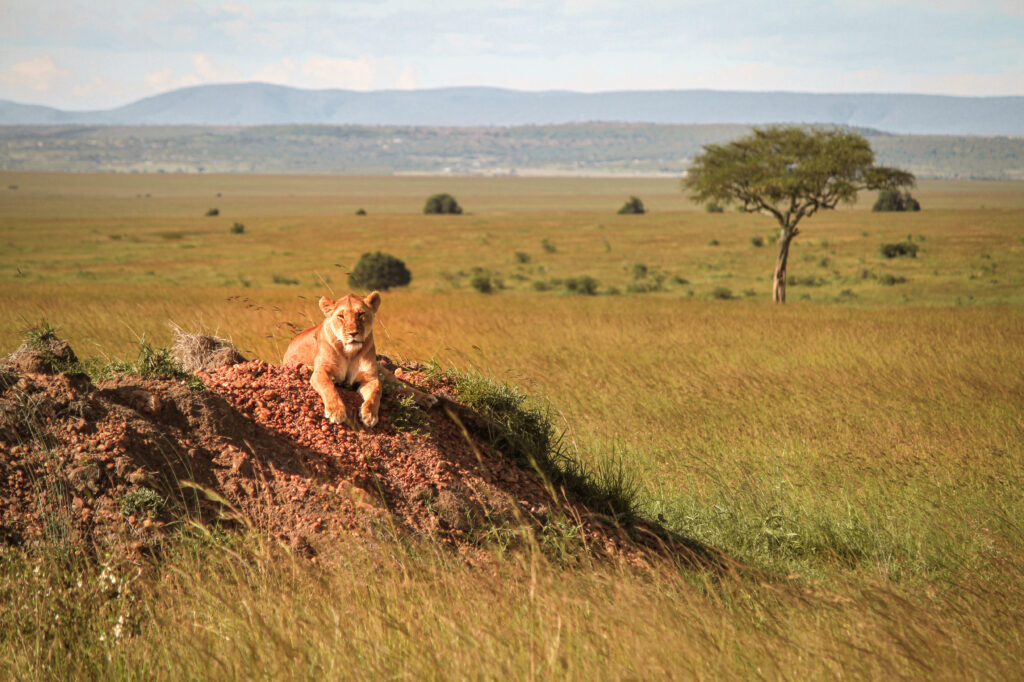
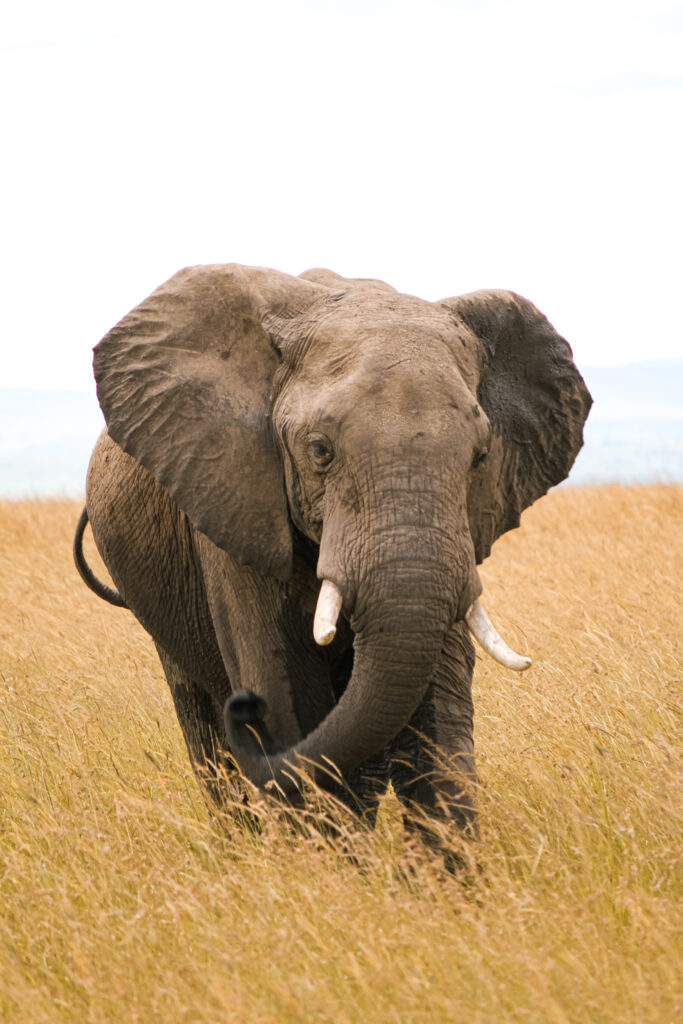
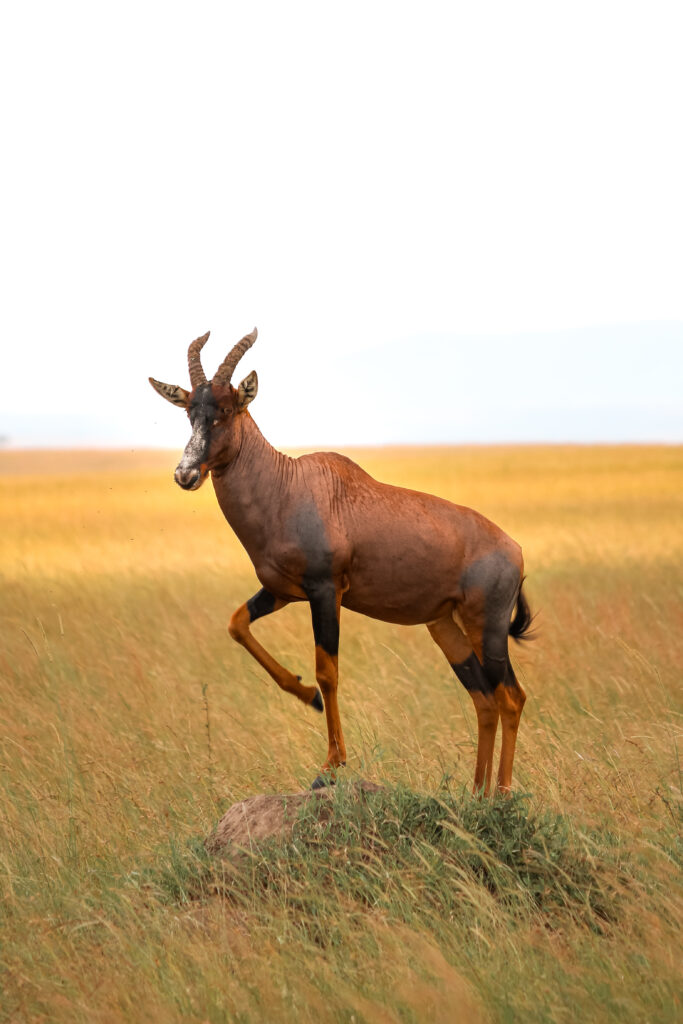
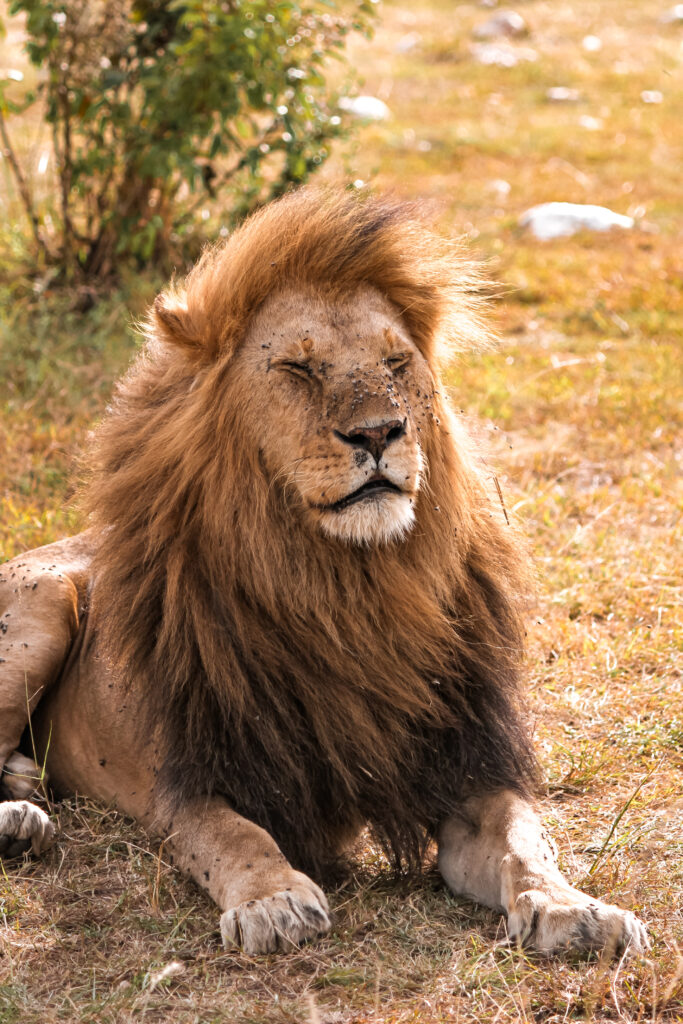
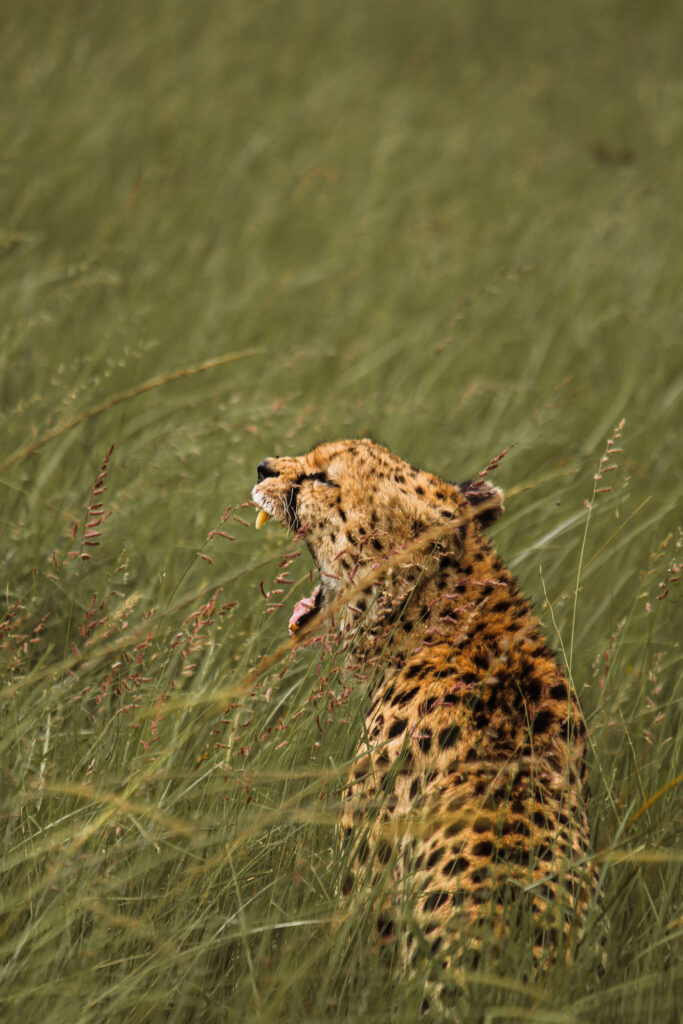
The main reason to travel to the Maasai Mara is of course a safari. The area is known for its great diversity of animals and the chance to spot the Big Five. During our safaris we spotted lions, leopards, cheetahs, elephants, buffalo, topis, giraffes, hyenas, hippos, crocodiles, jackals and more.
But remember, a safari in the Maasai Mara is not just about ticking off animals. The most beautiful moments often happen unexpectedly when you wait patiently: a lion walking calmly past the jeep or a herd of elephants crossing the road. It is a large, vast area, so set aside several days for it.
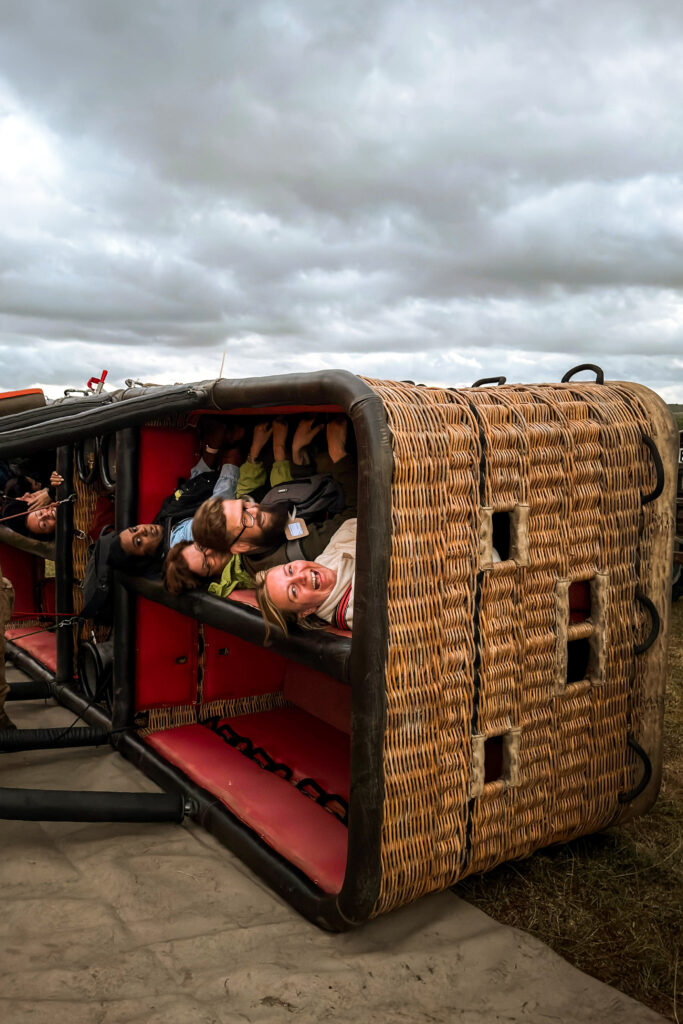
Hot air balloon ride and bush breakfast in the Maasai Mara ⌄
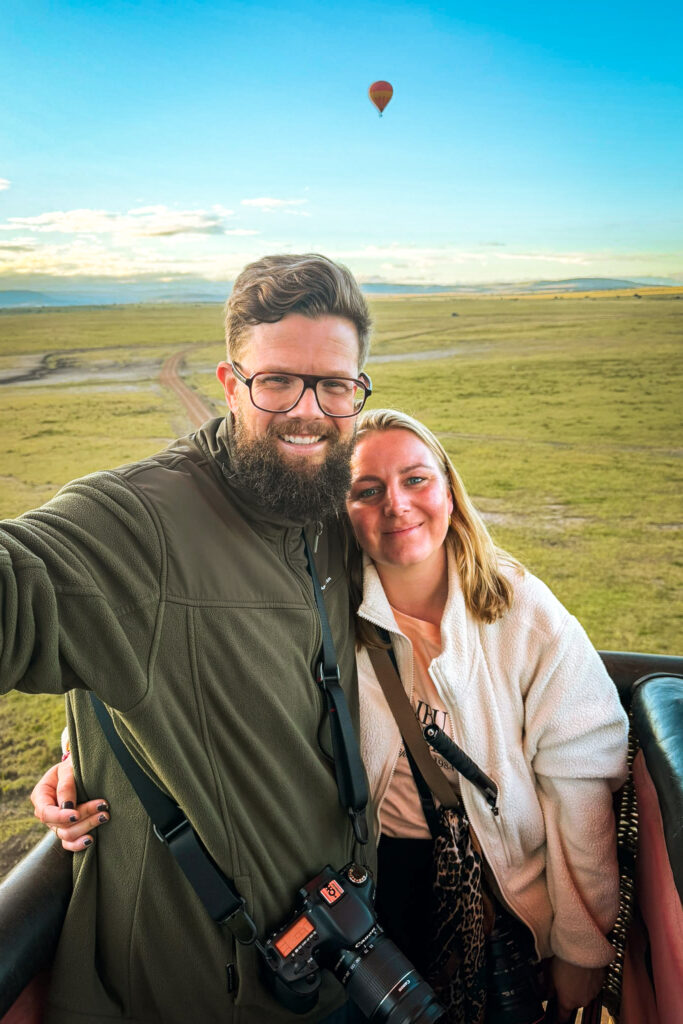
A hot air balloon ride over the Maasai Mara was a dream come true for us! Goosebumps from head to toe!
You leave early in the morning: before the sun rises, you are picked up from your accommodation and taken to the launch site. In the dark you see the hot air balloon slowly being prepared while the first colours appear on the horizon. Then it is time to climb in and float away. You get a completely different perspective on the Maasai Mara. It is breathtaking to see the vast grasslands, small rivers and herds of animals moving across the savannah from the air. A serene calm comes over you, along with the renewed realisation of how beautiful the world is.
You cannot determine the exact route of the balloon in advance. The wind decides where the balloon goes. That makes every flight different, but it also means there is no guarantee that you will see certain animals or places from the air.
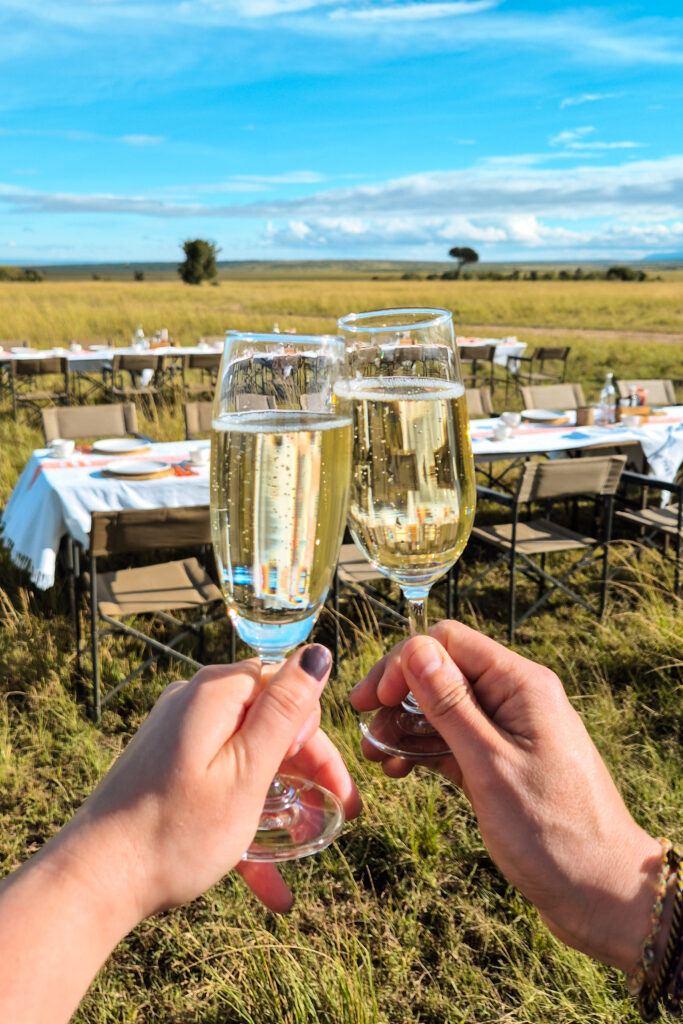
After landing, the experience ends with breakfast in the middle of nature. A long laid table, a buffet, champagne and even a toilet are set up on the savannah, with a view over the landscape. The perfect end to a special morning.
A hot air balloon ride is not cheap; it costs on average around €400 to €500 per person.
💰 Budget tip: A hot air balloon ride is a hefty amount, but if you want to choose one special excursion during your trip to Kenya, let it be this one. Personally, we thought this was perhaps the most unforgettable experience ever!
End your safari day with a sundowner ⌄
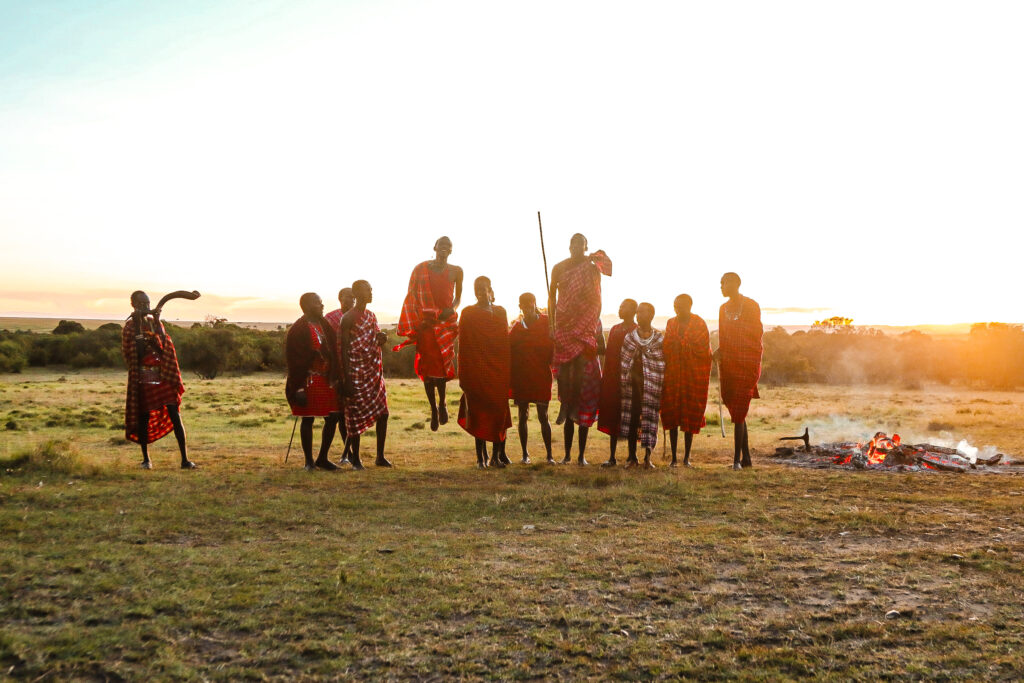
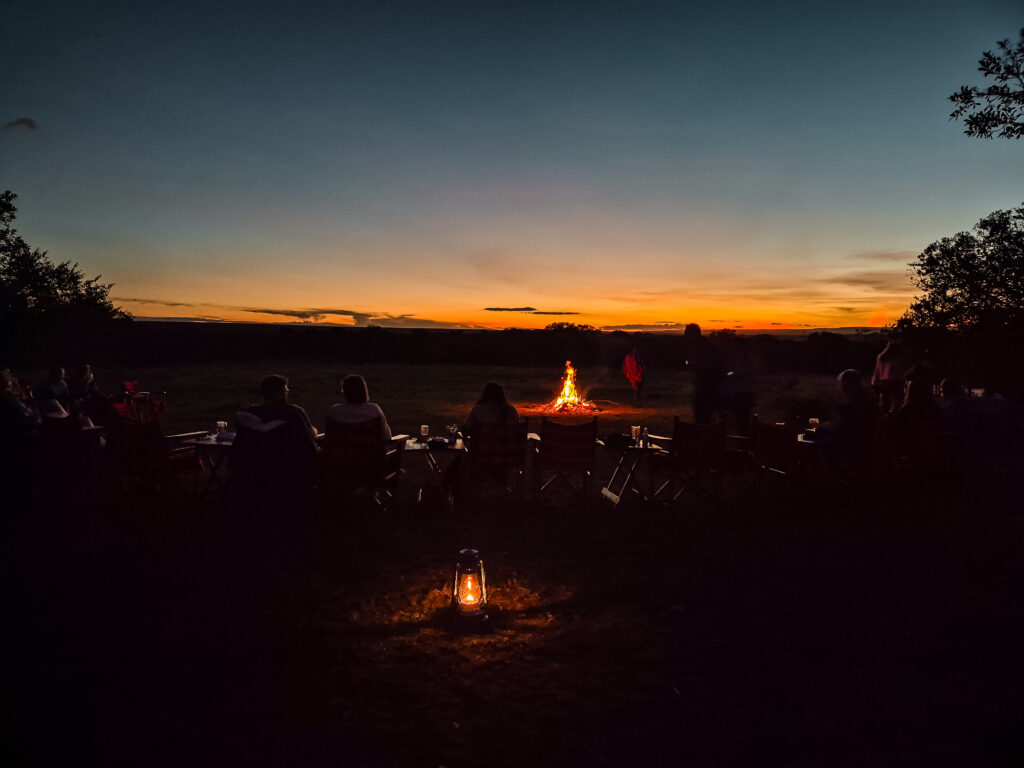
After driving through the Maasai Mara for hours, it is lovely to step out of the jeep for a while at the end of the afternoon. For a sundowner you and your guide look for a beautiful spot to watch the sunset. The jeep is parked with a view over the savannah and in the meantime drinks and small snacks are set out.
As the sun slowly disappears behind the horizon, the landscape changes colour. The temperature becomes more pleasant and most safari vehicles start heading back to their accommodations. You sit still for a moment and look out over the endless grasslands where you saw so many animals that day. Sometimes a traditional dance is performed and a campfire is built. We found this a lovely end to a long safari day.
💡 Tip: Ask your safari organisation in advance whether a sundowner is included in the trip or can be booked as an extra activity. The details differ per lodge.
Day 11-14
Diani Beach
depending on the route you choose.
After all the safari adventures, it is time to relax in Diani Beach. From the Maasai Mara you can get here in two ways. By plane: you fly from the Maasai Mara area to the coast of Kenya. By train: you first drive from the Maasai Mara back to Nairobi and take the train to Mombasa the next day. From Mombasa you take a transfer to Diani Beach.
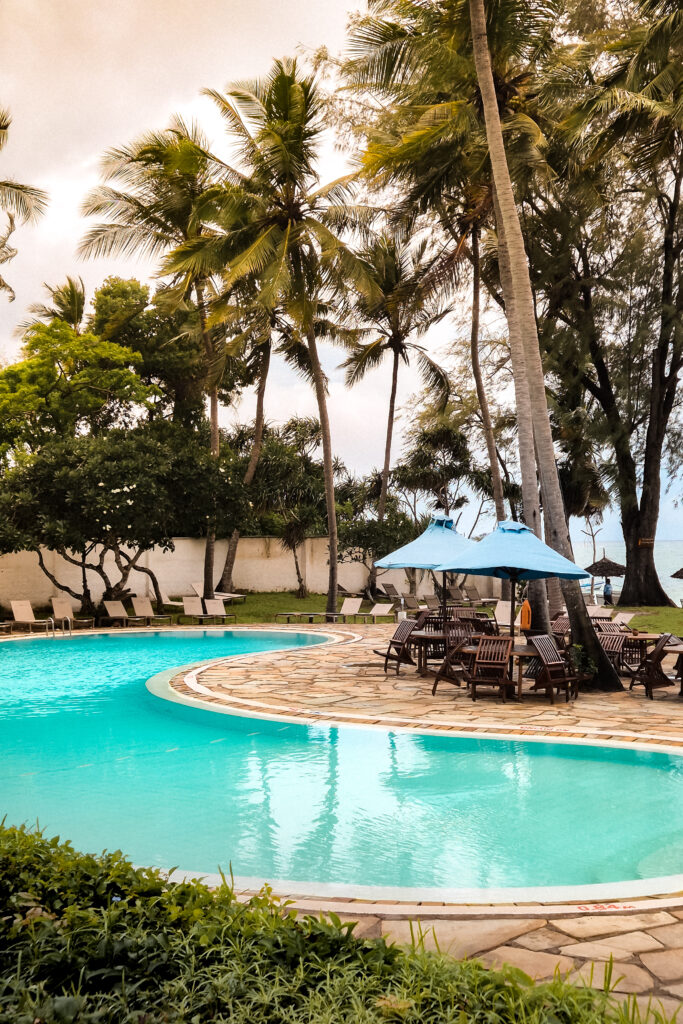
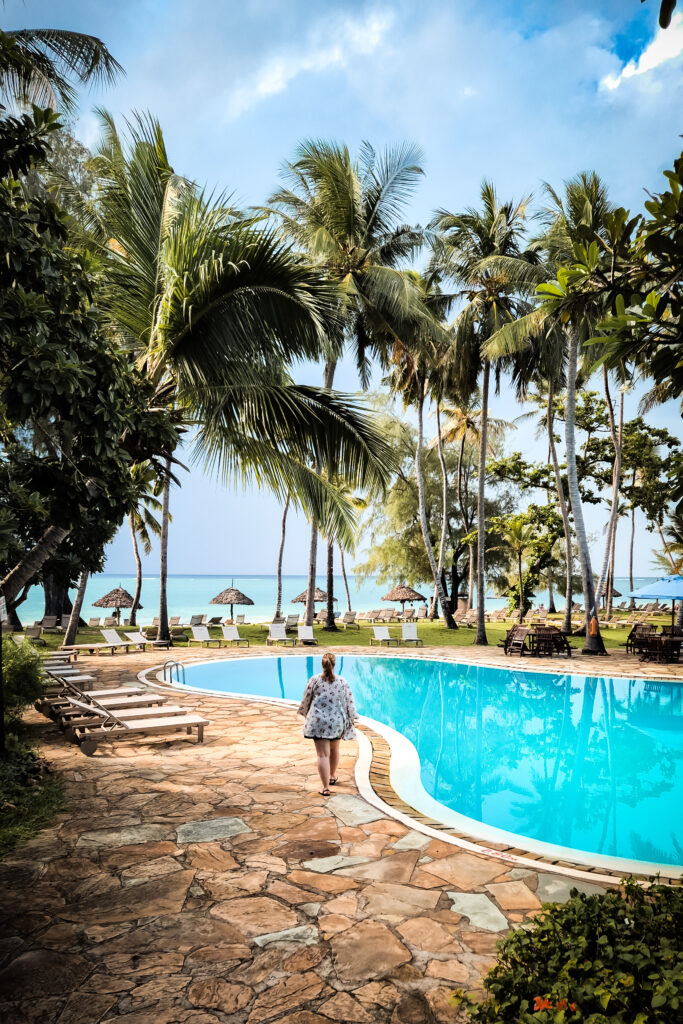
Diani Beach lies on the south coast of Kenya and is known for its white sand, clear blue water and swaying palm trees. After several early safari mornings, this is the perfect place to slow down the pace for a while.
We found the transition took some getting used to, but the change is lovely! The day before you were standing among elephants and lions on the savannah, and now you are standing with your feet in the Indian Ocean.
⚠️ Good to know: When you first step off the train or plane, you walk into a wall of heat. Diani Beach has a tropical climate with high humidity all year round. Especially combined with temperatures of around 28–31 °C, it can feel quite hot and muggy during the day.
What to do in Diani Beach?
Relax on Diani Beach ⌄
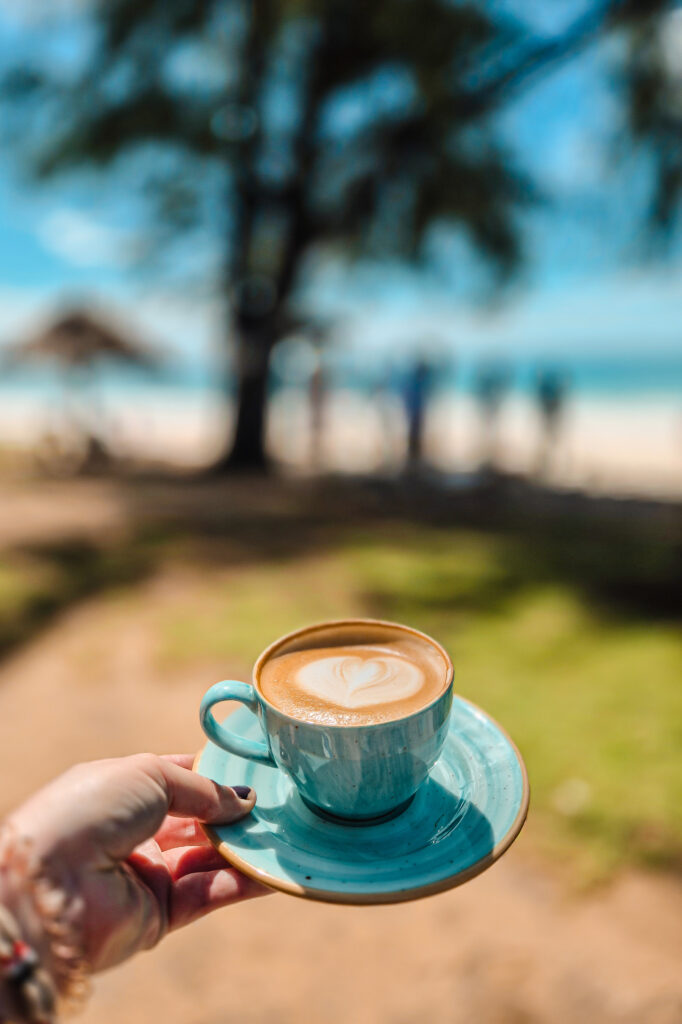
Diani Beach is above all a place where you do not have to do anything for a while. Walk along the kilometres-long beach, swim in the sea or enjoy a drink with a view of the ocean. Thanks to the white sand and palm trees, the coast feels very different from most African destinations.
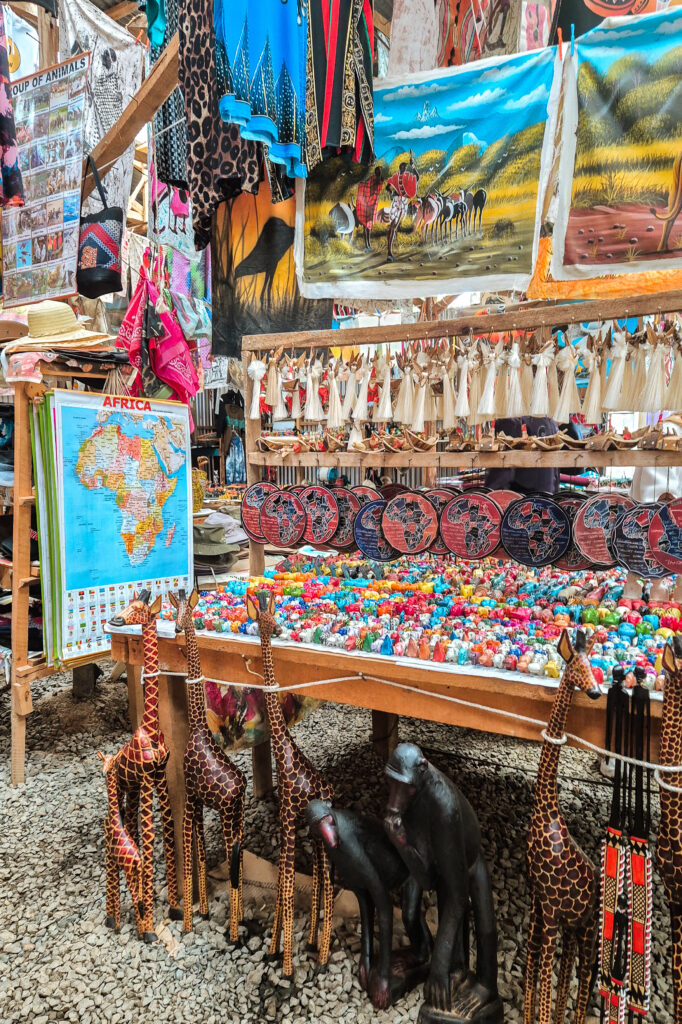
⚠️ Good to know: Do not expect complete peace and quiet all day on Diani Beach. Especially on busy stretches of the beach you can regularly be approached by sellers. If you do not want to buy anything, end the conversation straight away. Interested in buying something? Haggle hard first! Want to lie on the beach in peace? Then choose the stretch of beach at your accommodation.
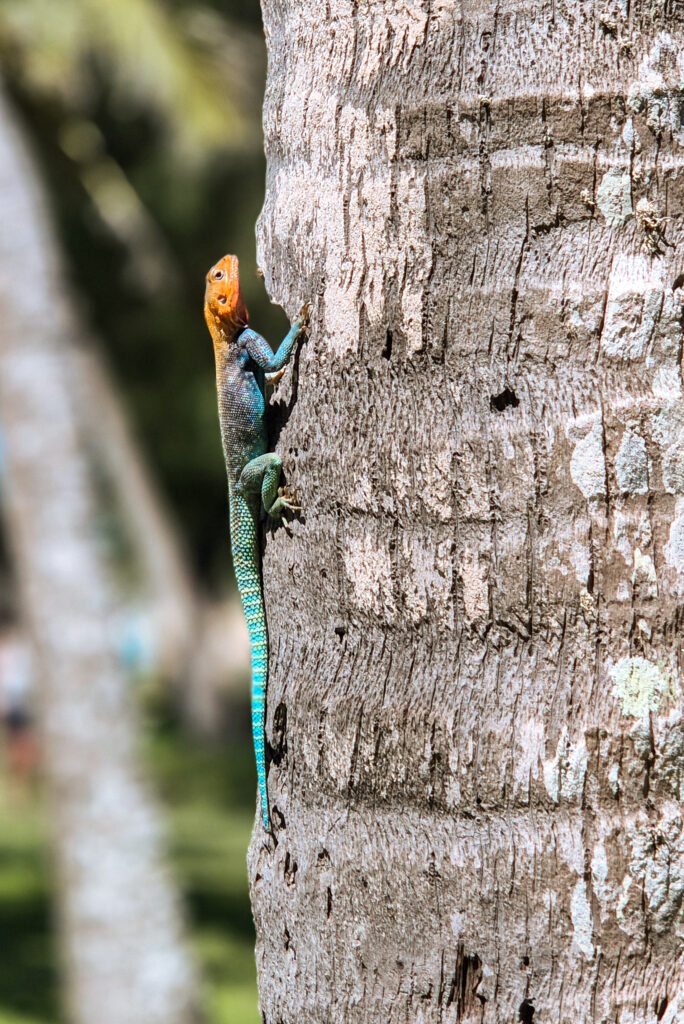
Go on a snorkelling trip to Kisite-Mpunguti Marine Park ⌄
Off the coast of Diani lies one of the best-known places to snorkel on the Kenyan coast: Kisite-Mpunguti Marine Park. The protected marine area lies near the border with Tanzania and consists of coral reefs, small islands and clear tropical water.
The excursion usually starts with a boat trip from the coast. Once you arrive at the marine park, the boat drops anchor and you can get into the water to snorkel. Below the surface a completely different world awaits, with colourful tropical fish, coral and other marine life. With a bit of luck you will also come across dolphins during the boat trip.
Many organised excursions combine the marine park with a visit to Wasini Island. After snorkelling you often sit down for lunch on the island. Fresh fish and seafood are often on the menu, so the excursion is not only about the snorkelling.
⚠️ Good to know: Underwater visibility depends on the weather, the sea and the season. Seeing dolphins can never be guaranteed either. So book this excursion for the combination of the boat trip, the marine park and the snorkelling, and see dolphins as a nice bonus.
💰 Budget tip: A snorkelling trip costs on average around €50 to €100 per person, depending on the provider, the group size and what is included in the excursion. So do not just compare the price, but also check whether transport, lunch, entrance fees and snorkelling gear are included.
💡 Tip: Bring swimwear, sunscreen and a towel. The sun can be quite strong on the water. If you have a waterproof phone case or an underwater camera, this is a good place to bring it.
Kayaking on the Kongo River ⌄
A nice way to discover the area around Diani Beach is a relaxed kayak trip on the Kongo River. The river runs through an area of mangroves and flows into the Indian Ocean. You paddle calmly across the water as you glide between the mangrove trees.
Because a kayak moves almost silently across the water, you have plenty of time to look around. Along the way you can spot various birds and see how the mangroves grow with their roots straight out of the water. The pace is slow, so the trip is mainly about nature and tranquillity.
You can also explore the Kongo River by traditional boat. Kayaking just gives you a bit more freedom, and you are literally right in the middle of the mangroves. Especially if you like to be active during your beach holiday, this is a nice change.
💡 Tip: Plan your kayak trip around the right tide. The water level affects the conditions on the river. Ask about the best time of day when you book.
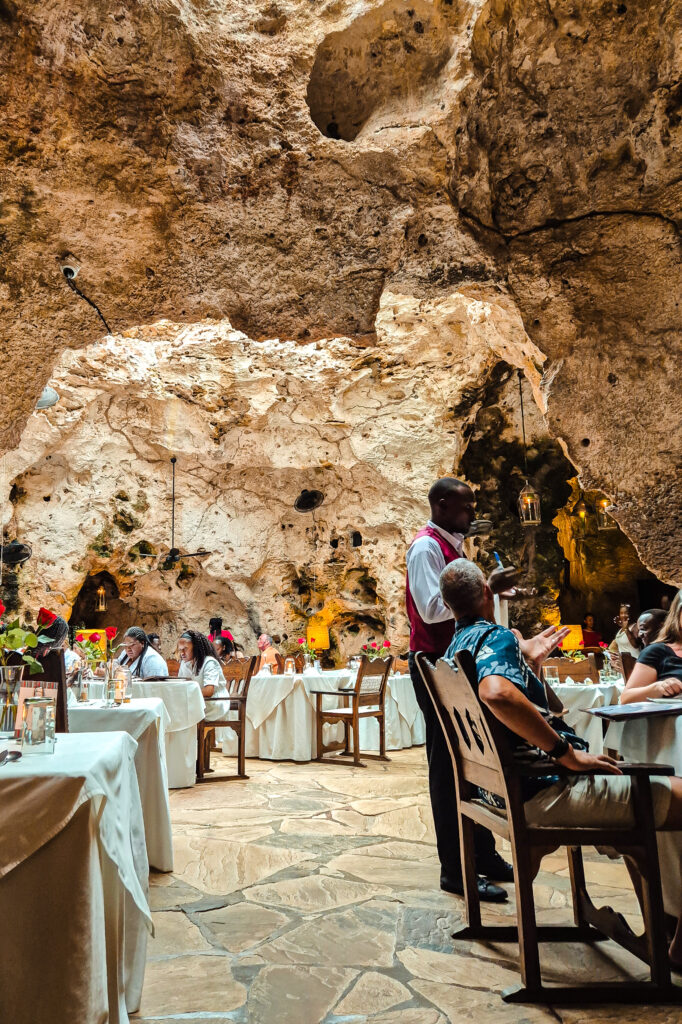
Dine in a natural cave at Ali Barbour's Cave ⌄
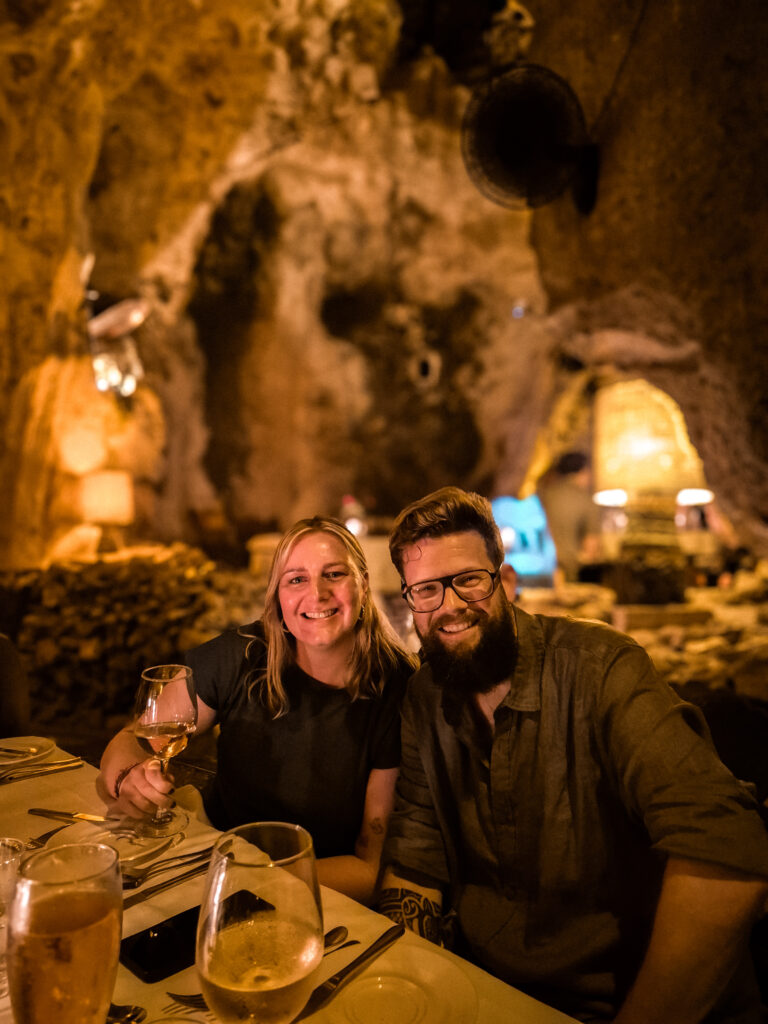
A special place to eat during your stay in Diani Beach is Ali Barbour's Cave Restaurant. As the name suggests, the restaurant is located in a natural cave.
The cave consists of several interconnected spaces and, according to the owners, is estimated to be between 120,000 and 180,000 years old. There are natural openings in the roof, so you can look up at the starry sky during dinner. In the evening the cave is lit with candles, making the natural surroundings part of the dining experience.
The menu mainly features international dishes with fish, meat and vegetarian options. We had a good piece of meat and a vegetarian risotto. So you can come here for an extensive dinner, but you also pay for the special location. All in all it is reasonably priced and comparable to Dutch prices. It is a recommendation if you want to do something special one evening during your stay in Diani.
⚠️ Good to know: Booking is advisable. The restaurant works with reservations and has specific conditions, including a minimum of two courses per person.
Day 14-15
Back to Nairobi
flight from Ukunda/Diani Beach to Nairobi
At the end of your trip you fly back to Nairobi for the return flight to the Netherlands. Depending on your flight times, you can spend one last afternoon or evening in the capital.
How do you get to Kenya?
Kenya lies in East Africa and is easy to reach from the Netherlands and Belgium. Most travellers fly to the capital Nairobi, home to the international Jomo Kenyatta International Airport.
From Amsterdam you can fly directly to Nairobi with Kenya Airways or KLM. The flight takes on average about 8.5 to 9 hours. An alternative for travellers from the south of the Netherlands and Belgium is via Brussels. Brussels Airlines flies directly to Nairobi, with a flight time of about 9 hours and 15 minutes. There are currently no direct flights from Düsseldorf to Nairobi; you will need a connection there.
Once you arrive in Nairobi, the airport can feel quite busy and chaotic. Through Kipanga Adventures we had a VIP service arranged, where someone met us straight after the gate and accompanied us through the checks. This made our arrival super calm and smooth, so we definitely recommend it!
How do you get around Kenya?
There are several ways to travel through Kenya. Which option suits you best mainly depends on your budget, travel experience and how much freedom you want.
Round trips with a driver and guide
The most popular way to discover Kenya is with a private driver/guide. This is also the option we recommend for a first trip to Kenya.
A driver knows the roads, knows where the animals are and can help you spot wildlife during safaris. Especially during safaris you notice how much difference an experienced guide makes.
For the first half of our trip we travelled with a driver/guide who took us from Nairobi to various nature reserves. We also used the train and a domestic flight to travel to the coast.
Driving yourself in Kenya
Renting a car yourself is possible, but it does require good preparation. Especially outside the cities the roads are poor, and during safaris you need to know how to drive through the parks, and you are not allowed to drive everywhere yourself. In addition, people drive on the left in Kenya and some stretches can be very busy and dangerous.
Public transport in Kenya
The best-known form of public transport are the matatus. These are local minibuses used mainly by residents. It is a cheap way to travel and a special cultural experience, but less comfortable and less predictable than travelling with a driver.
⚠️ Good to know: Especially in the evening and at night, it is wiser not to simply travel by local public transport on your own. Ask your accommodation which transport option they recommend for your route. When travelling by public transport, keep your phone, camera and wallet close to you, especially at busy bus stations and when getting on and off. Preferably carry your bag in front of you and do not leave valuables visible.

When is the best time to visit Kenya?
Kenya can be visited all year round, but the best time to travel depends on what you want to see during your trip. The country has different climate zones, so the weather can vary greatly by region.
The most popular period for a safari in Kenya runs from June to October. This is the dry season and therefore a very good time to spot wildlife. Because less water is available, animals gather around waterholes more often. The famous Great Migration also often takes place in the Maasai Mara between July and October.
The downside of this period is that it is also the busiest and most expensive time. Accommodations around the Maasai Mara in particular can fill up quickly.
The months of January to March are also considered a good time to travel. The weather is often dry and warm and there are fewer tourists than in the high season.
We travelled in April ourselves, during the short rainy season. Although we had doubts beforehand about whether the weather would spoil things, it turned out to be much better than expected. The showers were usually short and actually made for a beautiful green landscape.
💰 Budget tip: Are you travelling outside the high season, for example in April, May or November? Then accommodation prices are often considerably lower and the national parks are quieter.
⚠️ Good to know: During the rainy season it can be harder to spot animals because the grass is taller. On the other hand, nature is at its most beautiful and you sometimes feel like you have the savannah all to yourself.
Money and payment in Kenya
The official currency of Kenya is the Kenyan shilling (KES).
In tourist areas, hotels and larger restaurants you can often pay by debit or credit card. Still, cash remains handy for smaller expenses, tips and local shops.
Tipping is important in Kenya. Drivers, guides and accommodation staff often count on a tip to supplement their income.
💡 Tip: Bring several bank cards and keep them spread across your luggage. We always do this on long-haul trips, so you are not left without money if a card does not work or gets lost.
Internet and a SIM card in Kenya
A good internet connection is handy during a round trip. Especially when you want to stay in touch on the road, need navigation or want to share your most beautiful safari moments.
Many travellers choose a local SIM card or eSIM. We usually get our eSIM from AirAlo, and so far we have always had perfect coverage with it. With the code 'Rowan7477' you get € 3 off!
💡 Tip: Install your eSIM before you leave. As soon as you land you have internet straight away and do not have to look for a shop at the airport.
Visa for Kenya
Dutch and Belgian travellers need an electronic travel authorisation to enter Kenya.
You apply online in advance via the official system. Always check the current requirements before you leave, as rules can change.
⚠️ Good to know: Make sure your passport is still valid for long enough and that you have your documents available both digitally and offline.
Vaccinations and health
No standard vaccinations are mandatory for Kenya when you travel from the Netherlands, but various vaccinations are often recommended.
Many travellers seek advice about DTP, hepatitis A, yellow fever (depending on your route) and typhoid.
Malaria also occurs in parts of Kenya. Whether you need malaria tablets depends on your route, the length of your trip and your personal situation. We did take malaria tablets suitable for this trip.
For personal advice you can go to a Vaccinatiepunt near you.
💡 Tip: Always bring a small travel first aid kit, including ORS, plasters, paracetamol, anti-diarrhoea tablets and insect repellent with DEET.
⚠️ Good to know: There are currently Ebola outbreaks in Uganda and the Democratic Republic of the Congo. There is currently no Ebola outbreak in Kenya. If you travel directly from the Netherlands to Kenya, you do not need to take any special measures because of the current outbreak. If your route takes you to Kenya via Uganda or the Democratic Republic of the Congo, check the current entry and health measures shortly before departure. Additional checks may apply to travellers from these countries.
Practical tips for Kenya
Before you go
On the ground
Frequently asked questions about a round trip through Kenya
How much does a 2-week round trip through Kenya cost? +
The price mainly depends on the season, your accommodation, the number of safaris and the way you travel. Safaris and park fees often make up a large part of your budget. The Maasai Mara in particular can be pricey.
How many days do you need for a round trip through Kenya? +
With one to two weeks you can make a nice combination of Nairobi, several safaris and a few days on the beach. Try not to plan too many destinations, as the distances between the nature reserves are large.
How many days do you need for a safari in Kenya? +
Allow at least 3 days for one safari park. That way you can do several game drives at your leisure. A tip is to visit different national parks, because you see something different everywhere.
What are the travel distances in Kenya? +
Kenya is big and the distances between the different nature reserves can add up considerably. On our route, for example, you are on the road for about 4 hours from Ol Pejeta to Lake Naivasha and about 5 to 6 hours from Lake Naivasha to the Maasai Mara. Domestic flights can replace a long drive.
Is Kenya suitable for a holiday with children? +
Yes, Kenya can also be a fun destination with children if you are adventurous. Do take into account long travel days, early safaris and the fact that some accommodations have age restrictions. So choose a route with enough rest and not too many long drives.
Can you combine a safari in Kenya with a beach holiday? +
Yes. Diani Beach is a popular place to end your safari. After a few days of safari you can relax on the coast for a few days here, or do activities such as snorkelling and kayaking.
Do you need malaria pills for Kenya? +
Malaria occurs in parts of Kenya. Whether you need malaria pills depends on your route, the length of your trip, the season and your personal situation. So ask for personal advice before you leave at a Vaccinatiepunt near you.
Which vaccinations do you need for Kenya? +
Vaccinatiepunt recommends DTP and hepatitis A for Kenya, among others, and assesses whether additional vaccinations are needed depending on your route. Specific situations and entry requirements apply to yellow fever. Check the current advice before you leave.
Is Kenya safe to visit? +
Kenya is a good country to travel in, but there are differences per region. In Nairobi it is wise not to walk alone at night and to use reliable transport. Always check the current travel advice before you leave.
Do you need a visa for Kenya? +
As a Dutch traveller you need an Electronic Travel Authorisation (eTA). You have to apply for it online before you leave. Check the current requirements shortly before departure.
What should you not forget to bring for a safari in Kenya? +
Be sure to bring sunscreen, water, insect repellent, binoculars, comfortable shoes, a warm jumper for early safaris and enough memory for your camera. A small daypack is handy during game drives.
Do you need an eSIM in Kenya? +
An eSIM is not mandatory, but it is handy if you want to have internet straight away during your round trip. We use Airalo for this, for example, which lets you arrange and install an eSIM for Kenya before you leave. With the code 'Rowan7747' you currently get €3 off. That way you have internet as soon as you arrive for Google Maps, contact with your tour operator and looking up information.
Are you entitled to compensation for a delayed flight to Kenya? +
That depends on your flight, the airline and the cause of the delay. For some flights, European air passenger rights legislation may apply and you may be entitled to compensation. Via AirHelp or EUclaim you can easily check whether your flight may qualify for compensation. Keep your booking confirmation, boarding pass and information about the delay. You will need them if you want to submit a claim.