
Spotting orangutans in Sumatra
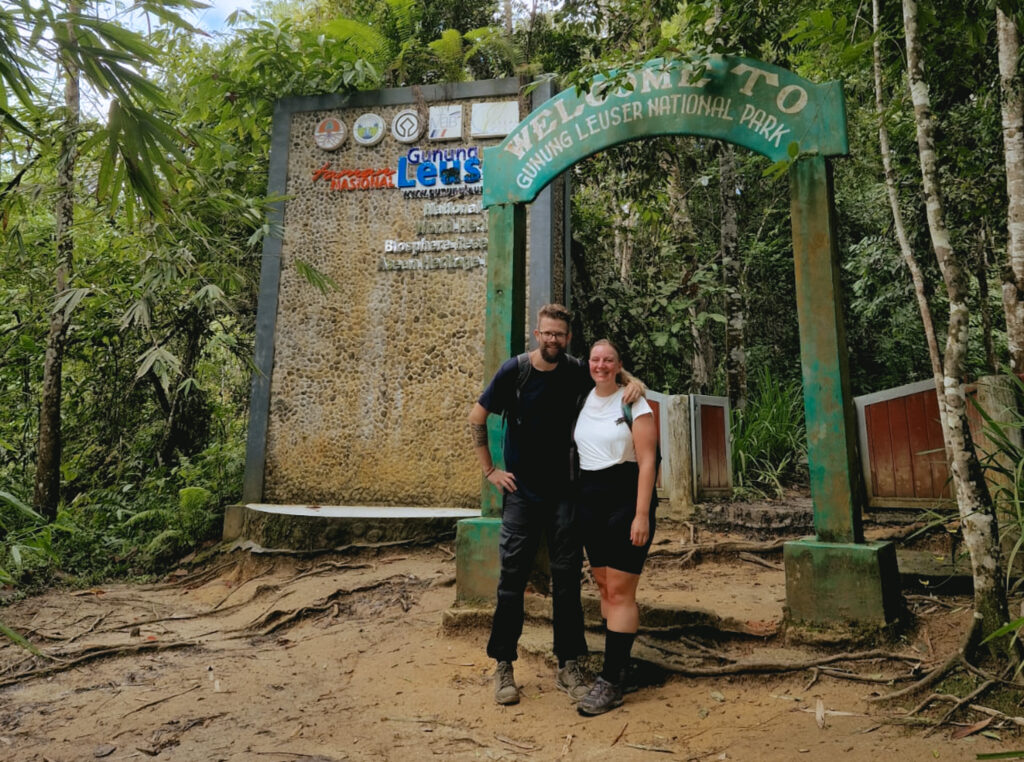
Sumatra is home to one of the largest national parks in Indonesia, Gunung Leuser National Park. The rainforest covers 950,000 hectares and is a protected World Heritage Site. It is the habitat of more than 750 animal species, including endangered species such as orangutans, elephants, leopards, tigers and rhinos. You will also find species here that you will not come across anywhere else in the world, such as the Thomas leaf monkey. Led by a ranger, you can go trekking through the national park. We tell you how.

Why spot orangutans in Sumatra?
Sumatra is home to one of the largest and most impressive national parks in Indonesia: Gunung Leuser National Park. This enormous rainforest stretches across no less than 950,000 hectares and is recognised by UNESCO as a protected World Heritage Site. The park is one of the last untouched rainforests in the world and is a crucial link in preserving biodiversity.
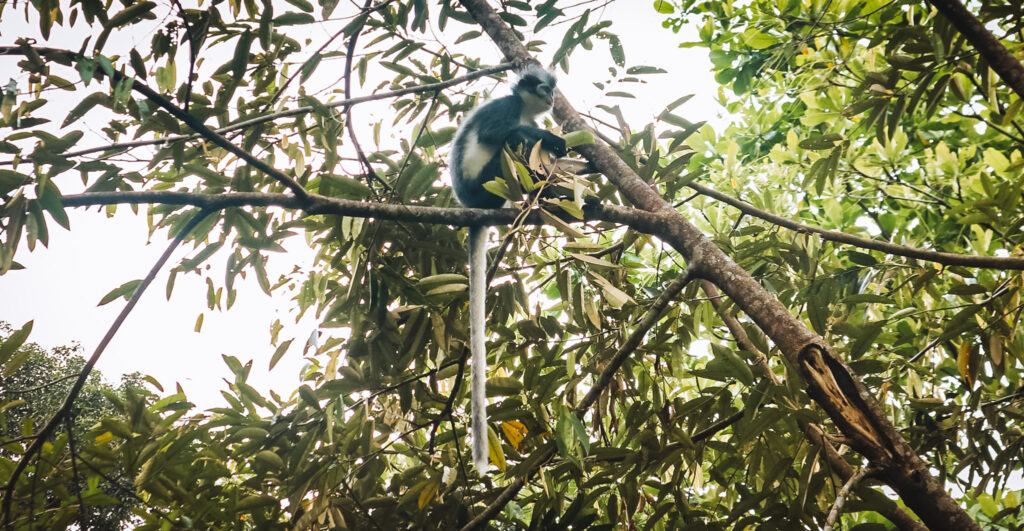
Gunung Leuser National Park is home to more than 750 animal species, many of which are endangered and need protection worldwide. Among others, you can find the majestic Sumatran tiger, the elephant, the leopard and the Sumatran rhino. The park is also home to unique species that you will not find anywhere else on earth, such as the remarkable Thomas leaf monkey, known for its striking appearance with a tall crest of hair.
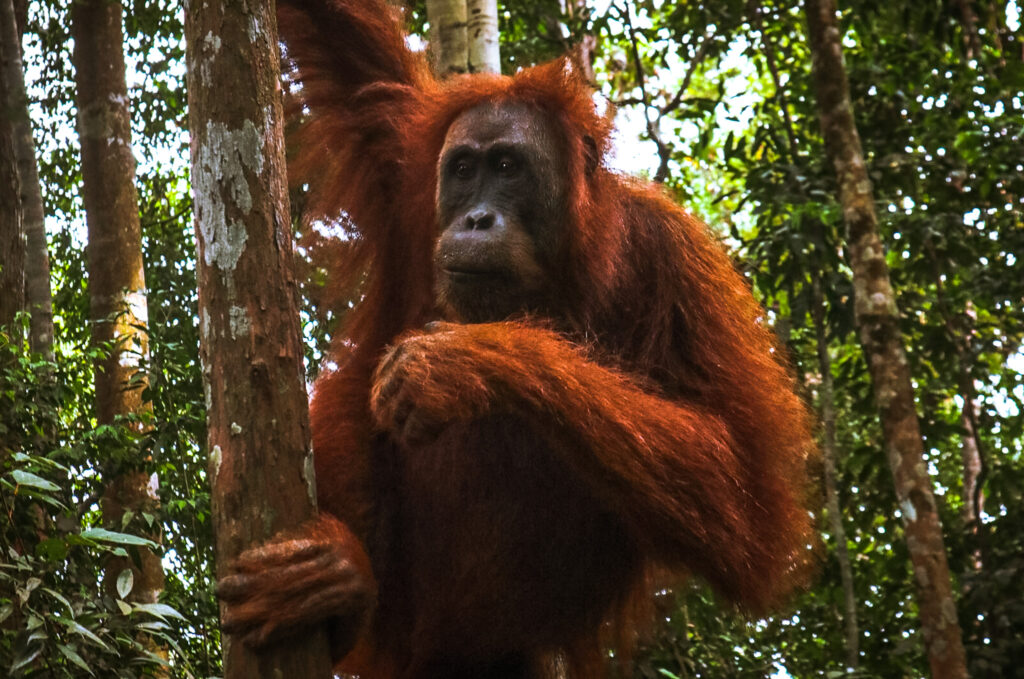
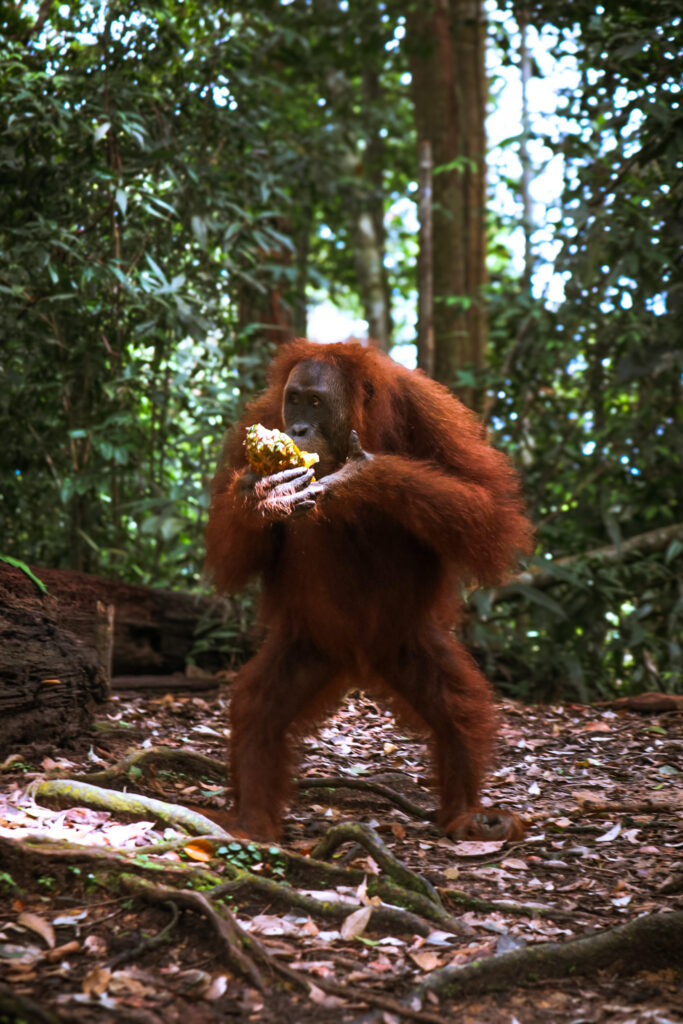
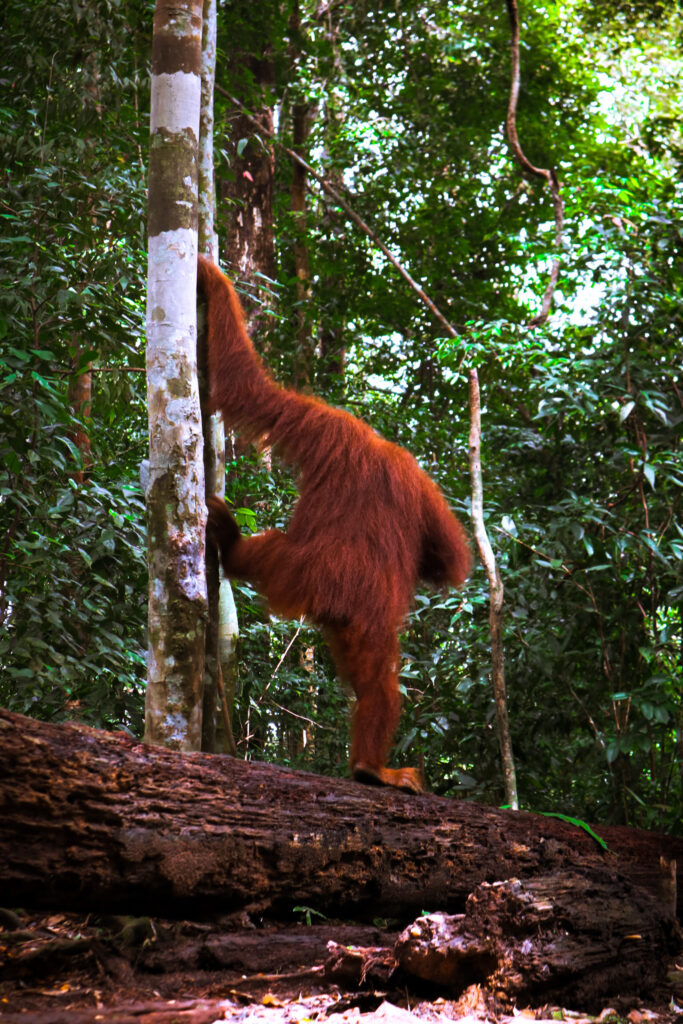
But perhaps the best-known reason why travellers come to Sumatra is the iconic orangutans. These special, intelligent primates are one of the biggest attractions for nature lovers and wildlife photographers. The park offers the unique opportunity to go trekking through the rainforest with experienced rangers. On these treks you can not only spot orangutans in their natural habitat, but also discover a rich variety of other wildlife and plant species. And it becomes a memory you will never forget!
How to get there?
From Amsterdam, Brussels or Düsseldorf you fly with one stopover to Medan, the largest city in North Sumatra. Already in the region? Then you can also take a regional or domestic flight to Medan, which is often quick and affordable.
Once you arrive in Medan, it is best to arrange a car with driver through your accommodation to take you to Gunung Leuser National Park. The drive takes about six hours and takes you over bumpy roads past small villages, rice fields and vast palm oil plantations. Along the way you unfortunately also see the downside of economic development: parts of the rainforest have had to make way for large-scale palm oil production. A confronting but important moment of awareness, because Sumatra is one of the largest producers of palm oil in the world.
Getting around locally
- Car with driver: This is the most comfortable and safest way to travel, especially on the long distances over rough roads. Your accommodation can often arrange this for you at a reasonable price.
- Becak (motorbike taxi or bicycle taxi): For short rides in villages such as Bukit Lawang, a becak is handy and cheap. Agree on the price in advance.
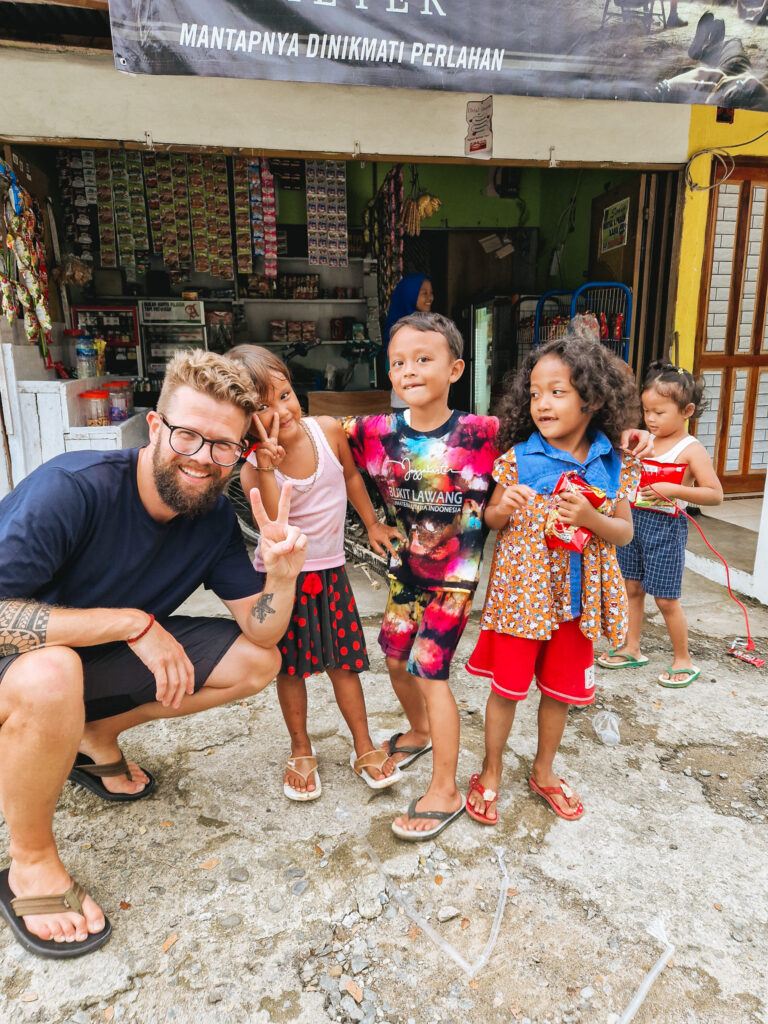
- On foot: Many parts of the park and the villages can only be reached on foot. It is also the nicest way to look around, and it leads to fun interactions with the villagers.
Trekking through the jungle
There are several ways to explore Gunung Leuser National Park. You can choose a short trek of about three hours, a day trek or a multi-day expedition deep into the jungle. The longer you go, the greater the chance of spotting rare species. On a multi-day trek you spend the night in simple tents in the middle of the rainforest, which makes the experience extra special. You will mainly come across monkeys, birds, insects and sometimes reptiles. If you want a chance of spotting elephants or even the rare Sumatran rhino, you have to trek far into the park. Our guide told us that he would soon be leading a 10-day expedition aimed specifically at observing these unique species.
For most travellers, a day trek from Bukit Lawang is the most popular option. These treks are often done in small groups of up to four people, accompanied by an experienced ranger. The orangutans you can meet here are semi-wild: many of them come from rescue centres, where they were rehabilitated after being mistreated as pets. In the past there was a feeding platform for tourists to see the animals, but it was abolished so that the animals can live fully independently in the wild again. Although some older orangutans still come down to the edge of the village looking for fruit, the younger generations are becoming wilder and wilder, exactly as intended.
Most treks start near the fruit plantations just outside the village, where there is a good chance of spotting orangutans, macaques and Thomas leaf monkeys. From there the real work begins: steep slopes, slippery paths, dense vegetation and high humidity make it tough, but the surroundings are breathtakingly beautiful. Along the way you cross streams, clamber over tree trunks and your guide tells fascinating stories about the flora, fauna and ecology of the park.
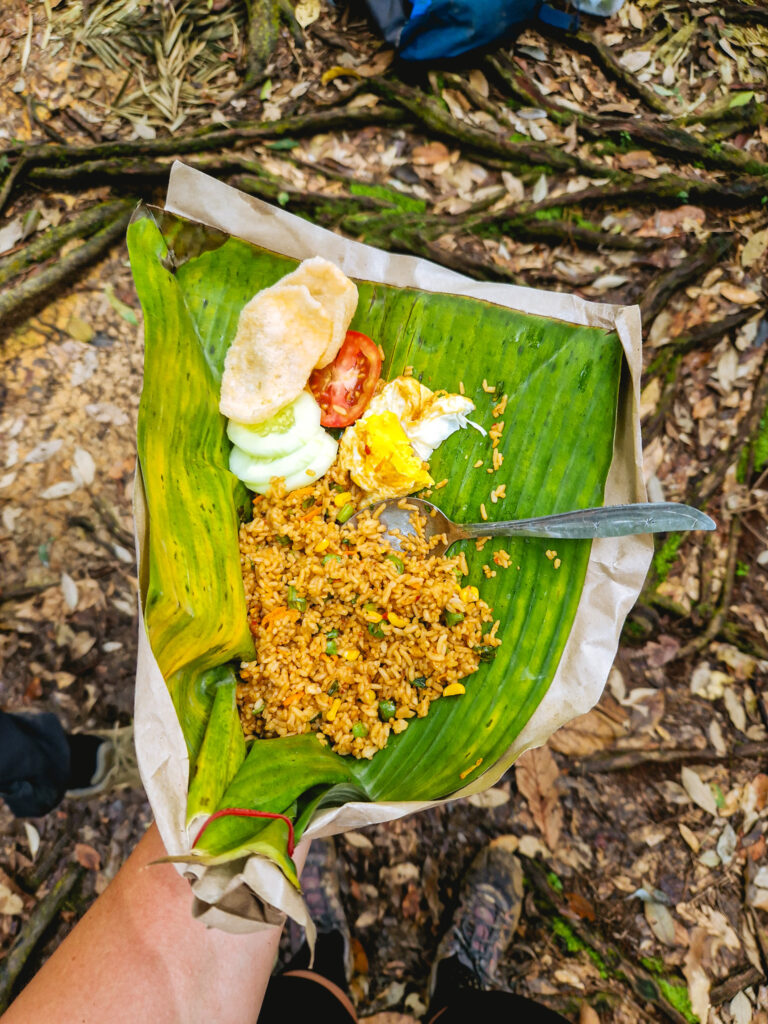
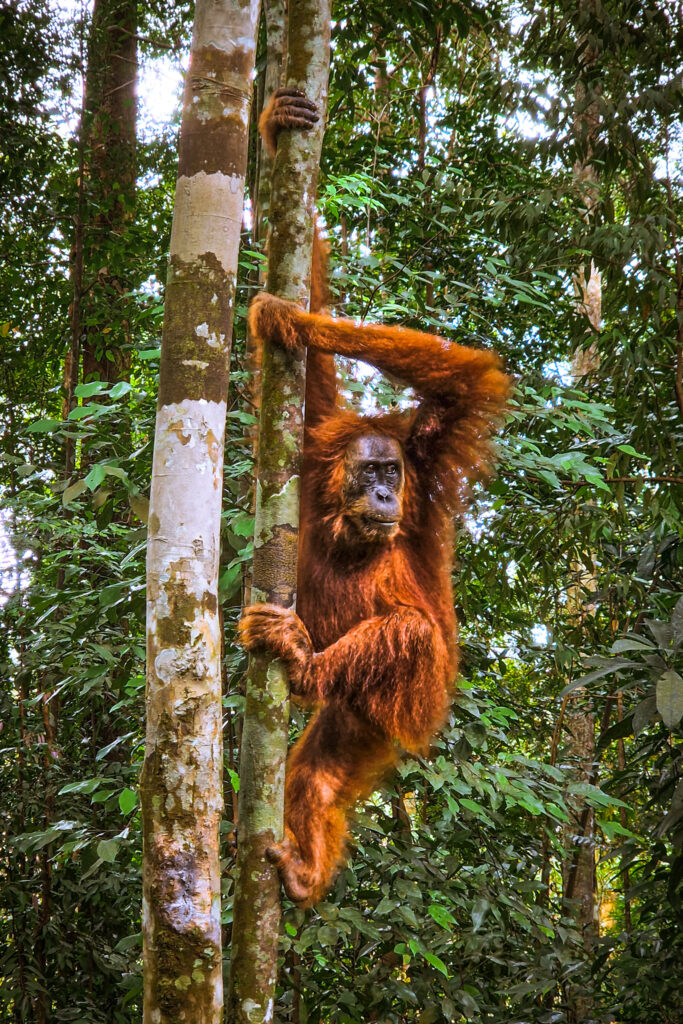
After a few hours without seeing many animals, we decided to take a break. Our guide conjured up a delicious portion of cold nasi goreng from his backpack, with fresh watermelon, pineapple and banana for dessert. And then something unexpected happened: out of nowhere, two small tortoises came over, curious about the smell of the pineapple. A bizarre and funny scene in the middle of the jungle. Not much later we heard rustling in the bushes and there, almost out of nowhere, a female orangutan appeared. She was clearly interested in our lunch leftovers and carefully came closer to eat the remaining pieces of fruit. A magical moment to observe such an impressive animal so close up. Frozen and full of admiration, we watched how she behaved, so human, so thoughtful. Wow.
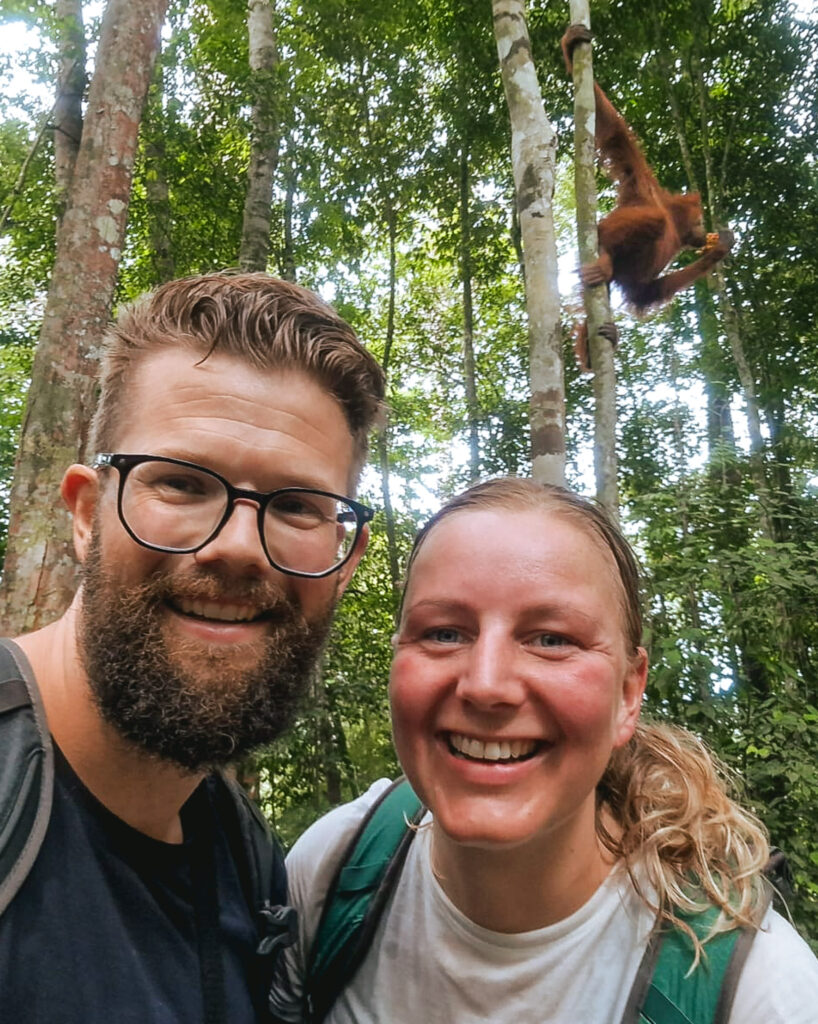
After lunch we continued our trek and saw three more orangutans in their natural environment along the way. What an unforgettable experience. Gunung Leuser National Park is one of the few places in the world where you can experience this in such a pure and respectful way.
What to bring?
Do not be alarmed if leeches or other insects crawl on you during the trek. In any case, make sure you wear long socks. Long trousers are also recommended, but shorts are fine too. Wear hiking shoes with good tread and grip. A (long-sleeved) T-shirt is enough. Bring a small backpack with a bottle of water and perhaps a small snack, your phone and/or camera and mosquito repellent! The ranger takes care of lunch along the way. You could bring a cap against the sun. You will sweat, especially with the high humidity and all the climbing and clambering, so you might want to bring a small towel. Bring some cash to give the ranger a tip at the end.
It is also handy to have the following with you at your accommodation: ORS, paracetamol, anti-diarrhoea tablets and zinc tablets. The food may not always agree with you and there are no pharmacies or medical clinics nearby. Also bring enough cash, because there are no ATMs.
Best places to stay
The best-known bases on the edge of Gunung Leuser National Park are Tangkahan, Ketambe and Bukit Lawang. These places are known above all for the chance to spot orangutans in the wild. From all three you can go on impressive treks through the tropical rainforest accompanied by a local ranger.
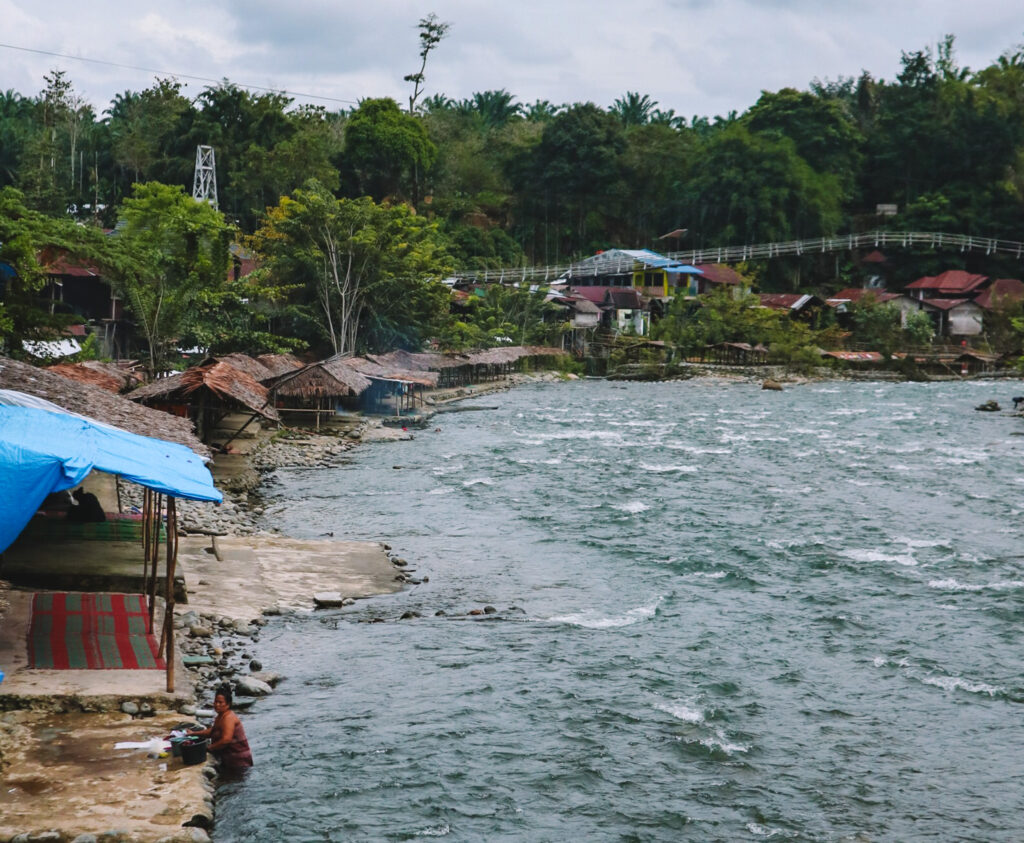
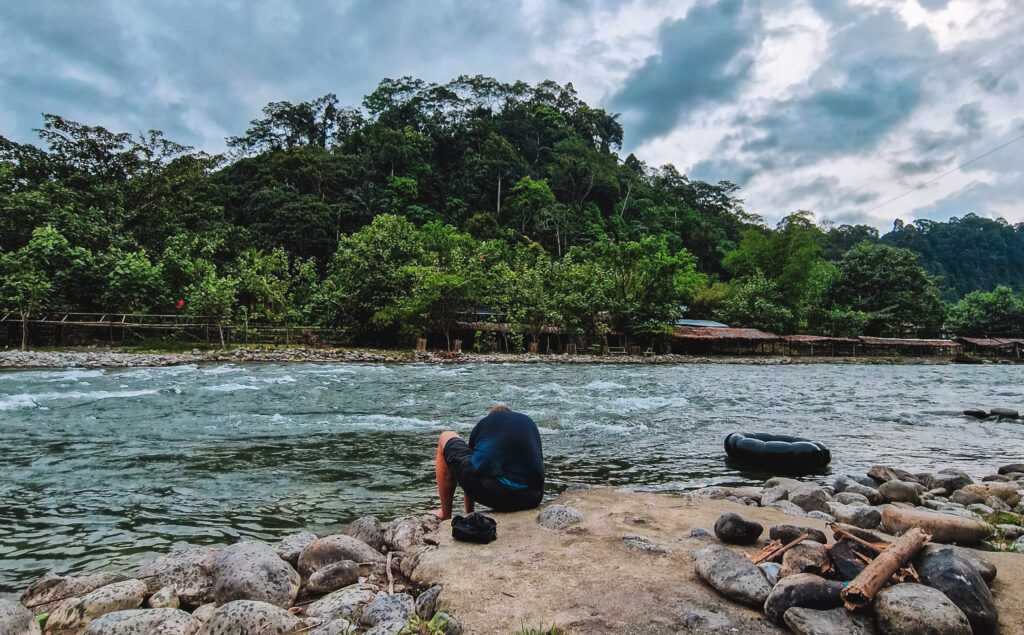
Tangkahan is a quiet village on the river, surrounded by lush nature. Here you stay in simple but atmospheric guesthouses. Besides jungle treks, you can go tubing on the river, bathe in natural hot springs and take a short hike to a waterfall. The atmosphere is relaxed and unspoilt, ideal for travellers looking for peace and nature.
Ketambe lies on the other side of the park and is the least accessible of the three locations. There is no real village, just a handful of basic accommodations along the river. That is exactly what makes Ketambe special: it feels like a pure jungle experience, far from mass tourism. Perfect for adventurers who want to experience the real Sumatra.
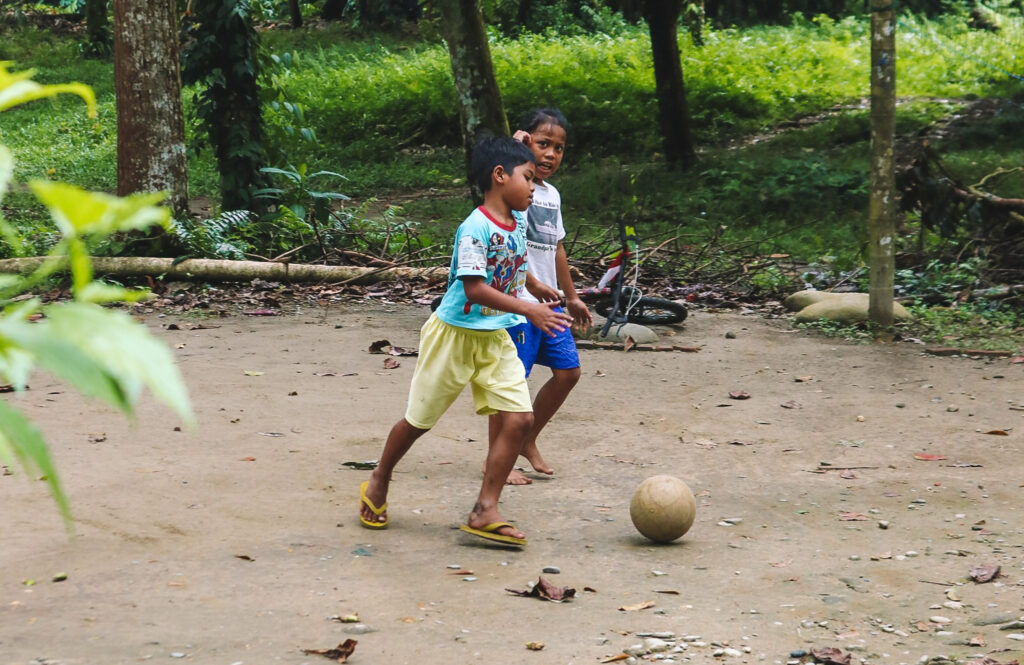
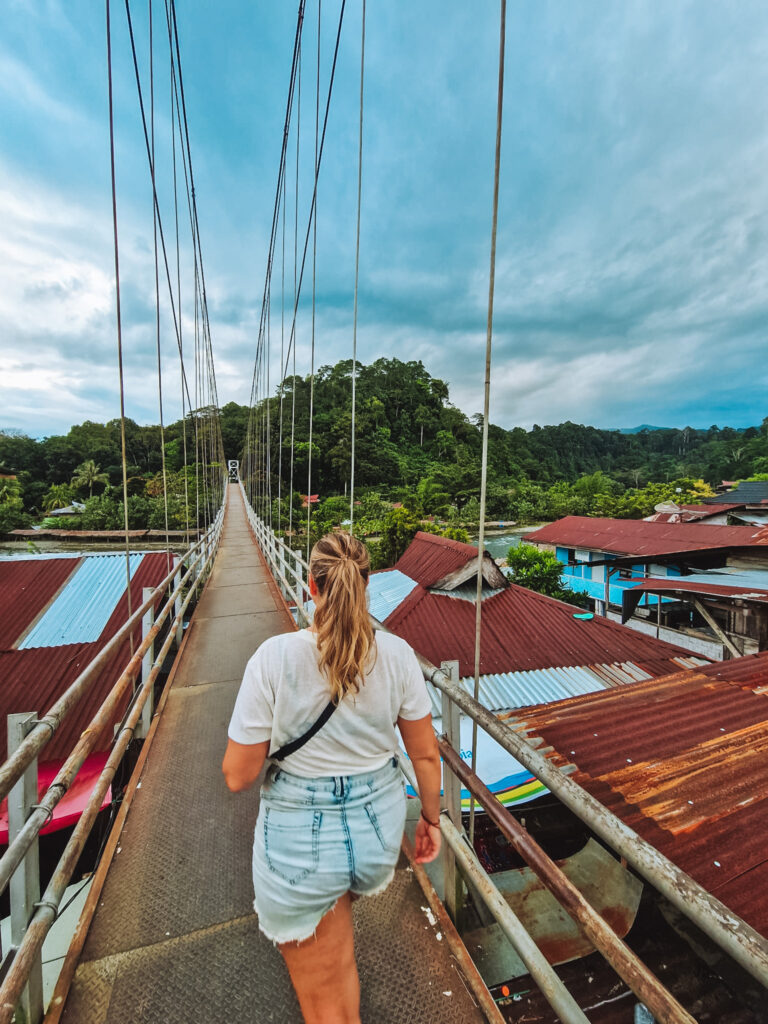
Would you like a little more comfort and facilities? Then choose Bukit Lawang, the most popular village among travellers. Here too you stay on the river, among most of the guesthouses, little restaurants and small shops. Take a walk through the village, watch children playing football in the street and get a close-up taste of village life. Outside the high season it is surprisingly quiet.
Best time to travel and number of nights
The best period is from February to September. We visited Bukit Lawang in January and luckily it was dry, but very hot. The humidity was high and the ground was still very wet and slippery from the rainy season that had just ended. The rainy season runs from October to December.
Stay at least 3 nights if one trek is enough for you. It is really worth spending one day experiencing local life as well. On the day of arrival you get there at the end of the afternoon. On the second day you can do a trek. On the third day you can take it easy, walk through the village, go tubing or book a tour by motorised becak. On the day of departure you will be on the road for a long time again, whether you go straight back to Medan or travel on to Lake Toba, Berastagi or another place.
Where to book?
You can book everything separately: a ticket with the airline and accommodation through a hotel booking site. Contact the accommodation to book a car with driver for the return trip and a trek. Recommended places to stay are Eco Lodge Bukit Lawang Cottages or the cosy Ida Guesthouse & Restaurant, where you are warmly welcomed and can enjoy delicious local food.
But perhaps even nicer is to hand it all over and book through a travel company. Sumatra also has much more to offer than just Gunung Leuser National Park. Take a look at the round trips from Van Verre Reizen. A round trip fully tailor-made to your wishes. And the best part: everything is taken care of and all you have to do is get in and enjoy!
A visit to Bukit Lawang and Gunung Leuser National Park is not just a day out, it is an experience that stays with you. Walking through the dense rainforest, coming face to face with orangutans in their natural habitat and falling asleep to the sounds of the jungle. How special is it that we can still experience this place? Let us make sure together that it stays that way and treat this destination with respect.
Practical tips for spotting orangutans in Sumatra
Preparation
On the spot
Frequently asked questions about spotting orangutans in Sumatra
Where can you see orangutans in Sumatra? +
In Gunung Leuser National Park, one of the last untouched rainforests in the world and a UNESCO World Heritage Site. The best-known bases are Bukit Lawang, Tangkahan and Ketambe.
How do you get to Bukit Lawang? +
You fly with one stopover from Amsterdam, Brussels or Düsseldorf to Medan. From there a car with driver takes you to the park in about six hours; your accommodation can arrange this.
How long does a jungle trek take? +
You can choose a short trek of about three hours, a day trek or a multi-day expedition where you sleep in tents in the rainforest. The day trek from Bukit Lawang is the most popular.
Are the orangutans in Bukit Lawang wild? +
They are semi-wild. Many of them come from rescue centres. The feeding platform for tourists has been abolished so that the animals live independently again; the younger generations are becoming wilder and wilder.
What do you bring on a jungle trek? +
Long socks, hiking shoes with good tread, a (long-sleeved) shirt, a small backpack with water and a snack, your camera, mosquito repellent, a cap and perhaps a small towel. The ranger takes care of lunch.
What is the best time to visit Sumatra? +
February to September. October to December is the rainy season. We went in January: it was dry, but very hot, and the paths were still wet and slippery.
How many nights should you stay in Bukit Lawang? +
At least three nights: a day of arrival, a day for the trek and a day to recover, walk through the village or go tubing.
Can you withdraw cash in Bukit Lawang? +
No, there are no ATMs. So bring enough cash, also for a tip for the ranger.