
What to do in Ubud?
Ubud is the cultural heart of Bali, surrounded by rice fields, temples and jungle. Explore highlights such as the Monkey Forest, rice fields, temples and local cooking classes. Rent a scooter, wear respectful clothing when visiting temples and start your day early to avoid the crowds and the heat. Let yourself be surprised by the nature, spirituality and local hospitality of Ubud!
Bali
What to do in Ubud?
The cultural heart of Bali
Ubud, in the green interior of Bali, is a popular destination for travellers looking for cultural sights, spiritual experiences and natural beauty. Although it is flooded with tourists these days, with the right preparation you can still really enjoy a visit.
Ubud is known for its ancient temples, picturesque rice fields and beautiful waterfalls. If you want to experience Balinese culture up close, there are plenty of options: a cooking class with a Balinese chef, a bike ride through the rice fields, or a visit to the traditional art market, where you will find local crafts, plenty of souvenirs and fresh produce.
Whether you are interested in nature, spirituality or local traditions, Ubud has it all. Read our 11 best tips for Ubud below.
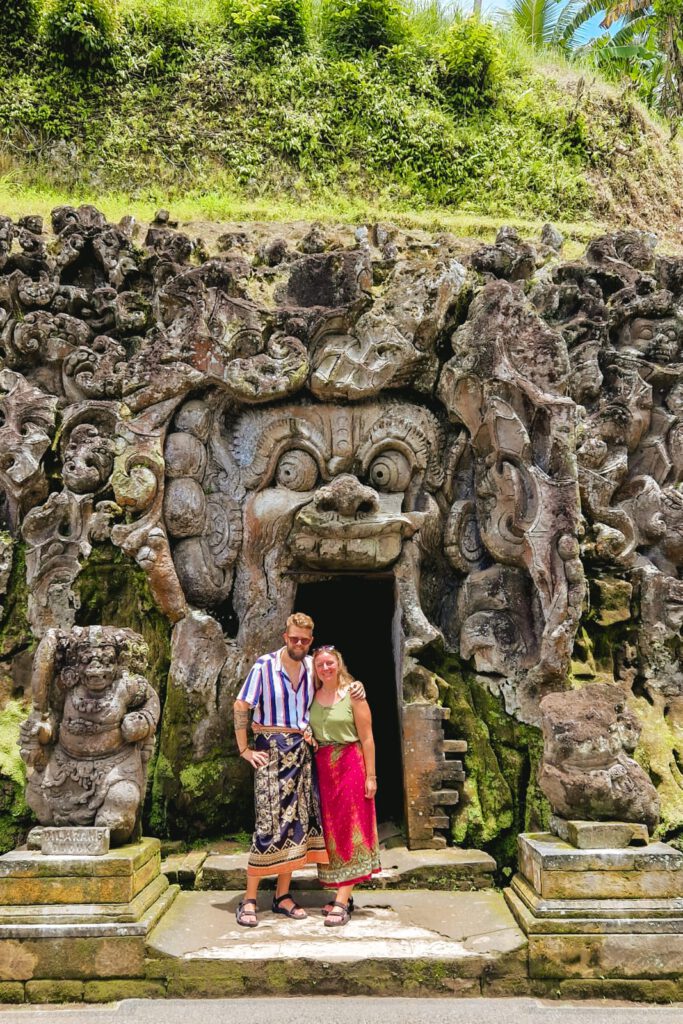
1. Goa Gajah & Gunung Kawi – Historic temples near Ubud
If you are looking for impressive temples in Bali, start with Goa Gajah, the Elephant Cave. This mystical place, which dates back to the 11th century, is hidden among lush trees and holy bathing pools. The entrance to the cave, with a fearsome face carved into the rock, seems to swallow you up and invites you on a journey to the spiritual heart of the island.
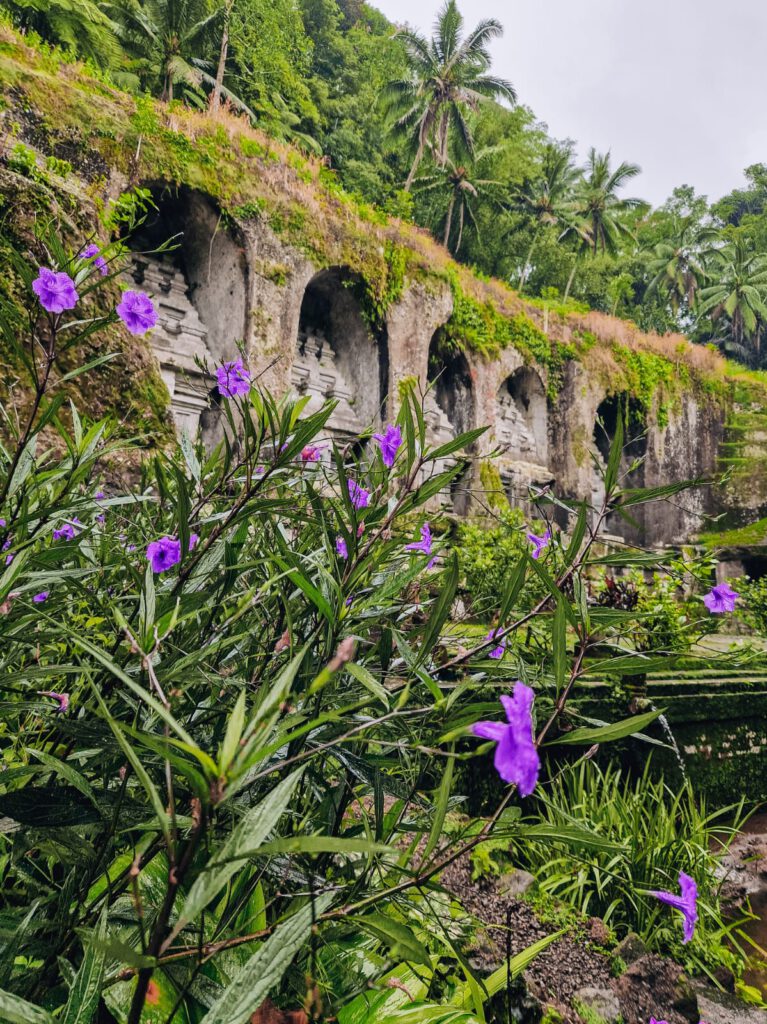
Combine your visit with Gunung Kawi, one of the oldest and most special temple complexes in Bali. It lies deep in a valley, surrounded by towering palms and terraced rice fields. The walk there takes you down a long staircase, past small warungs and panoramic views. Once you arrive, you can admire the ten shrines carved out of the rock, a tribute to royal ancestors. The surroundings are quiet and magical.
These two spiritual places immediately give you a feel for old Bali, far away from modern tourism. Here you can still feel the deep religious traditions of the island, interwoven with nature, history and spirituality.
Practical tips for your visit:
- Best time: Visit the temples early in the morning to avoid the crowds and the heat.
- Cost: Expect a small entrance fee at both temples (around 50,000 IDR per person).
- Clothing: A sarong and covered shoulders are required – these can often be rented at the entrance or are included in the entrance fee. Wear sturdy shoes; Gunung Kawi in particular involves a lot of steps up and down.
- Water & protection: Bring enough water and use sunscreen – there is little shade during the walk. And in the rainy season, do not forget your poncho.
2. Tirta Empul – Holy spring for a purification ritual
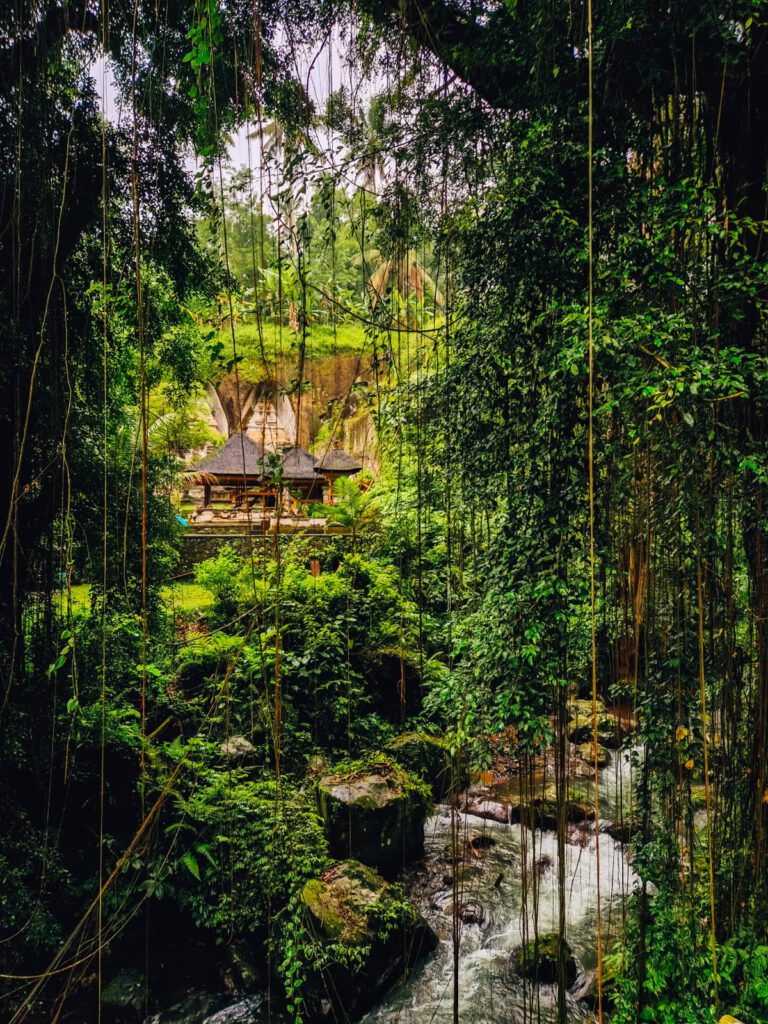
Tirta Empul is one of the best-known temples in Bali and an important spiritual place for the local population. Located in Tampaksiring, about an hour from Ubud, the temple is famous for its holy spring water, in which purification rituals take place every day. The Balinese believe the water has healing and cleansing powers – and as a visitor you are allowed to take part.
The ritual involves immersing yourself under different fountains, each with its own meaning. It is a special experience that brings calm, reflection and a connection with Balinese culture. The serene atmosphere, the scent of incense and the calm water make it a moment to fall silent.
Whether you take part in the ritual or just come to watch, Tirta Empul is an experience that takes you into the spiritual soul of Bali.
Practical tips for your visit: - Clothing: Wear a sarong (required) – you can rent one at the entrance or bring your own. - Best time: Go early in the morning to avoid the crowds, when the temperature is also more pleasant. - What to bring: Spare clothes and a towel if you are going into the water. - Respect: Behave respectfully, follow the instructions of the local guides and do not bathe in fountains that are reserved for ceremonial purposes. - Cost: There is a small entrance fee, usually around 50,000 IDR.

3. Pura Saraswati – The famous lotus temple in Ubud
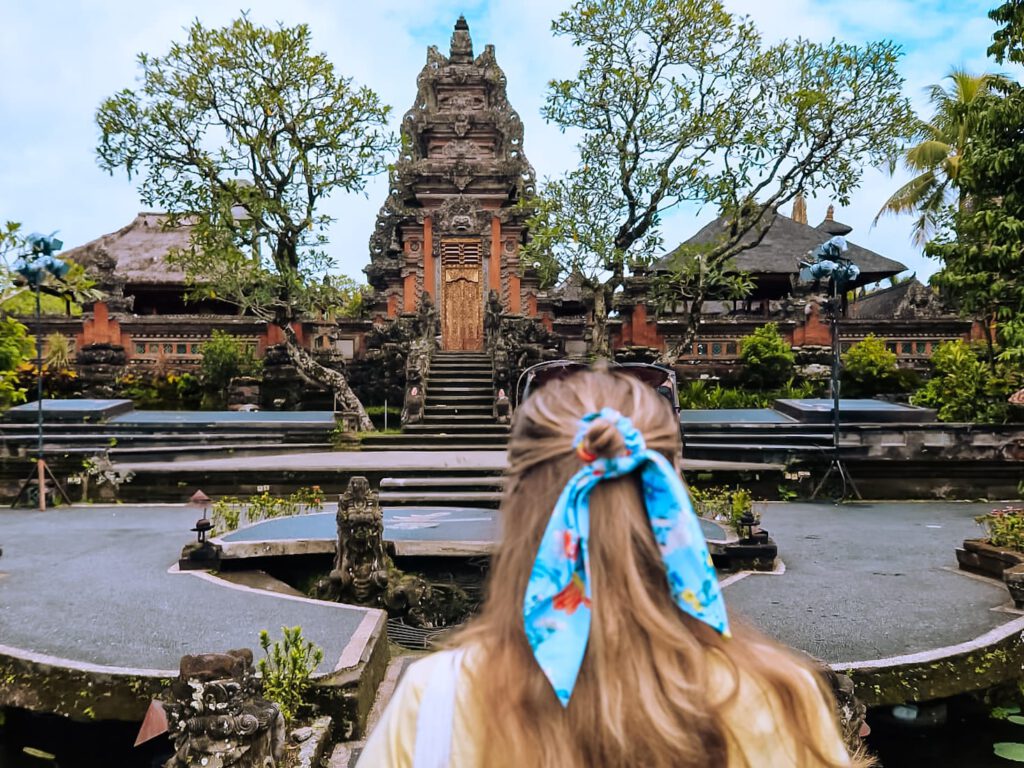
Pura Taman Saraswati, also known as the Lotus Temple, is a hidden gem in the middle of Ubud's lively centre. The temple is dedicated to Saraswati, the Hindu goddess of wisdom, art and literature. What makes this temple so special is the beautiful lotus garden, through which an elegant path across the water leads you to the entrance. The pond, surrounded by stone carvings and tropical greenery, is in bloom almost all year round and forms an idyllic setting that is loved by photographers and anyone looking for some peace and quiet.
Although the temple itself is relatively small, the place has a serene atmosphere. The traditional Balinese architecture is richly decorated with detailed wood carvings and sandstone statues depicting the goddess Saraswati and other important figures. It is a lovely place to unwind for a moment, away from the bustle of the main street.
In the evening the temple really comes to life. Traditional Balinese dance performances are regularly held on the stage in front of the temple, with colourful costumes, hypnotic music and graceful movements. With the illuminated lotus pond in the background, this is a magical experience you will not forget in a hurry.
Practical tips for your visit: - Cost: The temple is free to visit during the day, but there is usually an entrance fee for the dance performances (around 100,000 IDR). Performances usually start around 7.30 pm – buy your ticket a few hours in advance at the adjoining café (Café Lotus) or on the spot. - Clothing: Respectful clothing is appreciated; a sarong is not required here, but covered shoulders and knees are appropriate. - Best time: Visit during the day for quiet photos in beautiful light, and come back in the evening for the performance. - Combine: The temple is close to other sights such as Ubud Palace and the market – ideal for a cultural walk through the centre. - Café tip: Take a seat on the terrace of Café Lotus for a beautiful view over the pond with a cup of Balinese coffee or a light lunch.
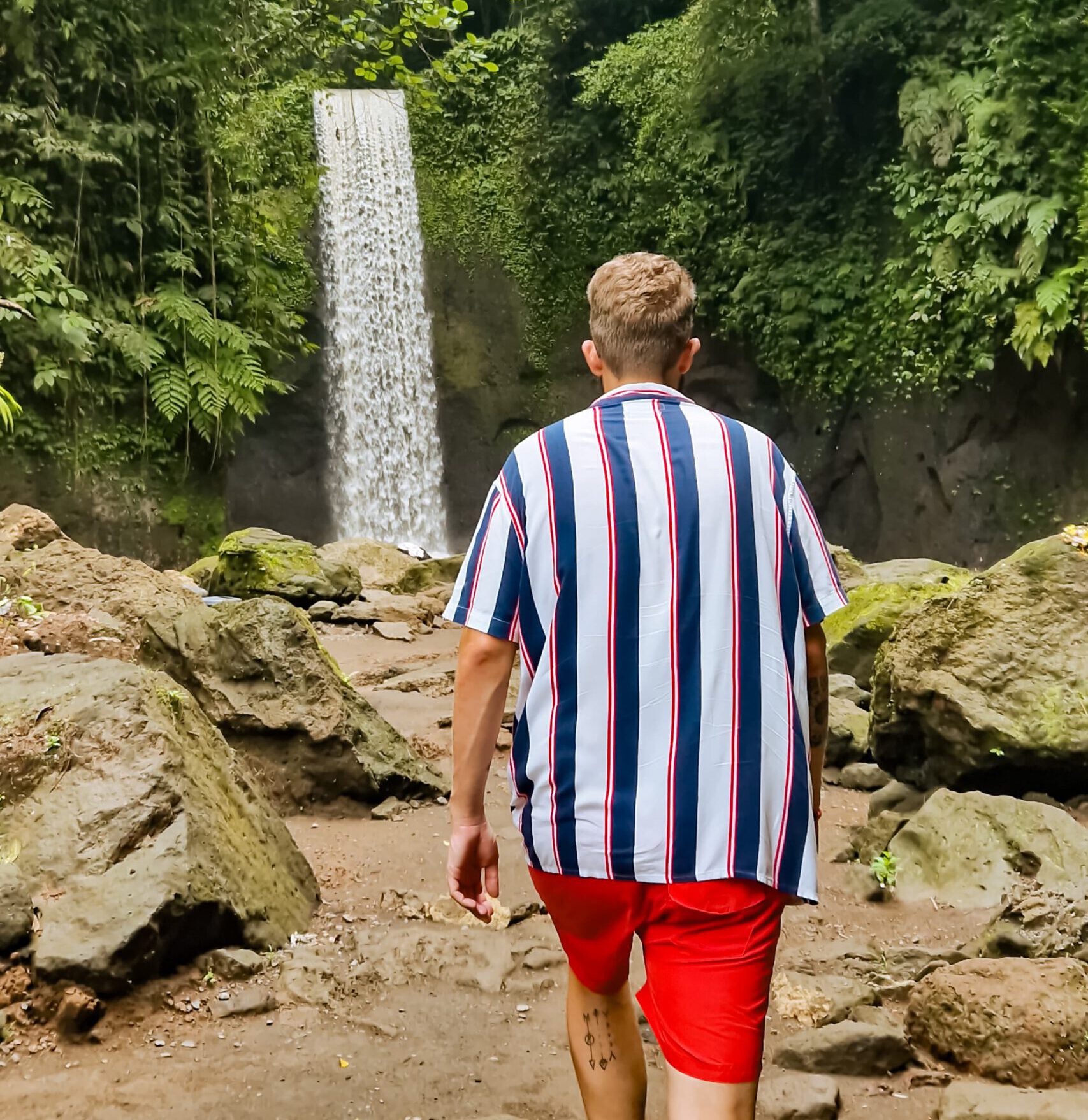
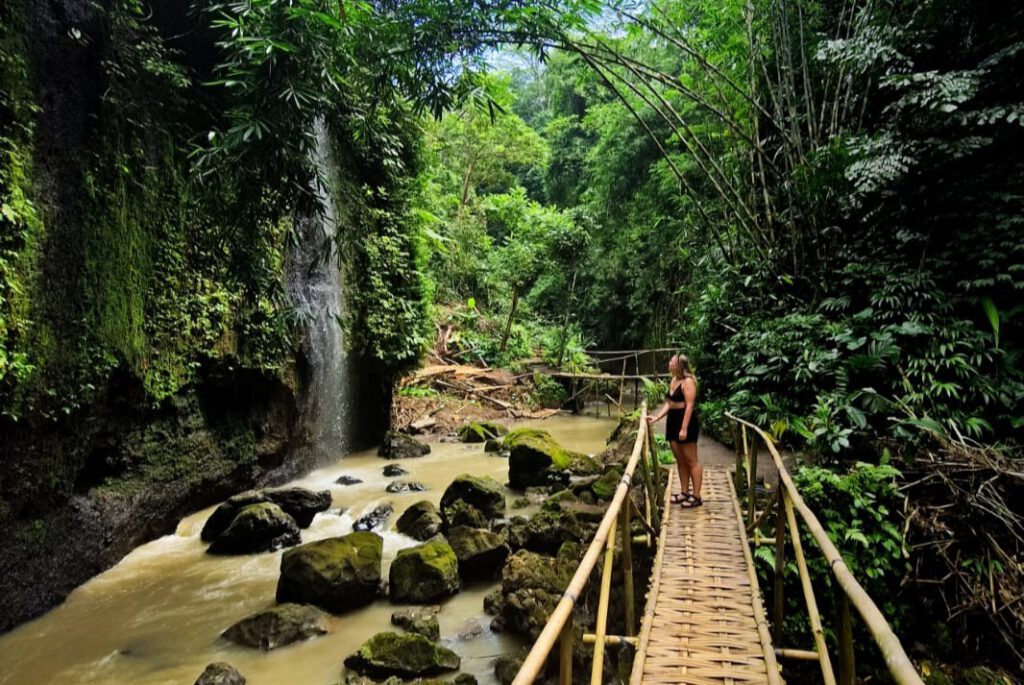
4. Tibumana, Kanto Lampo & Tegenungan - The most beautiful waterfalls around Ubud
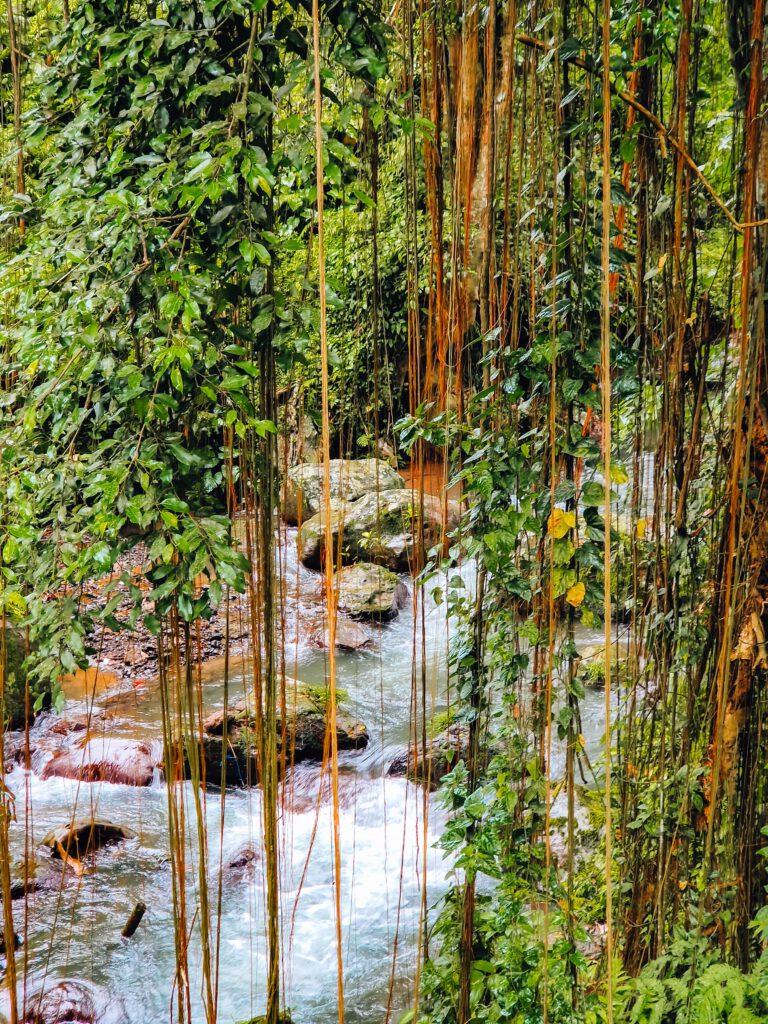
Waterfalls are among the most beautiful natural sights around Ubud. They make a wonderfully refreshing trip away from the heat of the town and show you a completely different, lush side of Bali: cool, green, calming and at the same time powerful and energetic.
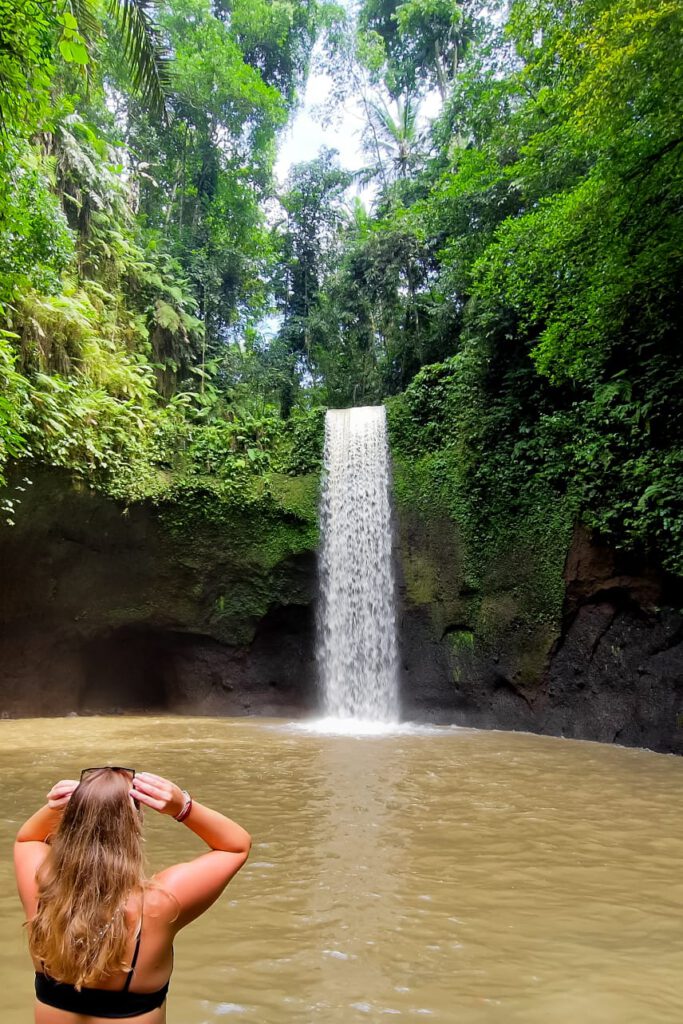
Tibumana Waterfall
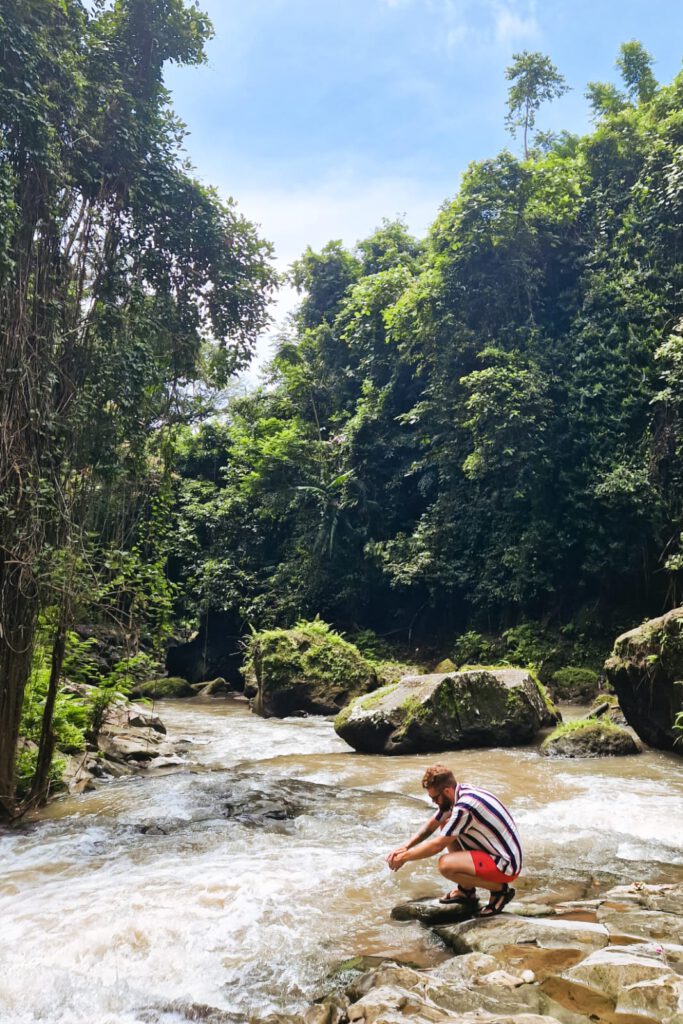
Tibumana is one of the quietest and most idyllic waterfalls near Ubud. Hidden in a green valley and surrounded by palm trees and dense jungle, the water falls in a straight line into a natural pool where you can safely swim. The short walk there takes you past tropical plants, small bridges and streams. A perfect place to unwind or take a refreshing dip.
Kanto Lampo Waterfall
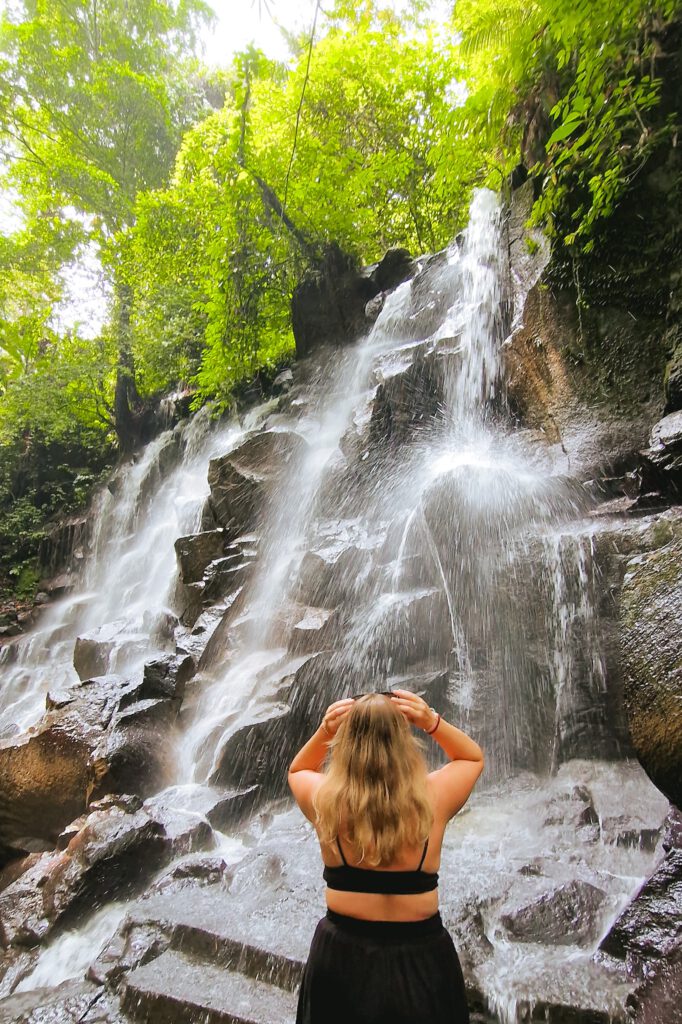
Kanto Lampo is a real photo spot. This waterfall cascades down a rock face, so the water ripples down in wide streams. You can stand close to the falling water (or climb into it), which makes for spectacular photos. This waterfall is not far from the centre of Ubud and is relatively easy to reach. Do keep in mind that the path down can be steep and sometimes a bit slippery, and that it is a busy waterfall.
Tegenungan Waterfall
Tegenungan is the best-known and busiest waterfall in the area. It is an impressive, powerful waterfall with a wide view and several viewpoints. Steps and paths have been laid out so you can take beautiful photos from both above and below. Around the waterfall you will find cafés, souvenir shops and even a zipline, which makes it a bit more touristy – but it is still worth a visit because of the size and power of the waterfall.
These three waterfalls are a short drive from each other and are easy to combine in a half-day trip by scooter or with a private driver from Ubud.
Practical tips for your visit: - Best time: Go early in the morning to avoid the crowds and the heat, especially at Tegenungan. - Cost: Expect to pay 20,000 – 30,000 IDR per person per waterfall (bring cash). - Clothing: Wear swimwear under your clothes if you want to swim, and bring a towel and dry clothes. - Shoes: Sturdy (waterproof) shoes or sandals are handy – some paths are muddy or slippery.
5. Campuhan Ridge Walk – The most beautiful walk in Ubud
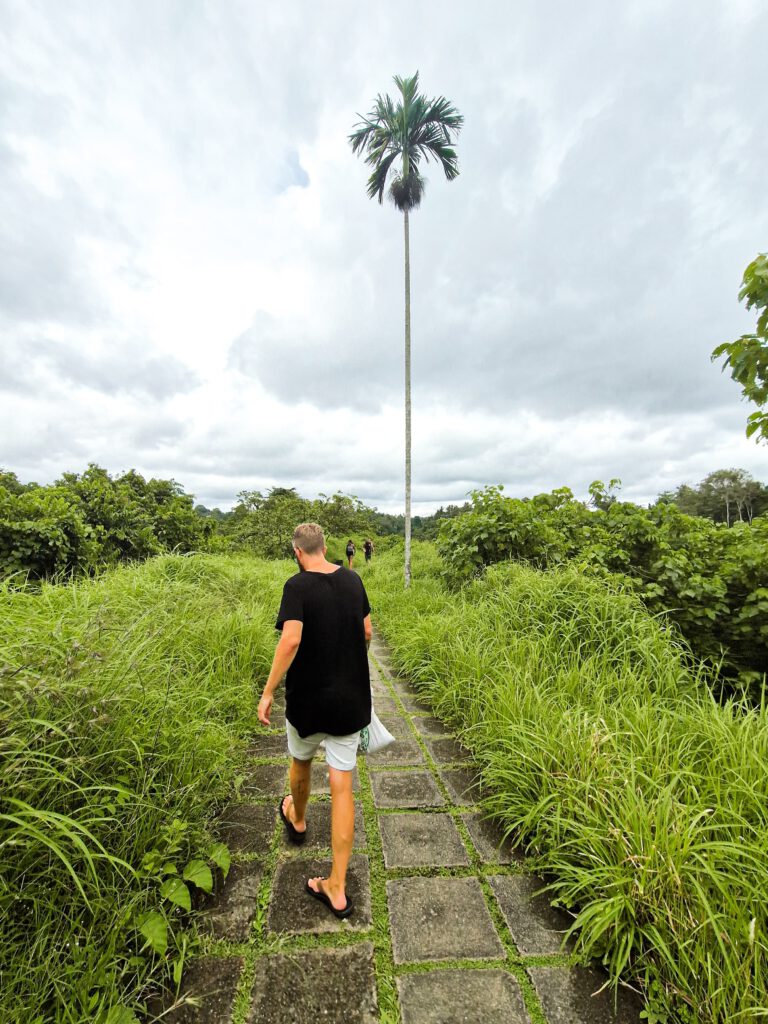
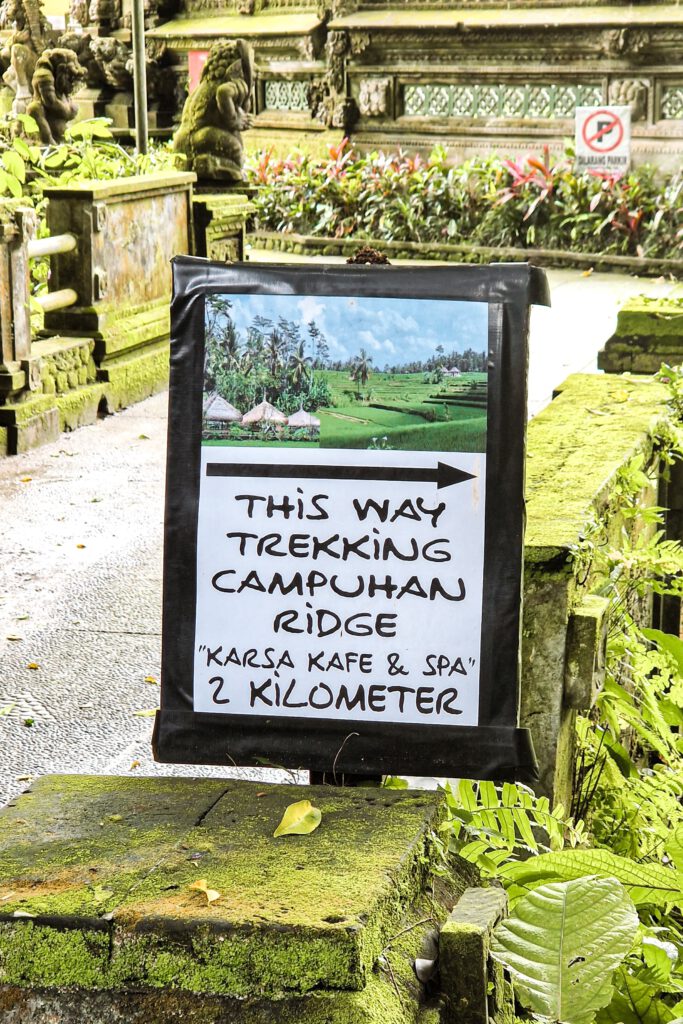
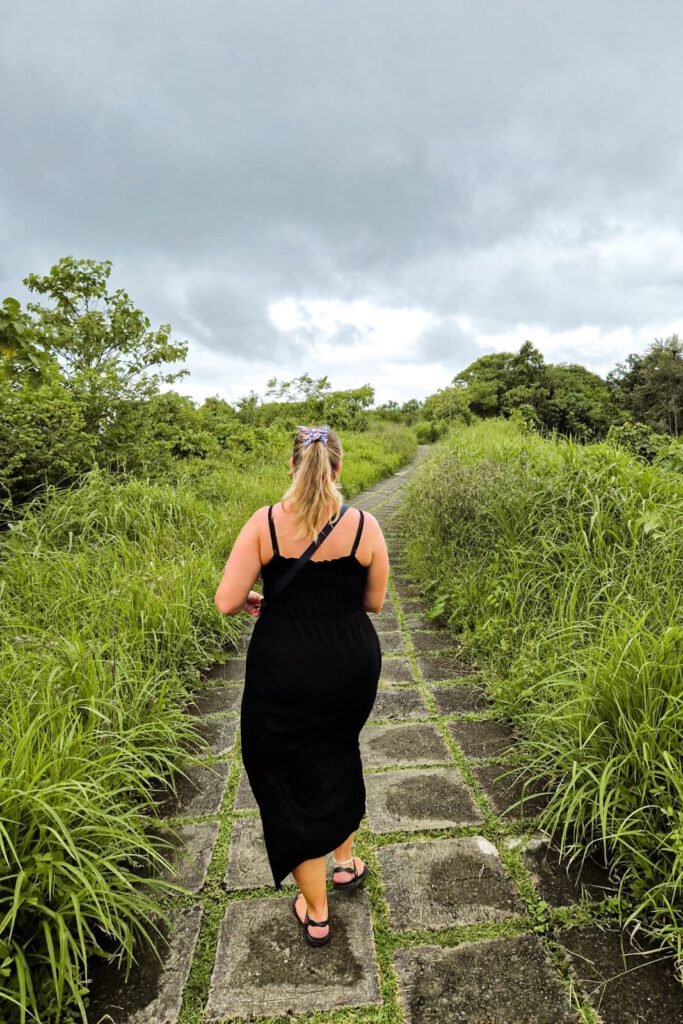
The Campuhan Ridge Walk is one of the most beautiful and accessible walks in Ubud. This short hike starts within walking distance of the centre and takes you along a narrow ridge between two valleys. On both sides a panoramic view unfolds over lush jungle, rolling rice fields and palm tops swaying gently in the wind. The path is about two kilometres long (one way). Along the way you pass a few art galleries, rustic warungs and small villas tucked away in the greenery.
You really find yourself in an oasis of calm for a while, far away from busy city life.
Practical tips for your walk: - Starting point: The walk starts at the entrance next to the Pura Gunung Lebah temple, behind the Warwick Ibah Luxury Villas hotel. Follow the signs for "Campuhan Ridge Walk". - Best time: Especially in the early morning there is an almost magical calm over the landscape, with dewdrops on the grass and a soft mist above the rice fields. In the late afternoon the light is beautiful, but it can be warmer and busier. - Duration: The walk takes about 30–60 minutes (there and back, depending on your pace). - Clothing & shoes: Wear light, breathable clothing and comfortable walking shoes or sandals. There is little shade, so a hat or cap is handy. - What to bring: Bring water (there are few stalls along the way) and sunscreen. - Accessibility: The walk is free and suitable for almost everyone, even without hiking experience. - Pit stop: Walk on to the village of Bangkiang Sidem, where you will find cosy cafés among the rice fields for a 'breakfast with a view'.
6. Green Bike Adventures – Cycling through rice fields and villages
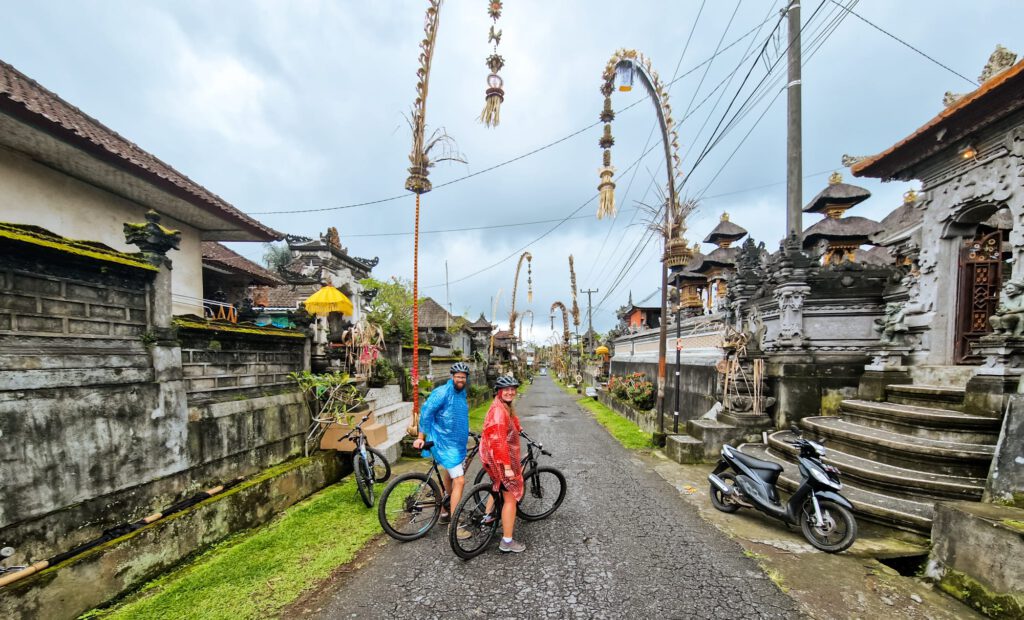
A bike tour with Green Bike Adventures is one of the most fun and authentic ways to experience the real Bali. Instead of only visiting the tourist hotspots, you cycle with a local guide through the green, rural hinterland of Ubud – past villages, rice terraces, temples and traditional houses.
The tour usually starts in the higher areas around Kintamani, where you can first enjoy a beautiful view of the Mount Batur volcano and its crater lake. Then the relaxed part begins: the route goes mostly downhill, so you glide through the landscape without much effort. Along the way you regularly stop for explanations about Balinese culture, religion and farming – for example about how rice is planted and harvested, or how a traditional family compound is laid out.
The guides speak good English, are friendly and love to share their knowledge in a personal way. The tour feels informal and small-scale, which makes it extra special. A visit to a local market or workshop is often included too, and you finish the tour with a delicious Balinese lunch in a peaceful setting overlooking the rice fields.
Practical tips for your bike tour: - Booking: Reserve your tour online via the Green Bike Adventures website. Most tours include transfers to and from your accommodation in Ubud. - Cost: Depends on the tour you choose. - Duration: The tour usually takes half a day (about 6 hours including transport). - Bike & gear: You get a good mountain bike and a helmet – both are included. - Clothing: Wear comfortable sportswear, sunglasses and sturdy shoes. A cap and sunscreen are also recommended. - Water & snacks: Water is provided, and along the way you get small snacks and coffee or tea. - Level: The tour is suitable for all ages and fitness levels, as it is almost entirely downhill. Children can join too. - Weather: The morning is often the most pleasant in terms of temperature. In the rainy season (Nov–Mar) it is a good idea to bring a light rain jacket.
7. Ketut Cooking Class – Authentic Balinese cooking
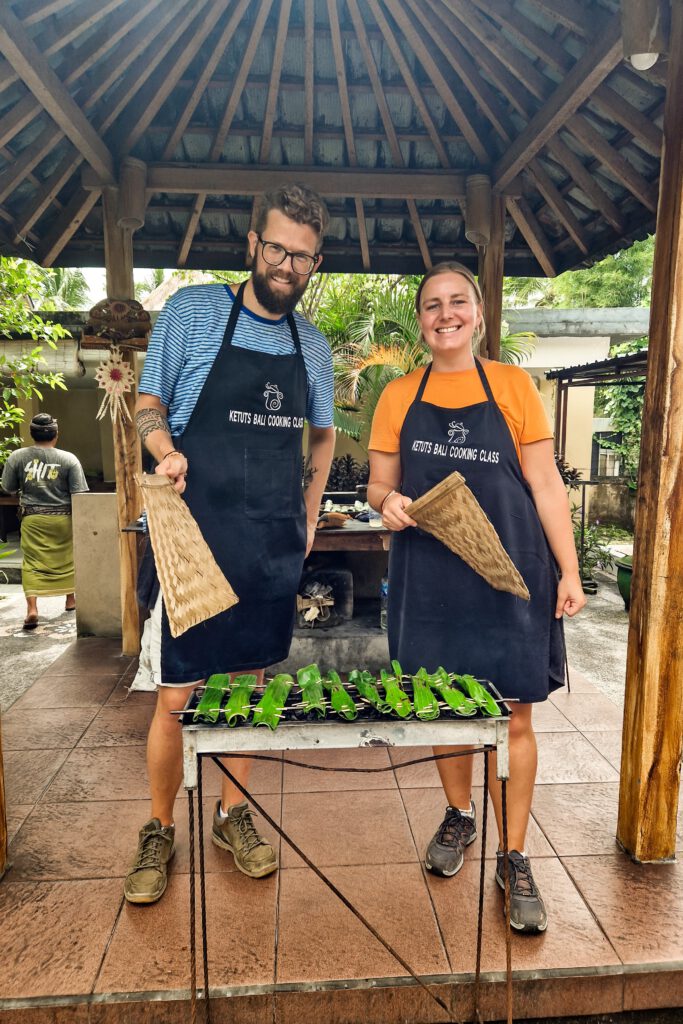
During the Ketut Cooking Class in Ubud you go on a unique journey through the flavours and traditions of Bali. You start your experience with a visit to a local market, where you pick out fresh herbs, vegetables and other authentic ingredients together with your hospitable Balinese host. Here you learn not only about the ingredients themselves, but also about their cultural meaning and their importance in Balinese cuisine.
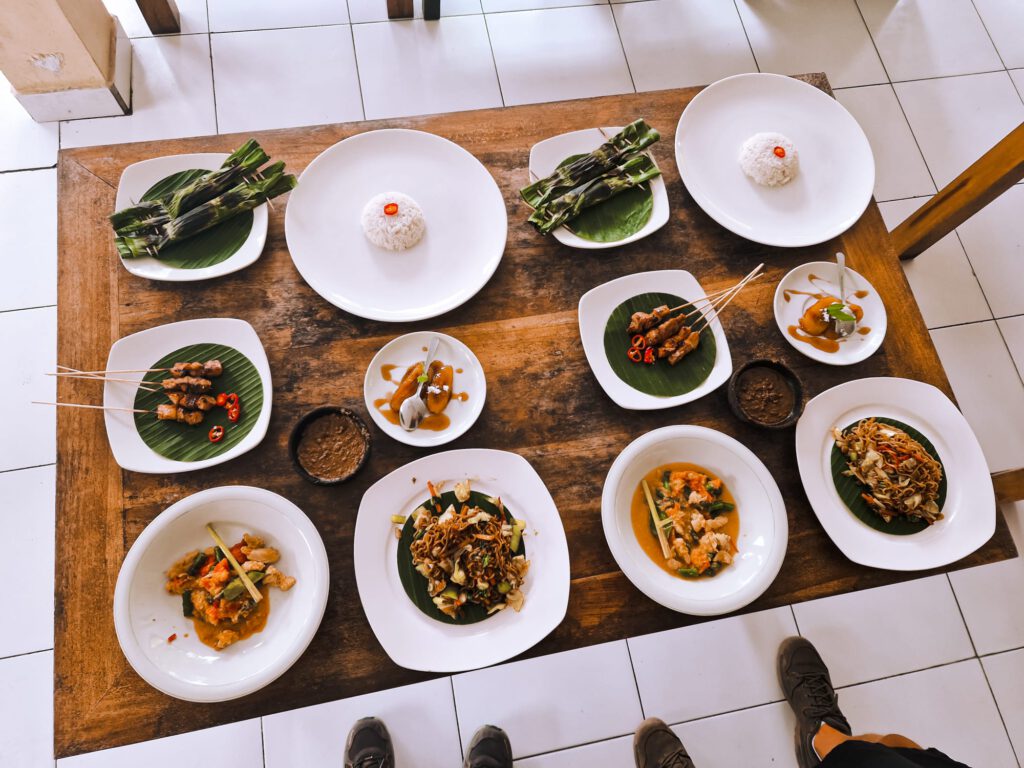
After the market you go to the family's home, where you are guided step by step through preparing several traditional dishes. Think fragrant satay, spicy sambals, fresh vegetables in coconut milk and aromatic rice dishes. The classes are interactive and suitable for all levels, even if you have little cooking experience. Meanwhile your host shares stories about Balinese cuisine, culture and daily life.
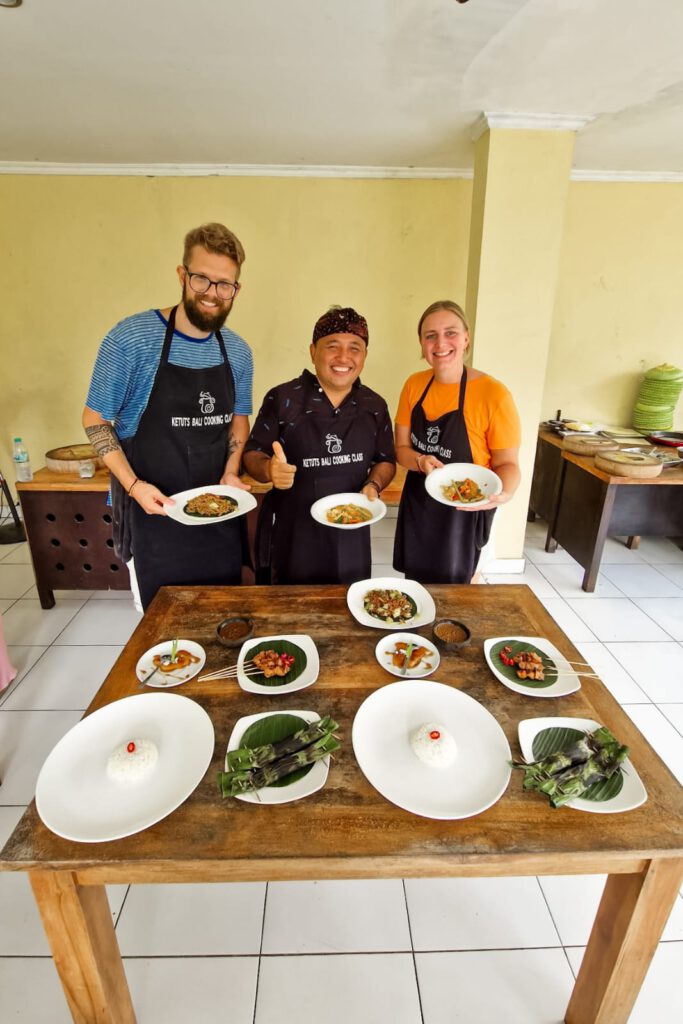
When the meal is ready, you enjoy the dinner you made yourself together in a cosy, homely setting. You get the recipes printed to take home. It is a tasty and educational experience in which you not only cook, but also feel the warmth and hospitality of Bali.
Practical tips for your cooking class: - Duration: The cooking class usually takes about 4 hours, often from morning to early afternoon. - Booking: Reserve your place in advance via the website or through your hotel in Ubud. It is popular, so booking early is recommended. - Location: The class takes place with a local family in Ubud, easy to reach by scooter, or book a transfer that picks you up from and drops you back at your accommodation. - Dietary requirements: Let them know about any dietary requirements or allergies in advance; there is often room for adjustments. - Cost: The price is 350,000 IDR including the market visit, ingredients, guidance and lunch/dinner. - Group size: Small-scale, often with a maximum of 6-8 people for a personal atmosphere.
8. Ubud Art Market – Local art & crafts
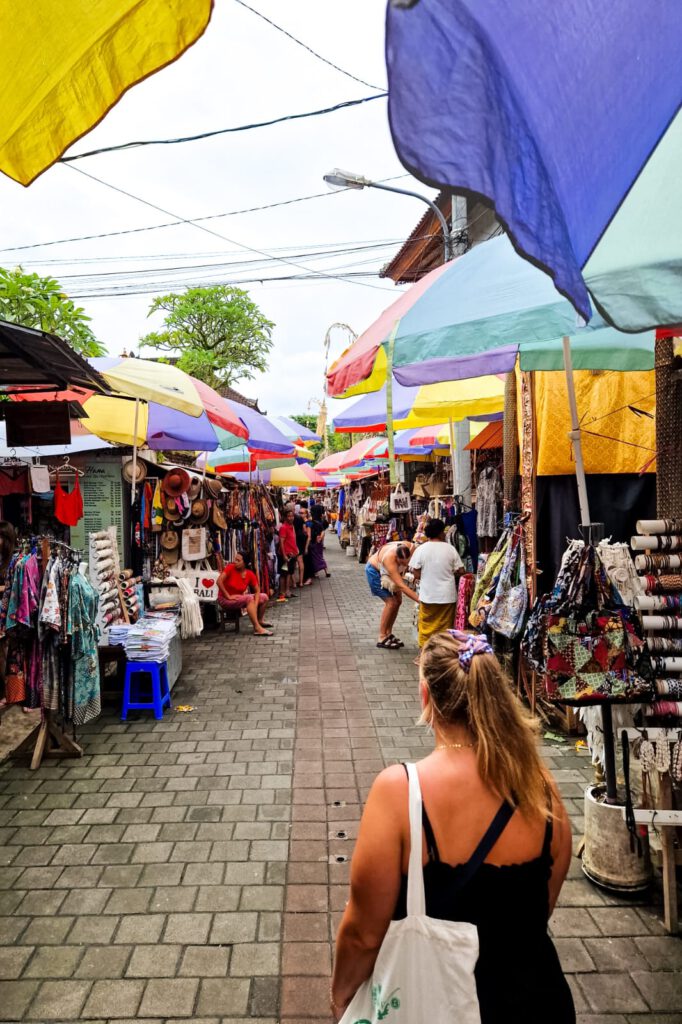
The Ubud Art Market (Pasar Seni Ubud) is a lively and colourful market where you can find the best handmade souvenirs in Bali. From traditional batik fabrics, jewellery, wooden figurines and hand-carved masks to woven baskets and paintings: you will find it all here. The market is a treasure trove for lovers of handicrafts and perfect for picking up a unique gift or keepsake.
The market is in a prime location, right opposite Ubud Palace, so you can easily combine these two sights. The narrow alleys of the market are full of stalls with local sellers who often enthusiastically promote their wares. Besides art and crafts you will also find clothing, bags and accessories in all kinds of styles and price ranges.
Practical tips for your visit to the Ubud Art Market: - Opening hours: The market is usually open from 8:00 am to 6:00 pm. Visit early in the morning to avoid the crowds and have the best choice. - Bargaining: It is normal to haggle over the price. Start at around half the asking price and meet in the middle. Stay friendly and respectful. - Cash: Make sure you have enough cash in small notes, as paying by card is usually not possible. - Safety: Keep an eye on your belongings, as it can get busy. A small backpack or bum bag with a zip is recommended. - Taking photos: Ask permission before taking photos of stalls or sellers; most do not mind if you ask nicely.

9. Coffee tasting with a view of the jungle
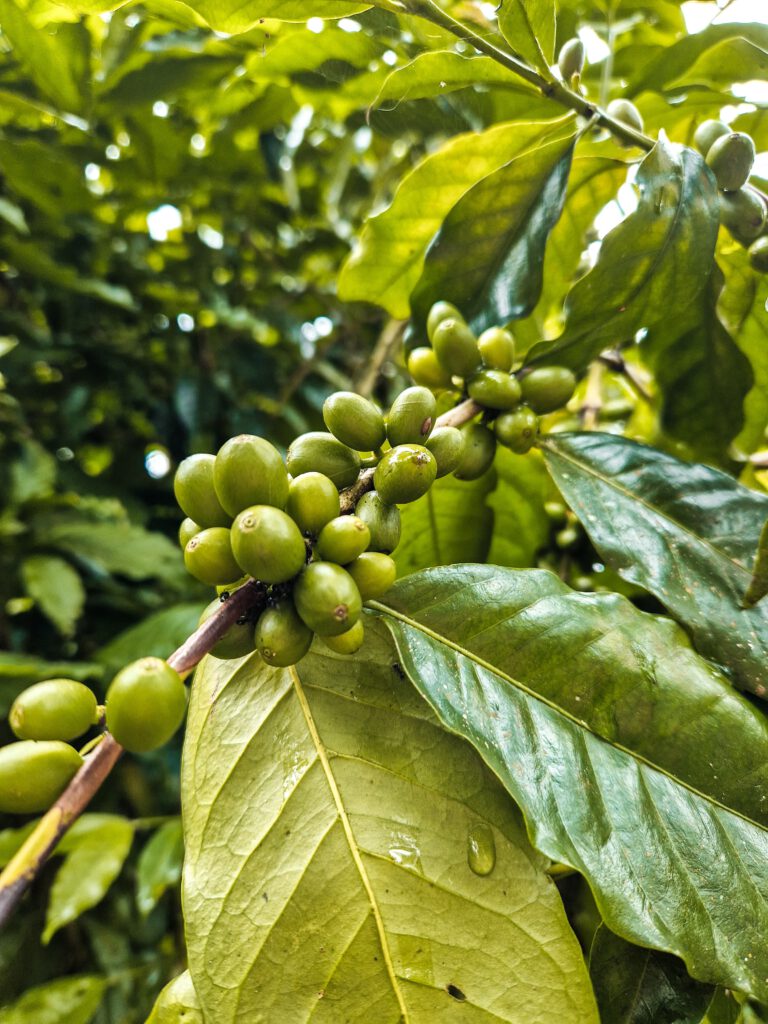
Around Ubud you will find several coffee plantations where you can not only taste the best Bali coffee, but also get a look at the fascinating process of growing and preparing coffee. These plantations are often in beautiful locations, with panoramic views over green rice fields, tropical jungle and sometimes even volcanoes in the distance. It is an ideal place for a relaxed stop during a day trip through the Balinese interior.
During a tour you learn all about the different types of coffee that grow here, such as Arabica, Robusta and the famous (and controversial) kopi luwak. This unique 'luwak' coffee is made from coffee beans that have been eaten and excreted by a civet. Although the taste is special, there is also a lot of debate about animal welfare in its production, so it is good to choose a responsible plantation that produces ethically.
Besides coffee you can often taste various local teas and herbal infusions too, such as ginger and clove tea. Many plantations serve the drinks with traditional snacks or sweets, making it a complete tasting experience.
Practical tips for your coffee tasting: - Locations: Popular coffee plantations around Ubud include Satria Coffee Plantation, Bali Pulina Agro Tourism and Seniman Coffee Studio. - Duration: Tours and tastings usually take 30 to 60 minutes, which is easy to combine with other activities nearby. - Cost: Most tastings are affordable or free, sometimes for a small contribution. Check in advance whether you need to book. - Transport: Many tours offer transfers, or rent a scooter/taxi to go independently. - Kopi luwak: Ask about the origin of the kopi luwak in advance to make sure it is produced in an animal-friendly way. - Shopping: Coffee and tea are often for sale in the plantation shop – a fun and tasty souvenir to take home.

10. Rice fields in Bali: Tegallalang & Kajeng Rice Fields
When you think of Bali, you immediately think of vast, green rice terraces shaping the landscape.
Tegallalang rice terraces
Tegallalang is perhaps the most famous rice field on the island and attracts thousands of visitors every year because of its beautiful, photogenic view of the stepped terraces. This location is ideal for lovely walks, atmospheric photos and experiencing the traditional farming system that has been used for centuries: the so-called subak system, a UNESCO World Heritage Site.
Besides the rice terraces, at Tegallalang you will also find popular attractions such as hanging swings and viewing platforms, perfect for a bit of adventure and of course for filling your Instagram feed. The area is lively, with lots of small cafés and stalls where you can buy fresh coconut, local snacks and souvenirs.
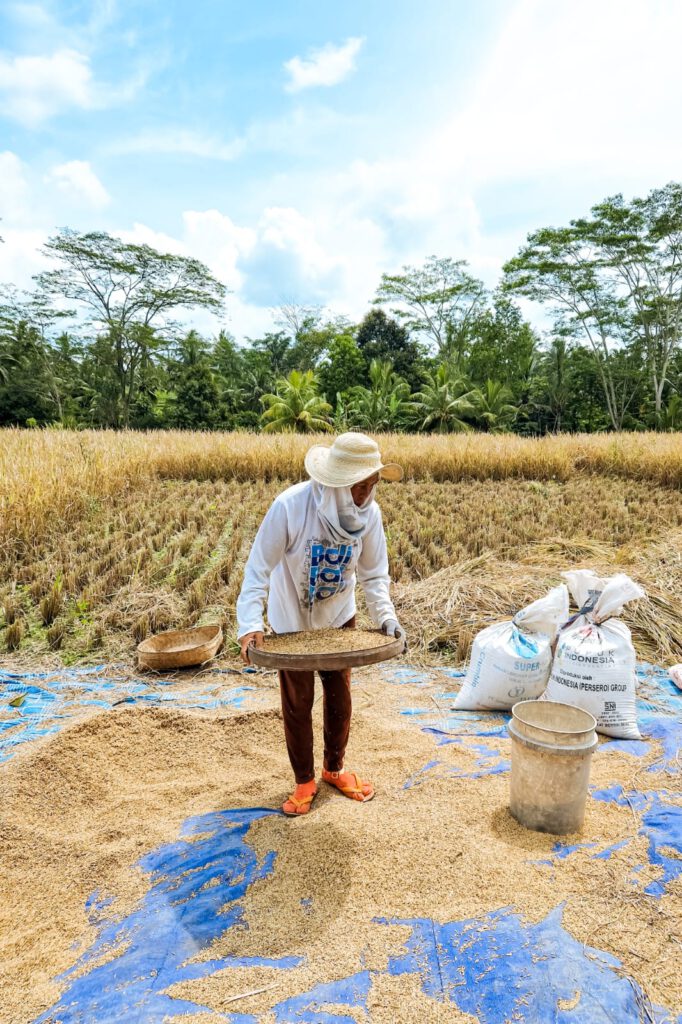
Kajeng rice fields Would you like to visit a slightly quieter, but just as enchanting place? Then the Kajeng Rice Fields are a hidden gem. These rice fields are within walking distance of the centre of Ubud and are less busy, so you can walk here in peace and enjoy natural Bali. The narrow paths between the green fields offer an intimate experience, and you will often see local farmers at work. Unlike Tegallalang, the Kajeng rice fields are flat.
Practical tips for visiting the rice fields: - Best time: Visit the rice fields early in the morning or late in the afternoon. That is when the light is most beautiful for photos and it is often less busy. - Access: Tegallalang is easy to reach by scooter or taxi from Ubud (about 20 minutes). You can easily walk to Kajeng from the centre of Ubud. Behind the Puri Lukisan museum there is a footpath that eventually leads to the rice fields. - Cost: At Tegallalang a small entrance fee or contribution is sometimes asked for the upkeep of the paths and viewpoints. Keep some small change at hand. - Walking shoes: Wear sturdy shoes or flip-flops with grip, as the paths can be muddy and uneven, especially after rain. - Respect nature: Stay on the paths and do not disturb the farmers while they work. Take photos politely and without getting too close. - Food & drink: At Tegallalang there are several cafés with beautiful views where you can have something to eat or drink. At Kajeng, bring a bottle of water, as there are few facilities. - Duration: A walk at Kajeng takes about 30 to 60 minutes; Tegallalang is easy to combine with a longer walk and a visit to nearby villages.


11. Sacred Monkey Forest – A jungle full of monkeys in the middle of Ubud
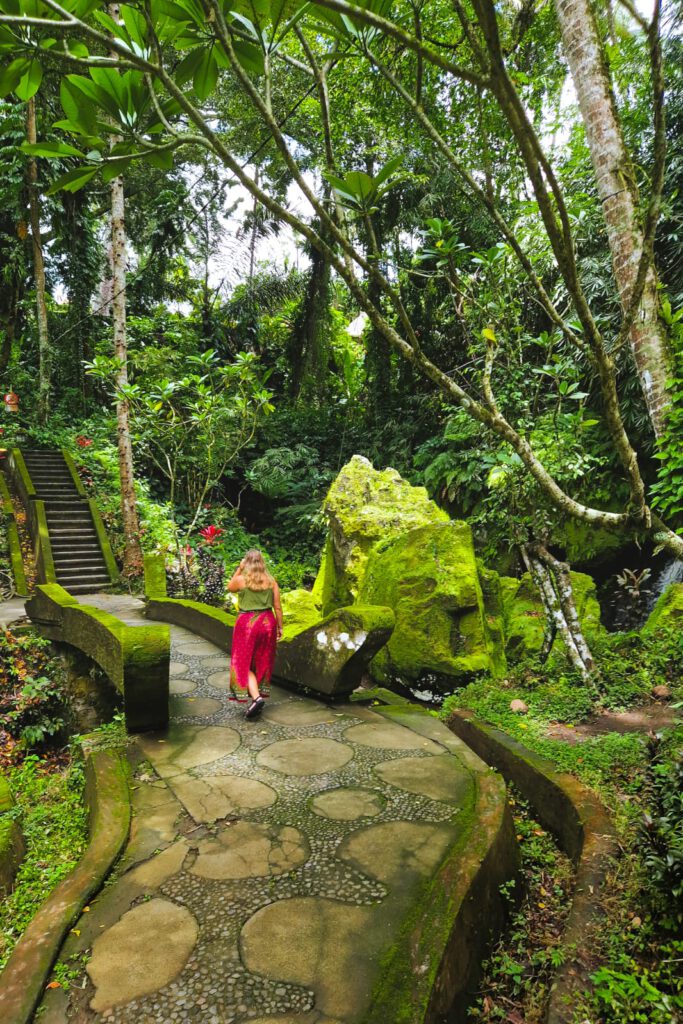
In the bustling centre of Ubud lies a special oasis: the Sacred Monkey Forest Sanctuary, a small but impressive nature reserve with both spiritual and ecological significance. This green paradise is home to hundreds of cheeky, curious Balinese macaques that roam freely. Besides the monkeys, you can admire beautiful traditional Balinese architecture here, including centuries-old temples such as Pura Dalem Agung and the ancient bridges and statues that make the area a mystical place.
The monkeys are playful and sometimes naughty: they are notorious for their clever tricks and can quickly grab things they find interesting. That is why it is important to stay alert and keep your belongings well protected. Despite the bustle and liveliness, the park has a serene atmosphere where nature and culture come together beautifully.
Practical tips for your visit to the Sacred Monkey Forest: - Opening hours: The Monkey Forest is open daily from about 8:30 am to 6:00 pm. - Cost: There is an entrance fee (about 50,000 IDR, roughly €3-4), which contributes to the conservation of the park and the animals. - Safety: Do not leave loose items such as sunglasses, hats, bags or food unattended, as monkeys can grab them quickly. - Photography: Taking photos is allowed, but make sure your equipment is secure. Be respectful towards the animals and do not make loud noises. - Clothing: Wear comfortable clothes and good shoes for a walk through the forest. Bear in mind that the paths are sometimes damp and muddy. - Behaviour around the monkeys: Stay calm and avoid sudden movements. Do not try to feed the monkeys, as this can disturb their natural behaviour. - Guide: Consider hiring a guide who can tell you more about the history of the forest, the temples and the behaviour of the monkeys. - Accessibility: The path through the park is fairly flat, but can be slippery at times. Not ideal for wheelchairs or pushchairs.
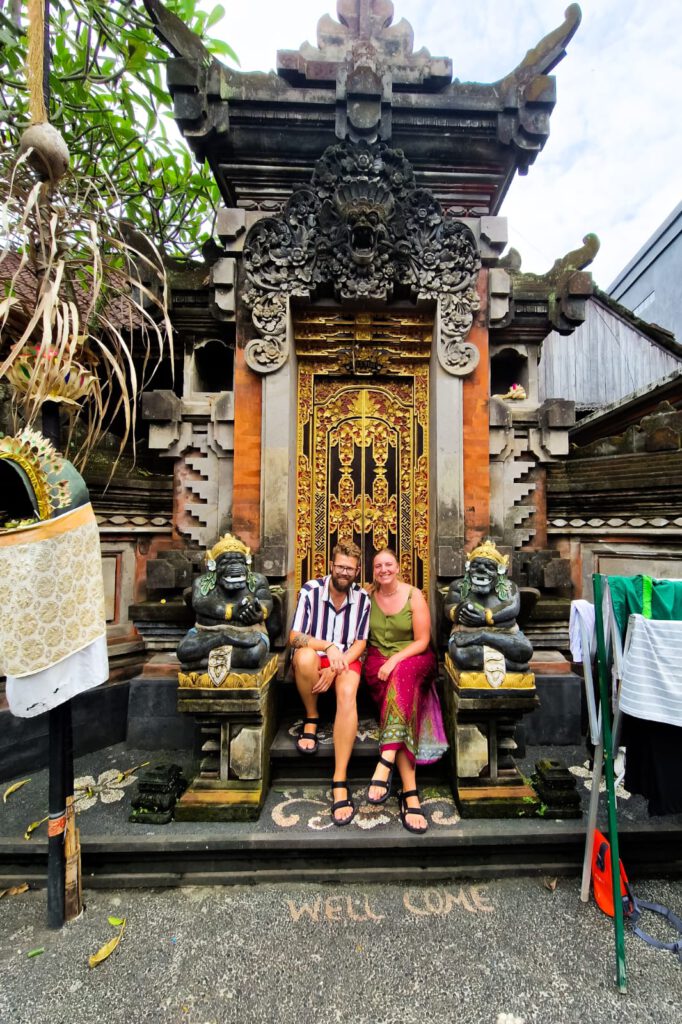
With these practical tips and highlights you are well prepared for your trip to Ubud. Whether you come for the nature, the spirituality or simply to relax – Ubud is sure to stay with you.
Practical tips for Ubud
Before you go
On the ground
Frequently asked questions about Ubud
What is there to do in Ubud? +
Ubud is known for its ancient temples such as Goa Gajah, Tirta Empul and Pura Saraswati, its waterfalls, the Campuhan Ridge Walk and the rice fields of Tegallalang and Kajeng. You can also cycle through the rice fields, take a Balinese cooking class, visit the Ubud Art Market, taste coffee and visit the Sacred Monkey Forest.
When is the best time to visit the sights in Ubud? +
Head out as early as possible. In the morning it is cooler and quieter, and you avoid the crowds at the most popular sights.
What do you wear to a temple in Bali? +
At most temples a sarong and covered shoulders are required; you can often rent a sarong at the entrance. At Pura Saraswati a sarong is not required, but covered shoulders and knees are appropriate.
How much do the sights in Ubud cost to enter? +
For the temples and the Sacred Monkey Forest you usually pay around 50,000 IDR per person. At the waterfalls, expect 20,000 to 30,000 IDR per person per waterfall. Bring cash.
Where is the best place to stay in Ubud? +
Choose accommodation within walking distance of the centre, but on a quiet side street or among the rice fields. That way you have everything close by and can retreat in the evening, without getting stuck in the traffic jams around lunchtime and sunset.
How do you get around in and around Ubud? +
Many highlights are spread out, so a car with a driver is an efficient and comfortable way to combine several places in one day. You can also take a scooter or taxi; Tegallalang is about 20 minutes from Ubud and you can reach the Kajeng rice fields on foot from the centre.
Is the Sacred Monkey Forest safe? +
Yes, as long as you pay attention. The monkeys are playful and can grab things quickly, so do not leave loose items such as sunglasses, hats, bags or food unattended. The park is open daily from about 8.30 am to 6.00 pm.
How long does the Campuhan Ridge Walk take? +
The walk takes about 30 to 60 minutes there and back. It is wonderfully quiet, especially in the early morning.